Overview:
The Ph.D. program in Theoretical Linguistics offers advanced academic and research training in the field of linguistics. The program is designed to equip students with the necessary theoretical and analytical skills to explore the fundamental aspects of language structure, meaning, and use. The program provides a comprehensive understanding of linguistic theory, covering various subfields such as syntax, semantics, phonetics, phonology, morphology, and pragmatics. Students engage in rigorous coursework, seminars, and independent research projects to deepen their theoretical knowledge and develop critical thinking skills in the field.
Mission:
To produce world class postgraduates, researchers, scholars and academics well versed in both theoretical and applied aspects of language studies, teaching and research who can perfectly participate in university teaching, international research and various forms of linguistic community services.
Program Goals:
1. Enable students to scientifically evaluate and analyze various linguistic structures and
themes.
2. Enable students to develop their critical thinking and convert their linguistic knowledge into
practical, applied, and analytical reality for language structures.
3. Provide students with a robust research environment that is conducive to applying research
skills.
4. Engage students in international linguistic research activities and publication.
5. Prepare highly-qualified faculty members to teach linguistics in Saudi at university level and
serve in other sectors.
6. Prepare highly-qualified linguistics’ specialists who can participate in different linguistic
community events and services.
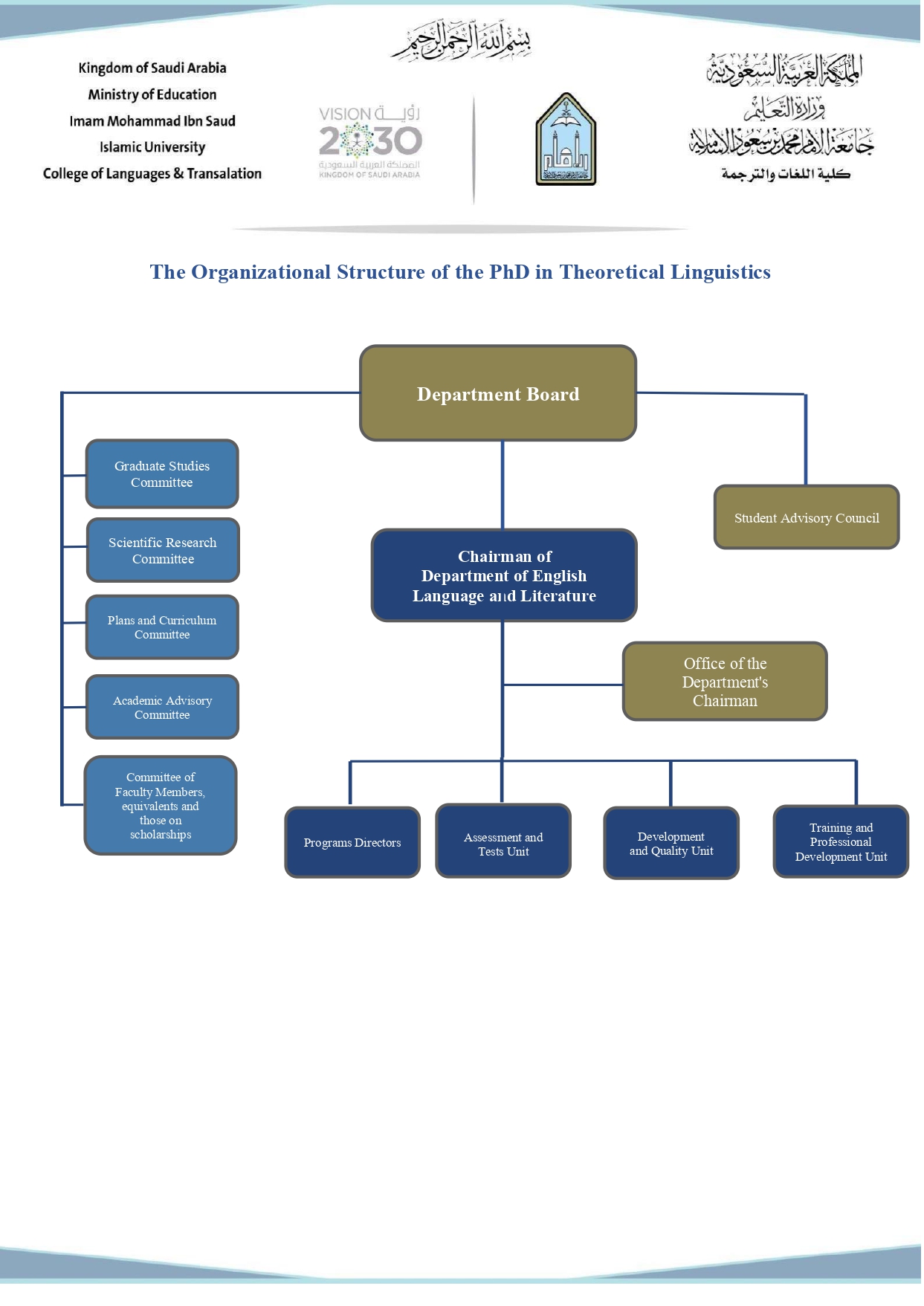
Key features of the program:
1. The program encourages interdisciplinary perspectives by integrating insights from other related fields such as psychology, cognitive science, anthropology, and sociolinguistics.
2. The program places a strong emphasis on research, fostering students' ability to conduct original and innovative research in theoretical linguistics.
3. Students gain a solid foundation in linguistic theory, exploring different theoretical frameworks and methodologies. They engage with key theoretical debates and critically analyse linguistic phenomena across languages.
4. Regular seminars and workshops provide a platform for students to present their research, engage in scholarly discussions, and receive feedback from faculty and peers.
5. The program offers opportunities for students to develop teaching skills by engaging in teaching assistantships or delivering lectures under faculty supervision.
6.Graduates of the Ph.D. program in Theoretical Linguistics are equipped with advanced knowledge and research skills that prepare them for diverse career paths. They can pursue academic positions as professors or researchers in universities and research institutions, contribute to language-related policymaking, work in language technology and computational linguistics, or pursue careers in language consultancy and translation.
Program Learning Outcomes:
Knowledge:
- Demonstrate comprehensive knowledge of the areas of theoretical linguistics including the phonological, structural, lexical, semantic, pragmatic, textual aspects of language in addition to principles of language acquisition, psycholinguistics and sociolinguistics.
- Describe the role of technology in linguistic studies and research
- Identify principles and tools of corpus linguistics
- Demonstrate the acquisition of technical vocabulary, theoretical tools, and various forms of research methods necessary to read, reflect, criticize and conduct research in theoretical linguistics
Skills:
- Analyze the linguistic aspects of language scientifically.
- Compare the linguistic aspects of different languages on various levels
- Use current technological tools to study language/ language applications.
- Apply linguistic theories and approaches in different linguistic tasks, text analyses and research.
Values, Autonomy, and Responsibility:
- Conduct research in accord with the ethical standards and best practices of the discipline.
- Demonstrate a capacity to work flexibly, collaboratively, critically, and creatively in teams to exchange theoretical knowledge, research proficiencies, and professional skills.
- Show individual responsibility to manage time, meet deadlines, and work effectively under pressure in both the academic and professional spheres.
- Demonstrate autonomous creativity, intellectual independence and proactive decision-making in complex academic and professional situations.)
Admission:
University Enrolment Requirements:
1.A university degree and MA degree obtained from a Saudi or other recognized university
2.Two letters of recommendation delivered by the candidate’s former instructors
3.Employer’s permission if applicable
NB: The candidate is not authorized to concurrently enrol in two programs
Department of English Enrolment Requirements:
1.Holding an MA degree in English Language, Literature, and/ or Linguistics with a minimum GPA of (3.75 out of 5.00).
2.A minimum IELTS academic score equal to (6.5) or its TOEFL equivalent (especially in writing and reading skills).
3.Passing the Graduate’s Aptitude Test (with a minimum of 80%)
4.Passing the program admission test and admission interview.
Required Documents:
1.ID (i.e. National or passport)
2.Academic documents (i.e. Degrees, acadmic records for BA and MA)
3.A model of a student's research production, which can be either a paper presented to the MA courses or the MA thesis.
4.A statement letter (written in English) on the purpose of the study.
5.C.V.
*For more detailed information regarding the fees and updated requirements, please refer to the website of the
Deanery of Registration
Theoretical Linguistics - Program handbook.pdf
Three Semester Curriculum Plan, Program Specifcation and Course Specifications
Student E-Services
▪ For more details about using the e-system services, please click on the following link.
▪ For details about using Olia Platform, please click on the following link.