في إطار النشاط العلمي والبحثي لقسم الأحياء بكلية العلوم، أقام القسم ندوة علمية (سيمنار علمي) بعنوان:
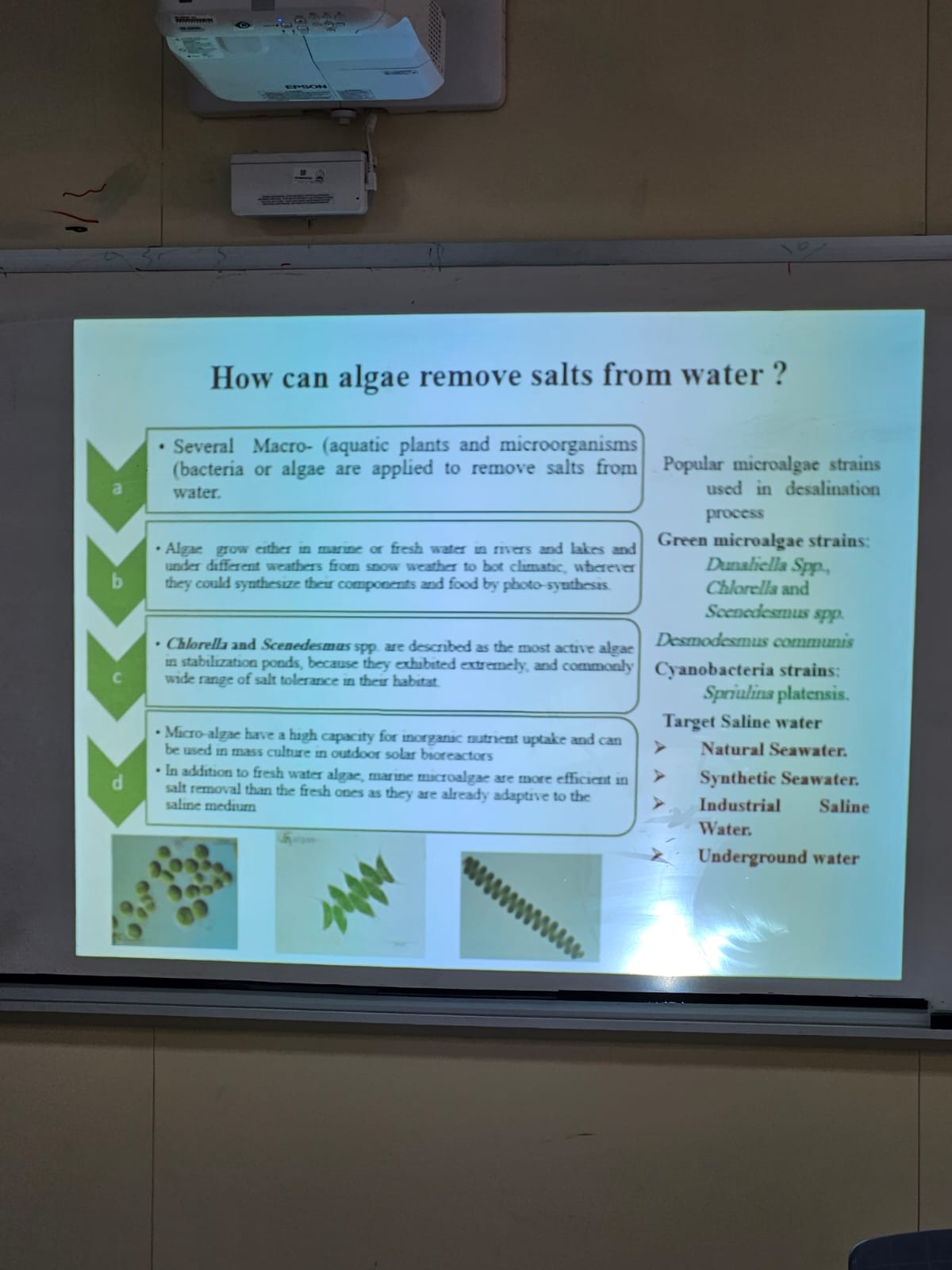
Water Desalination using Microalgae: Methods, Challenges and future prospects
قدّمها سعادة الدكتورة سهام موسى محمد، الأستاذ المشارك في القسم، وذلك يوم الاثنين 7 ربيع ثاني 1447هـ، الموافق 29 سبتمبر 2025م في تمام الساعة 08:25 صباحاً بقاعة السمنارات في قسم الأحياء بالكلية.
وقد تناولت الندوة العلمية مايلي:
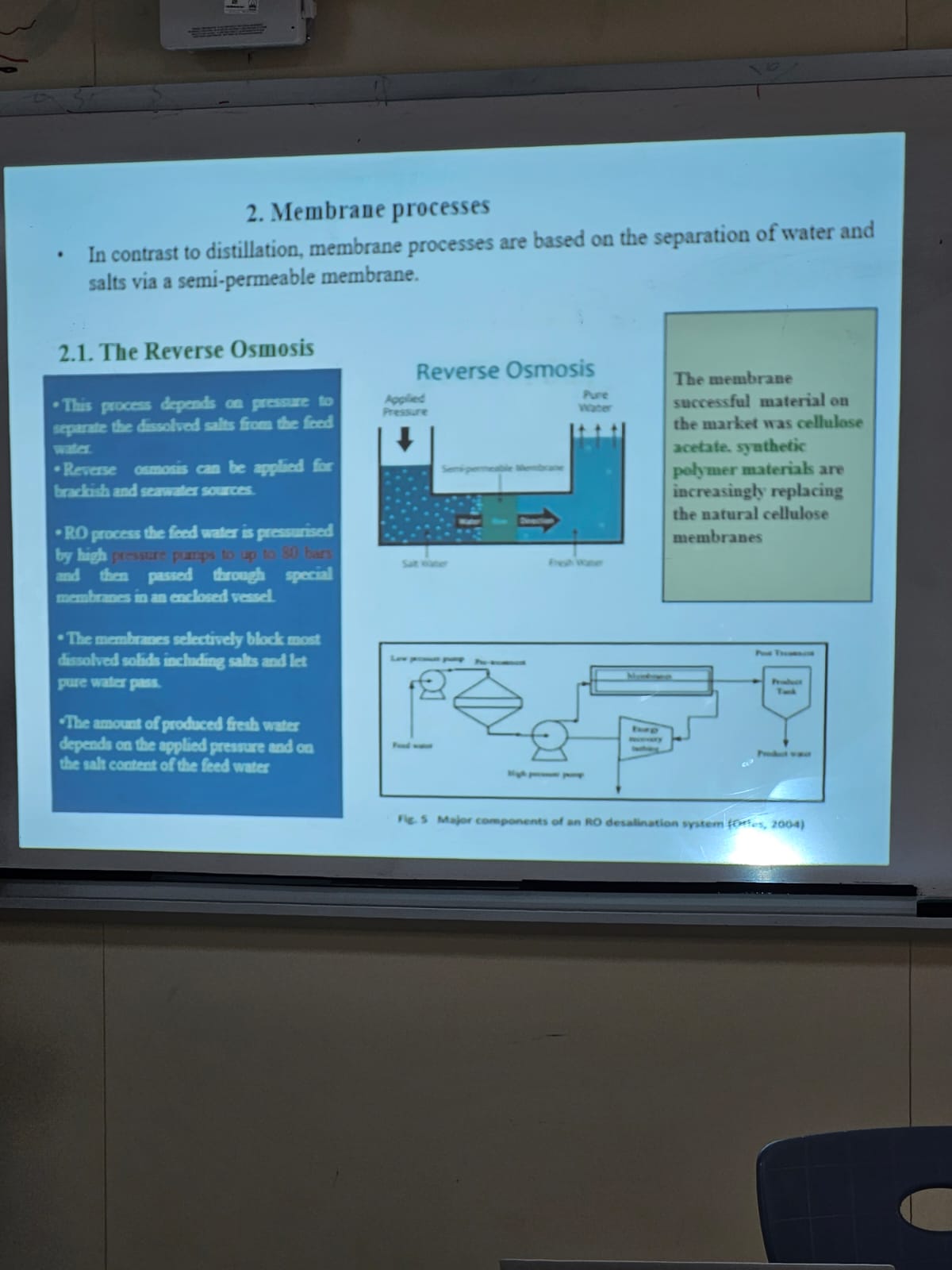
Freshwater scarcity represents one of the most critical challenges of the 21st century, particularly in arid regions such as Saudi Arabia where natural water resources are extremely limited. To address this crisis, desalination has become a cornerstone of water provision, with the Kingdom holding one of the largest shares of global desalination capacity. Worldwide, desalination plants employ diverse technologies, including multi-stage flash (MSF), multi-effect distillation (MED), and reverse osmosis (RO), each with varying efficiency, energy requirements, and environmental footprints. However, these conventional methods are often costly, energy-intensive, and environmentally challenging, motivating exploration of innovative, sustainable alternatives. Among emerging approaches, microalgae-based desalination has attracted attention as a potential biological tool for salt removal. Microalgae, through their unique cellular physiology and photosynthetic activity, can uptake and accumulate ions, thereby contributing to desalination. Mechanisms include ion exchange, bioaccumulation, and formation of biopolymers that bind salts, offering a low-energy, eco-friendly alternative. While still in early research stages, the feasibility of using algae for partial desalination and water treatment suggests promising potential. The quality of desalinated water produced through such processes is an important consideration, particularly for agricultural uses. Initial findings indicate that algal-treated water may be suitable for irrigation, supporting crop growth without adverse effects. Furthermore, integration with controlled systems such as hydroponics could enhance agricultural productivity while conserving freshwater resources. In Saudi Arabia, where agriculture heavily relies on limited water reserves, adopting biological desalination could provide dual benefits: saving freshwater for human consumption and ensuring sustainable irrigation supplies. Although significant challenges remain—including scalability, optimization of algal strains, and economic feasibility—the integration of microalgal desalination into the water management portfolio presents a future-oriented solution. This presentation will highlight methods, challenges, and prospects of microalgae-based desalination, with emphasis on its role in sustainable agriculture and hydroponic propagation.
كما استعرضت الدكتوره أبرز المحاور والنتائج ذات الصلة، مقدمتاً طرحاً علمياً قيّماً أثار نقاشاً مثمراً بين أعضاء هيئة التدريس والطالبات الحاضرات. وتأتي هذه الندوة ضمن سلسلة الأنشطة العلمية التي يحرص قسم الأحياء على تنظيمها بشكل دوري وذلك في إطار تعزيز النشاط البحثي والأكاديمي بالقسم وحرصاً على
إتاحة الفرصة للتفاعل العلمي وتبادل الخبرات والمعارف بين أعضاء هيئة التدريس والباحثين وطلاب الدراسات العليا بالقسم.
.jpeg)
.jpeg)
.jpeg)
.jpeg)