The Central Unit for Training and Development and the scientific committees in the departments of the College of Science, especially the departments of Physics, Biology, and Chemistry at the university, regularly organize scientific lectures and seminars concerned with the conservation of water resources, pollutants, diagnostic methods, and methods that contribute to reducing marine pollution and treatment methods. Researchers in the college study physical and chemical changes in different ecosystems.
Some examples: A lecture titled "Easy Preparation of New Nano-Composites from Waste for Water Pollution Treatment" presented by His Excellency Dr. Ihab Abdelhamid Ahmed.
A lecture presented by Associate Professor Dr. Imad Omar Mohammed Al-Ghailoufi, which discussed the use of nanomaterials such as carbon nanotubes and metal oxides in absorbing heavy metals from polluted water.
Link to College of Science lectures
and seminars
Lecture link
Lecture link
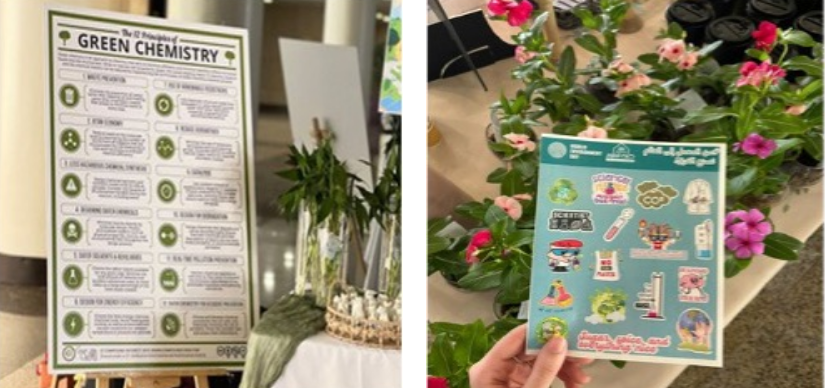
Lecture on the role of Green Chemistry
in environmental protection
The College of Science at Imam Mohammad Ibn Saud Islamic University, represented by the Marketing, Business, and Social Responsibility Unit, organized an event on the occasion of World Environment Day titled: "The Role of Green Chemistry in Environmental Protection" on Monday, May 12, 2025, at the College Panorama. The event aimed to enhance environmental awareness among the university community and highlight the importance of green chemistry in reducing environmental and water pollution and providing innovative scientific solutions to preserve natural resources for future generations.
Dr. Aidah Bint Salman Al-Farraj, Vice Dean of the College of Science for Female Student Affairs, opened the event with a welcoming speech, affirming the role of green chemistry as a science and a vision that seeks to balance industrial progress with environmental protection, especially water sources. She also pointed out that the college's role extends to spreading awareness and contributing to addressing environmental issues through scientific research and practical application.
The event included interactive scientific experiments illustrating how sustainable chemical technologies can contribute to building a safe and sustainable environmental future.
Lecture link
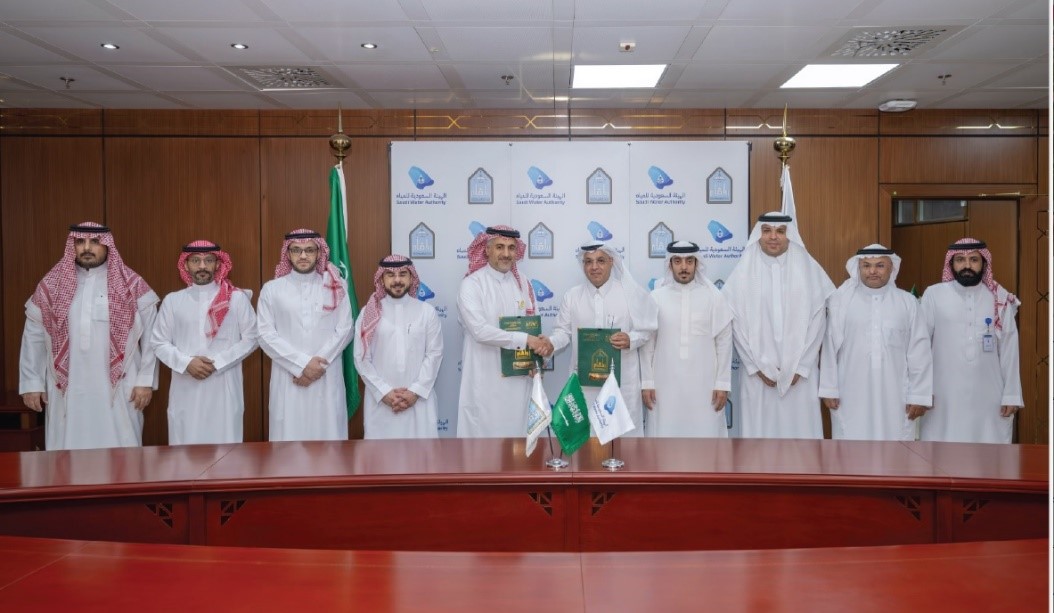
Signing of a Memorandum of Understanding with the Saudi Water Authority
The Saudi Water Authority signed a Memorandum of
Understanding with Imam Mohammad Ibn Saud Islamic University to enhance
cooperation in scientific research, training, and
capacity building in the water
sector. The
agreement includes
specialized training
programs, exchange of expertise, organization of conferences and workshops, and
development of educational initiatives to support the labor market. It aims to
qualify national cadres capable of facing sectoral challenges, fostering innovation, and managing resources sustainably.
Activity link
Synthesis of a new chemical
compound x2)3N2C(x2−TiO in the Chemistry Department
Dr. Khadijah Mohammed Qutbi presented a lecture on the preparation of the x2)3N2C(x2−TiO nano-composite. The project focuses on preparing light- absorbing nano-chemical materials used in treating environmental pollution in water, air, and sanitary sewers. TiO2 was modified using nitrogen-containing compounds to expand its light absorption capacity, providing innovative solutions for treating inorganic pollutants.
Lecture link
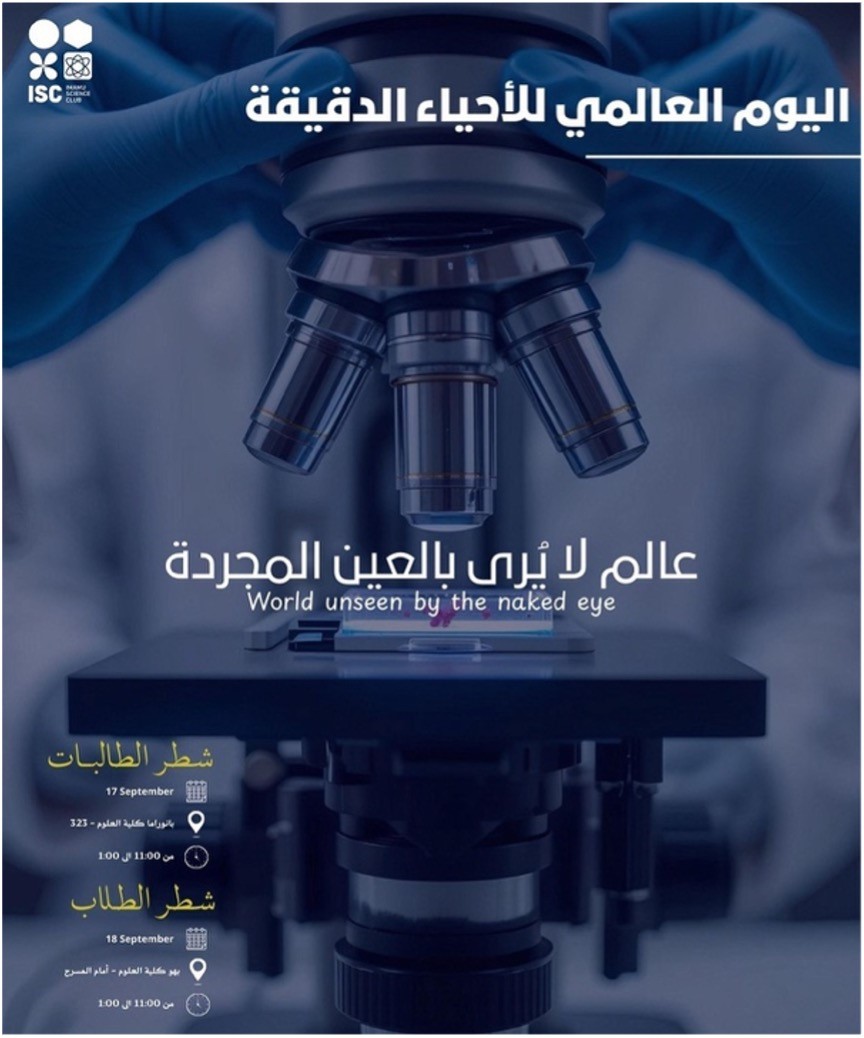
World Microbiology Day
Under the supervision of
the Student Clubs Unit, the Science Club organized the World Microbiology Day
event. The Science Club at Imam Mohammad Ibn
Saud Islamic University, under the supervision of the Student Clubs Unit, organized an event on the occasion of World Microbiology Day, aiming
to introduce students and the university community to the mysterious and
exciting world of microorganisms. The event highlights the importance of these microscopic organisms in our daily lives,
whether as friends who support our health and environment, or as potential
enemies that require their monitoring and understanding. The event provided an
opportunity for participants to discover the secrets of this
hidden world and learn about its vital role in nature, health, and science, through
interactive activities and innovative educational presentations.
An opportunity for participants to discover the
secrets of this
hidden world and
learn about its vital
role in nature,
health, and science, through interactive activities and innovative educational presentations.
Activity link
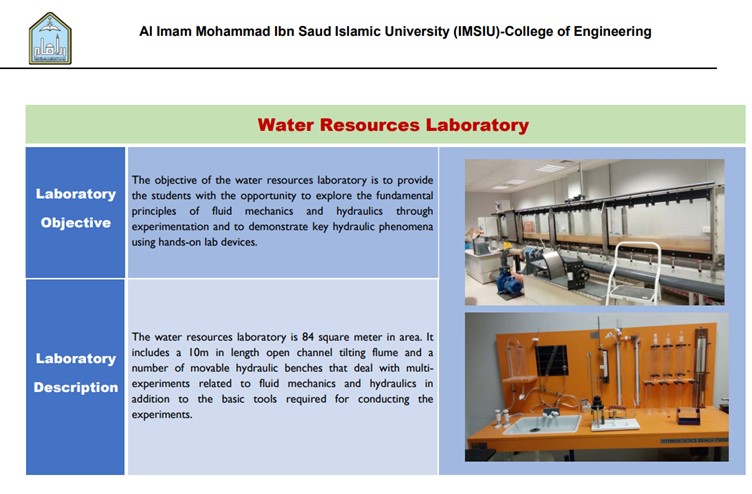
Water Laboratories and Projects
Through its water laboratories and educational programs, the university
aims to manage water resources sustainably, ensure the quality of drinking
water and its freedom from harmful pollutants and pathogenic organisms, while
emphasizing the importance of natural minerals and dissolved salt for human
health. The university's programs also include
field visits to the Ministry
of Water to learn about
methods of establishing water systems, rationalizing consumption, and providing
practical training for students on
water treatment technologies.
Two research labs in the College of Science win research lab support program
The Research, Development, and Innovation Authority announced the selection of Imam University among the winners in the research lab support program in the Kingdom of Saudi Arabia, where three research labs from the university won research lab support grants, including two research labs in the College of Science, namely:
Research Laboratory - Environment/Water Treatment (RLAEWT): Under the supervision of Dr. Lotfi Al-Khuzami from the Chemistry Department (within the national research priority in energy and industry).
Nano-Second LASER Research Lab (NSLRL): Under the supervision of Prof. Dr. Khaled Abnaouf Ahmed from the Physics Department (within the national research priority in energy and industry).
News link
Use of Nanoparticles and Magnetic
Particles in Water Treatment
University researchers, in collaboration between the Chemistry Department
and research teams, conducted studies on the use of nanoparticles and magnetic
particles to remove heavy
metals from polluted water. The
results were published in specialized
scientific journals such as Water Science
& Technology and Desalination and Water Treatment.
His Excellency Dr. Ihab
Abdelhamid Ahmed presented a lecture titled "Easy Preparation of New Nano-Composites from Waste for Water Pollution Treatment."
Lecture link
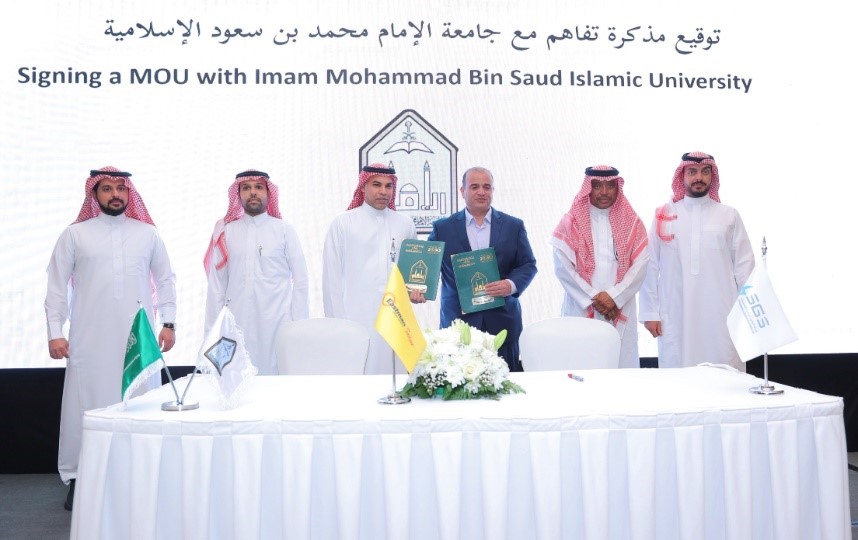
Cooperation Agreement with Green Solutions Company
Imam Mohammad Ibn Saud
Islamic University signed a cooperation agreement with Green Solutions Company,
which specializes in sustainable energy and environmentally friendly technologies.
This agreement aims to enhance
cooperation in the areas of design, training, and awareness, with a special focus
on renewable energy
systems and electric
vehicle charging technologies. This initiative strengthens the shift
towards clean energy sources and reduces reliance on fossil fuels, which falls
within the scope of responsible consumption and
production of resources.
His Excellency Dr. Ihab
Abdelhamid Ahmed presented a lecture titled "Easy Preparation of New Nano-Composites from Waste for Water Pollution Treatment."
Lecture link
Cooperation Agreement with Green Solutions Company
Imam Mohammad Ibn Saud
Islamic University signed a cooperation agreement with Green Solutions Company,
which specializes in sustainable energy and environmentally friendly technologies.
This agreement aims to enhance
cooperation in the areas of design, training, and awareness, with a special focus
on renewable energy
systems and electric
vehicle charging technologies. This initiative strengthens the shift
towards clean energy sources and reduces reliance on fossil fuels, which falls
within the scope of responsible consumption and
production of resources.
University cooperation agreement with Green Solutions Company
Conclusion
Imam Mohammad Ibn Saud Islamic
University actively contributes to achieving Sustainable Development Goal 14 – Life Below
Water (SDG 14) through
an integrated system of academic, research, and community activities. The university has
focused on studying marine ecosystems and understanding the impact of
pollution, climate change,
and human activities on marine organisms, in cooperation with government agencies and international organizations to enhance
the protection of marine biodiversity.
The university also offers educational
programs and workshops in marine science, environmental conservation, and sustainability, integrating Islamic principles related to responsibility for natural resources to foster ethical
awareness towards the
marine environment. Its efforts also
include community initiatives such as beach
cleanups, awareness campaigns about
the impact of plastics and
overfishing, and cooperation with local communities to promote sustainable fishing practices.
In addition, the university has adopted on-campus practices to reduce
marine pollution, including waste
reduction, recycling, and responsible waste
disposal, while promoting sustainable alternatives to single-use plastics.
Through these integrated efforts, the university has succeeded in
combining education, research, and community service to support marine
sustainability, develop qualified cadres
capable of facing
marine environmental challenges, and contribute to protecting life below water, in line with Saudi Vision
2030 and global Sustainable Development Goals.