Executive Summary
Sustainable Development Goal 13 (SDG 13) "Climate Action" (Goal 13 | Department of Economic and Social Affairs) is one of the core pillars for achieving global sustainable development. It focuses on taking urgent and effective measures to address climate change and reduce its negative impacts on humans, the environment, and the economy. In light of the escalating challenges associated with rising temperatures, desertification, water scarcity, and natural disasters resulting from climate fluctuations, this goal emerges as a strategic choice to ensure the resilience of societies and the sustainability of their resources for future generations. Through Saudi Vision 2030, the Kingdom has adopted a set of transformative initiatives and policies aimed at reducing carbon emissions, enhancing energy efficiency, expanding renewable energy projects, and supporting the circular carbon economy. These efforts fall within a national framework that aims to balance economic development requirements with environmental preservation.
This highlights the crucial role played by Saudi universities, including Imam Mohammad Ibn Saud Islamic University, in supporting this goal by integrating sustainability and climate action concepts into their educational programs, research activities, and community services, thereby contributing to raising environmental awareness, spreading a culture of sustainability, and finding innovative solutions to climate challenges.
Interlinkages with Other Sustainable Development Goals
Climate action (Goal 13) is closely linked to all other Sustainable Development Goals, as failure to take sufficient action to address climate change leads to worsening storms and disasters and increased resource-related challenges such as food and water (Goals 2 and 6).
These impacts will disproportionately affect poor and vulnerable groups (Goal 1), and threaten life on land (Goal 15) and below water (Goal 14). Conversely, innovation (Goal 9) and working to develop clean energy solutions (Goal 7) offer pathways to mitigate these impacts.
Saudi Government Efforts to Achieve SDG 13:
Sustainable Development Goal 13 (SDG 13) focuses on taking urgent action to combat climate change and its impacts. Climate action in the Kingdom of Saudi Arabia is crucial due to its arid climate and reliance on fossil fuels, in addition to climate-related challenges such as desertification and water scarcity. As part of Saudi Vision 2030, Saudi Arabia has launched ambitious initiatives to address climate change, reduce greenhouse gas emissions, and transition towards a more sustainable and resilient economy.
Saudi Green Initiative (SGI):
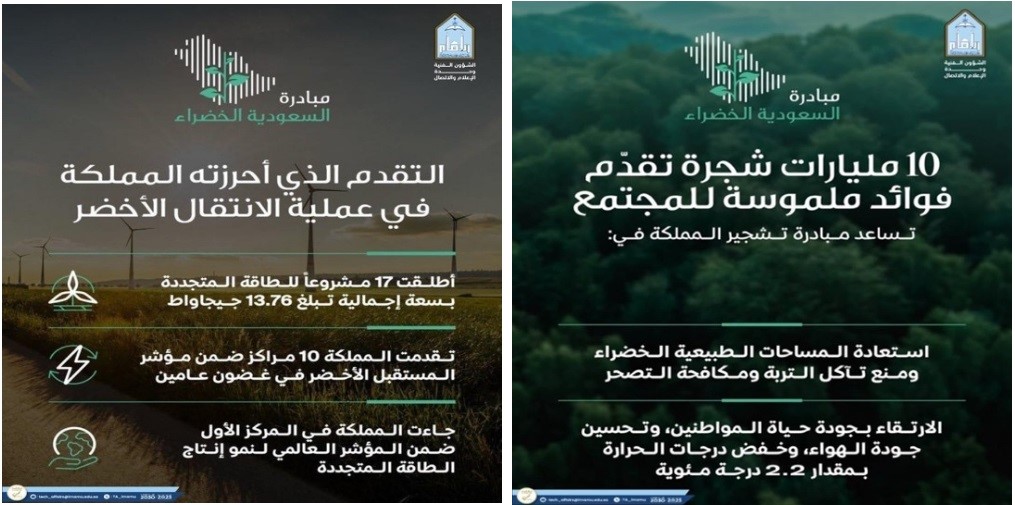
- Aims to plant 10 billion trees
across the Kingdom and rehabilitate 40 million
hectares of degraded land, contributing to global reforestation efforts.
- The initiative also focuses on increasing protected areas and curbing desertification.
Transition Towards
Renewable Energy: - The
Kingdom is working to diversify its energy mix through projects like
"NEOM" and "The Red Sea Project" which rely on renewable
energy sources.
- Saudi Arabia
plans to generate
50% of its electricity from renewable sources
by 2030, reducing reliance on
fossil fuels.
Carbon Reduction and
Circular Carbon Economy: - The "Circular Carbon Economy" framework is based on reducing, reusing, recycling, and removing carbon
emissions.
- Investments include
Carbon Capture and Storage (CCS)
technologies to mitigate
industrial emissions.
Energy
Efficiency Programs: - The
"Saudi Energy Efficiency Program (SEEP)" promotes energy-saving
measures in buildings, industries, and transportation.
- Awareness campaigns encourage citizens and businesses to adopt energy efficiency
practices.
Climate-Resilient
Infrastructure: - Urban planning initiatives adopt climate
resilience standards, with
a focus on flood
management, water conservation, and sustainable urban
design.
- Major projects integrate smart and
green technologies to ensure
sustainability.
International Cooperation: - Saudi Arabia
actively participates in global climate
discussions, such as UN Climate Conferences (COP),
advocating for a sustainable energy
transition.
- The
Kingdom collaborates with international organizations to exchange expertise and promote global climate action.
Awareness and Education:
The
government organizes campaigns to educate citizens on the importance of climate action
and encourage sustainable practices such as recycling and rationalizing energy
consumption.Role of Imam Mohammad Ibn Saud Islamic University
(IMSIU) in Achieving Goal 13 Imam Mohammad
Ibn Saud Islamic University (IMSIU) contributes to achieving Sustainable
Development Goal 13 (Climate Action) through campus sustainability initiatives,
educational programs, and research addressing climate change challenges. The
University's efforts align with national climate goals, working to enhance
awareness and encourage climate action among students, faculty members, and the community.
Sustainable
Campus Initiatives:
The
University adopts renewable energy systems such as solar panels to reduce its
carbon footprint.
The
campus includes green infrastructure such as energy-efficient buildings, water conservation measures, and tree-planting
campaigns to enhance carbon absorption.
Climate Change Education:
Courses and seminars are offered
in environmental sciences, sustainability, and
climate change, equipping students with the knowledge needed to address climate challenges. Islamic teachings on environmental stewardship and
moderation are integrated into curricula, emphasizing ethical responsibility in protecting the
planet.
Climate Research and Innovation:
Faculty members
and students participate in research related
to climate change mitigation strategies, such as renewable energy
technologies, carbon capture methods, and sustainable agriculture.
Collaborative
research projects with government agencies contribute to national and global efforts to combat climate
change.
Awareness Campaigns:
The University organizes events,
workshops, and public lectures to raise awareness
about climate change and its impacts.
Campaigns encourage students and employees to adopt
sustainable practices such as waste reduction, rationalizing energy consumption, and
using public transportation.
Community
Engagement:
The University collaborates with local communities and organizations to promote climate action through
awareness programs and
sustainability initiatives.
Its partnerships with government agencies support reforestation campaigns, water conservation programs, and projects to enhance climate
resilience.
Integrating Faith with Sustainability:
The
University emphasizes the integration of Islamic principles with climate
action, by promoting values such as resource preservation, sustainability, and
care for the Earth. Religious teachings inspire collective action to combat
climate change and protect natural resources.
Imam Mohammad Ibn Saud Islamic University's
Activities in Climate Action
Through education, research, and community engagement, Imam Mohammad Ibn Saud Islamic University supports the Kingdom's
climate action goals and contributes to global efforts to combat climate change. By
fostering a culture of sustainability and environmental responsibility, the
University prepares future leaders to address the urgent challenges of climate change.
Its initiatives also demonstrate the pivotal
role of academic institutions in enhancing climate
adaptation capacity and
driving sustainable development.
"Green Saudi Initiative" by the Deanship of Student AffairsI
Imam Muhammad
University, represented by the
Deanship of Student Affairs, activated the Green Saudi Initiative, which
includes activities such as tree planting, environmental awareness, and
reducing carbon emissions within the university campus. The university launched
a reforestation program
targeting the planting
of 100,000 trees in
the university city, as part of the "Green Saudi Initiative." It began by
planting 3,000 trees in
student housing and other areas within the university. This step contributes to
improving air quality, lowering urban temperatures, enhancing biodiversity, and
providing a healthy and safe environment for the university community.
University Participation in
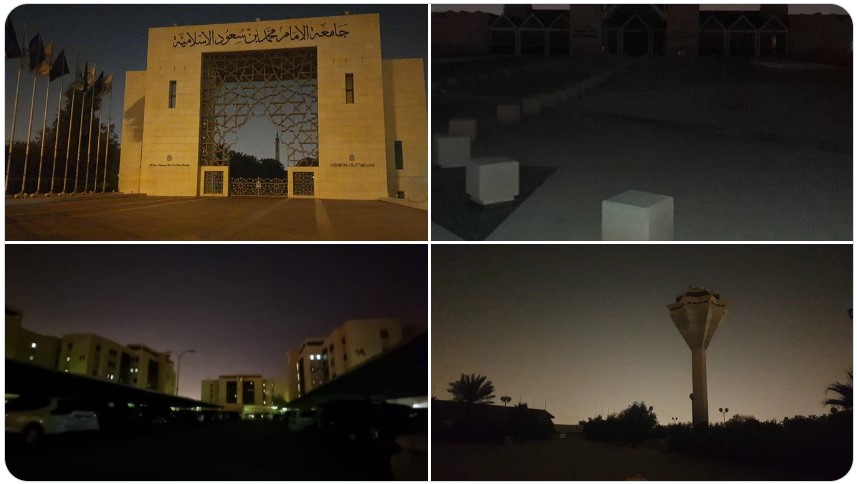
Global Initiatives and Awareness Events The University is active on social media, reflecting its participation in global initiatives to raise awareness about the dangers of climate change, and encouraging sustainable consumption and energy conservation. Example: A tweet from the university participating in the global initiative to raise awareness about the dangers of climate change and rationalizing consumption
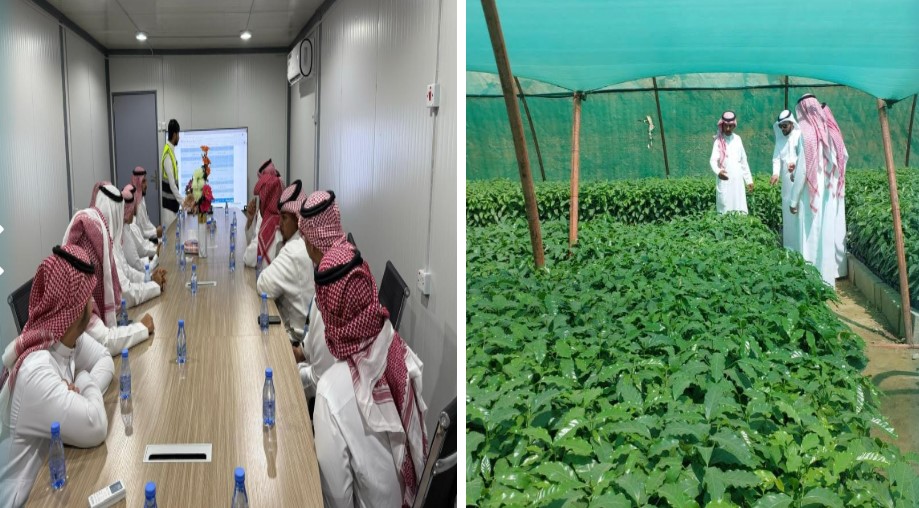
Geography and Geographic Information Systems Department – Field Visit
to Abha City
Under the guidance of His Excellency the University Rector, Professor Dr. Ahmed bin Salem
Al-Ameri, the Department of Geography and Geographic Information Systems
at the College of Social
Sciences organized a student field
visit to Abha city titled "Natural and Human Components in the
Civilized City of Abha" during the period from 13 – 22 /10/2024. The visit
aimed to equip students with advanced field skills
in physical and human geography, through an integrated study of the environmental and geographical aspects
of the southern region, with a focus on
topography, climate, natural
resources, and human
activities. The visit
included training students on the use of GPS and GIS maps, collecting climate data, analyzing natural phenomena, in addition
to studying agricultural activities such as coffee
production and irrigation patterns, economic activities in Al-Soudah mountains, and the impact of topography on tourism and
sustainable development.
Activity Link
Green Youth Summit Towards Climate Goals
The Deanship of Student Affairs at the University regularly organizes student participation in the Green Youth Summit, which is held annually in conjunction with the Saudi Green Initiative. A number of students are nominated to attend the summit, which includes dialogue sessions and workshops on increasing vegetation cover, protecting and managing marine areas, and reducing carbon emissions. The sessions also discussed the role of youth in leading climate change and investing in technology to achieve a sustainable future.
Activity Link

"Energy Efficiency Rehabilitation Project at the University
City"
Imam Mohammad
Ibn Saud Islamic University launched a project to rehabilitate energy
efficiency in the university city's facilities, in
cooperation with a specialized company, as part of its efforts to achieve
environmental sustainability and
reduce carbon emissions.
The project
included:
- Improving the efficiency of internal and external lighting
systems.
- Developing air
conditioning systems to be more
energy-efficient.
- Introducing modern
technologies to rationalize consumption in university buildings and services.
Key Achievements:
- Averted over 63,000 tons of harmful carbon
emissions.
- Saved approximately 155,000 barrels of oil equivalent in energy consumption.
- Supported the
Kingdom's directions towards Vision 2030 and its initiatives related to sustainability and renewable energy.
Impact:
- The project is a practical step contributing to carbon neutrality and reducing the financial burdens resulting from high energy consumption.
- it reinforces the University's leading role in supporting Sustainable Development Goals, especially Goal 13 (Climate Action).
News Link – Al Madina Newspaper
Cooperation Agreement with Green Solutions Company
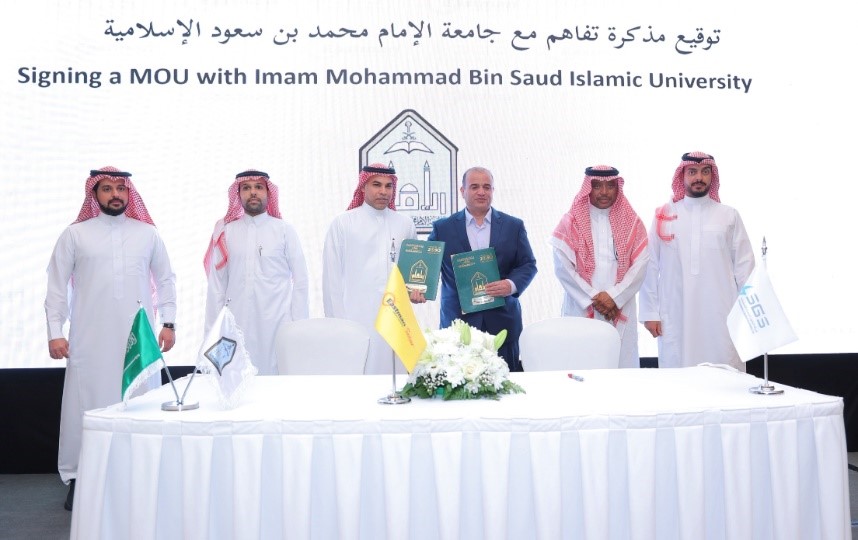
Imam Mohammad Ibn Saud Islamic University signed a cooperation agreement with Green Solutions Company, which specializes in sustainable energy and environmentally friendly technologies.
This agreement aims to enhance cooperation in the fields of design, training, and awareness, with a special focus on renewable energy systems and electric vehicle charging technologies. This initiative promotes the transition towards clean energy sources and reducing reliance on fossil fuels, which falls within the scope of responsible consumption and production of resources.
University Cooperation Agreement with Green Solutions Company
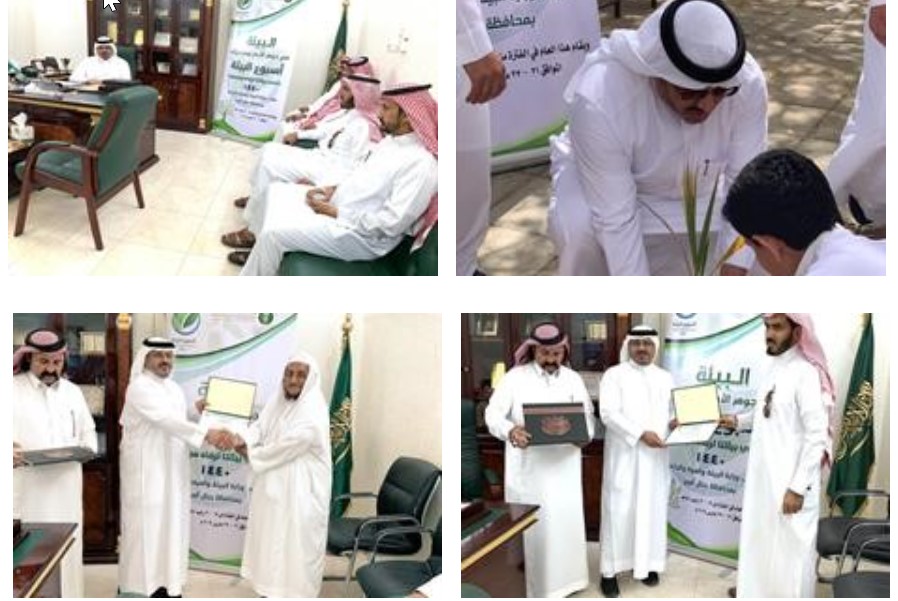
Visit to the Office of the Ministry of Environment, Water and Agriculture – Environment Week Activities
A delegation from the Scientific Institute participated
in the Environment Week activities by visiting the office of the Ministry of Environment, Water and
Agriculture, to enhance
environmental awareness among students and connect them
with sustainable development initiatives.
Participation of Students from the Institute of
Islamic and Arabic Sciences in Indonesia – Jakarta
Cleaning Day
Institute students
participated in Jakarta
Cleaning Day in cooperation with government agencies in Indonesia. The
number of participants reached 150 people, including 30 students from the Institute, and more than 191
kg of waste was
collected.
Activity Link

Local Educational Programs and
Activities at IMSIU
in Climate Action
The Saudi Environment on National
Day
The past
decade has witnessed increasing global attention to environmental issues
and their protection, which is consistent with the direction of the Kingdom
of Saudi Arabia,
which has given great importance to natural and environmental resources in its development plans,
reinforcing cultural heritage and Saudi
Vision 2030. This has been reflected in the integration of environmental considerations into national plans
from the second
plan to the sixth,
through environmental consultations and services, supporting the
participation of individuals and
institutions, and adopting clear strategies for
environmental preservation.Among the
Kingdom's most prominent achievements in this field:
- Integrating environmental standards in selecting sites for major projects
such as the industrial cities of Jubail
and Yanbu.
- Establishing regulatory structures and specialized bodies such as the General Presidency of Meteorology and
Environmental Protection and the National Commission for Wildlife
Conservation and Development.
- Issuing national environmental specifications and applying them
to development projects.
- Adopting standard
specifications for vehicle emissions and applying them to all imports.
- Establishing natural
reserves, national parks,
and fenced pastures
to preserve biodiversity.
Playing
a growing role at the regional level through participation in environmental councils of the Gulf
Cooperation Council and
the League of Arab
States, and marine environmental organizations in the Red Sea and Arabian Gulf.The Kingdom has
also adopted qualitative projects within its development plans, such as the
development of Wadi Hanifa, lowering
groundwater levels, wildlife protection projects, rationalizing irrigation water consumption, studying causes of air
and water pollution, and solid
waste treatment.Despite challenges such as pollution, desertification, declining groundwater, and health risks associated with waste, the Kingdom continues
to develop innovative solutions and policies to ensure resource
sustainability and reduce
environmental damage, thereby reinforcing the achievement of sustainable development goals. Article presented by: Prof. Dr. Zaid bin Mohammed Al-Rumani
– Economic Advisor and Faculty Member at Imam Mohammad
Ibn Saud Islamic.
Under the Slogan "We
Protect Our Environment for the Well-being of Our Society"
The Vice-Rector for Female Student Affairs, Dr. Hanan bint Abdul Rahman Al-Arini,
inaugurated the "Environment Week" event on Thursday
morning, 21/7/1440H, under the slogan "We protect our environment for the well-being of our society" in the lobby of building (324),
accompanied by the Vice Dean of Student Affairs
for Female Student Affairs, Dr.
Uhoud Al-Manna. Dr. Al-Arini
toured the interactive corners, viewed the accompanying activities, and enjoyed
a brief explanation of the exhibits and awareness tools that reflect
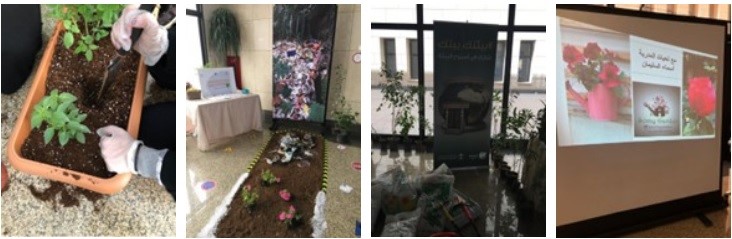
Imam University's keenness to participate in this environmental week and enhance its awareness role in the importance of environmental preservation and contributing to pollution reduction. Dr. Uhoud Al- Manna emphasized that among the most important goals of this event is to educate female students about environmental pollution and its effects and its impact on society and our daily lives. It also aims to introduce female students to types of plants and how to plant and care for them to increase environmental awareness among female students.
Environment Week, organized by the Vice Deanship of Student Affairs for Female Student Affairs in cooperation with the branch of the Ministry of Environment, Water and Agriculture in Riyadh region, included brochures and awareness leaflets, paper educational materials, and environmental artworks on the impact of the environment on physical and psychological health, and safe consumption and economy methods for the environment, which in turn contribute to raising the level of students' responsibility towards the environment. It also included a visual presentation titled "We Plant to Live," which covered the definition of plants and reasons for their death, planting and reproduction, seeds and fertilizers, in addition to irrigation methods and beneficial and harmful plants and insects. Trainer Asma Al-Sulaiman from the Ministry of Environment, Water and Agriculture participated with a workshop titled: "Our Land is Green and Our Environment is Clean," in which she discussed the foundations of successful home gardening and methods of caring for indoor plants, how to plant seeds, and suitable soil and fertilizers for them, in addition to problems facing plants and ways to treat them. From the practical side, students participated in planting and caring for trees, in addition to participating in the cultural competition in the environmental field for which prizes were awarded.
Link of Activity
Deanship of Student Affairs
Activates the "Green Saudi Initiative"
In an effort to achieve the climate goals
announced by His Royal
Highness Prince Mohammed bin Salman during the "Green Saudi Initiative" and
Saudi Vision 2030, which aims for a
safe, healthy, and
sustainable environment, the
Deanship of Student
Affairs at Imam Mohammad Ibn Saud Islamic
University, in cooperation with the General
Directorate of Technical Affairs, organized a
two-day volunteer opportunity: Wednesday, November
24, with the participation of (13)
university students, and Thursday, November
25, with the participation of (12) university female students, to activate the "Green Saudi Initiative." This initiative aimed to
increase vegetation cover by protecting and preserving the environment, addressing climate change challenges, reducing carbon emissions,
and combating pollution and land degradation, by
planting a number of "Talh"
trees within the university campus (new faculty housing area), to embody the Green Saudi
Initiative that leads
the Kingdom in protecting land and nature.Link
Environmental Educational Initiatives:
The University,
in cooperation with the General Directorate of Technical Affairs,
implemented a set of awareness programs, workshops, lectures, and seminars, focusing on
climate change issues, sustainable practices,
and the importance of resource preservation. Among the most prominent
are: the Saudi Green Initiative, the "Climate Change and Transformations Towards Sustainability" seminar, and the "Environmental Sustainability, Climate Change, and Women's Empowerment" seminar.
It also organized specialized workshops, including: "Climate Change and
its Impacts on Arab Countries," in addition to virtual
seminars such as "ISO and Sustainable Development Goals." These
activities aimed to enhance
student awareness and connect them with local,
regional, and global environmental issues, with a focus
on their role as future leaders in environmental protection.

Education in Disaster Planning:
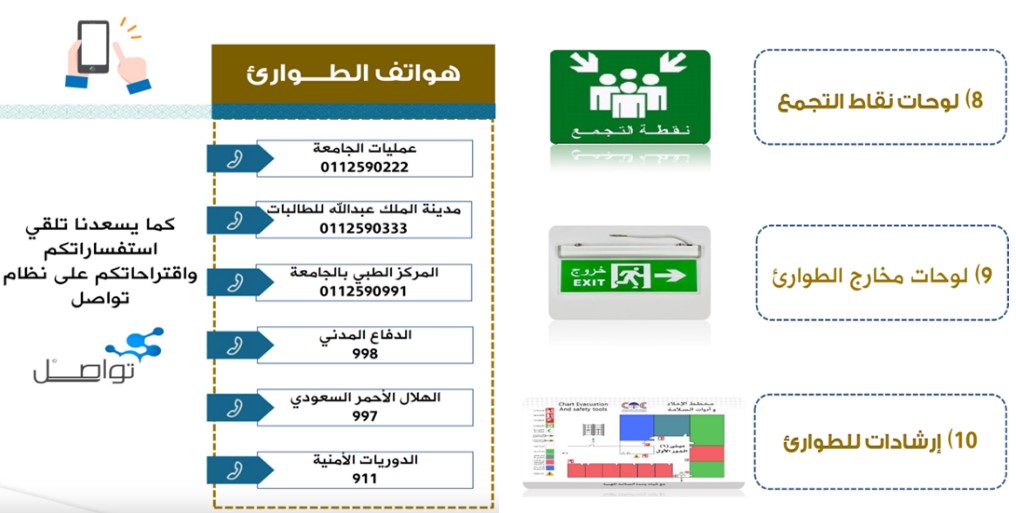
The University
has incorporated practical training and virtual evacuation plans into its
educational programs in cooperation with the Civil Defense, with the
participation of relevant departments such as Technical Affairs, Media, and the
University Medical Center. These
activities included emergency plans, fire
prevention, handling chemical materials, electrical safety,
and evacuation during natural
or emergency disasters, ensuring the safety
of individuals and facilities. The General Directorate of Security and Safety also issued a University
Safety Manual that promotes a culture of prevention and emergency preparedness.
Security and Safety Organizes an Awareness
Exhibition on World
First Aid Day
The General Directorate of Security and
Safety at Imam
Mohammad Ibn Saud
Islamic University organized an awareness exhibition on Sunday,
September 14, 2025, on the
occasion of World
First Aid Day. The event aimed
to raise awareness about the importance
of first aid and educate university staff on proper ways to deal with emergency
situations, thereby enhancing the university community's readiness for quick
and safe action
in the event of accidents, and emphasizing the importance of possessing
basic first aid skills to save lives.
The exhibition included various awareness activities that comprised simplified
guidance materials, a visual presentation prepared by the Saudi Red Crescent Authority, along
with interactive educational competitions and distribution of symbolic gifts to attendees. This event comes within the
University's efforts
to spread health
awareness and promote
a safe university
environment, by empowering
individuals and developing their skills in public health and safety.
Activity Link
Commitment to Carbon Neutrality:
The
University announced its commitment to reducing carbon emissions within its
sustainability strategy, through improving energy efficiency and sustainable resource management. The University participated in the Saudi Green
Initiative Day (March 27, 2024)
through tree-planting activities, environmental awareness, and energy
conservation campaigns, in support of Saudi
Vision 2030.

"Green Education" Forum at the University
The College of
Education at Imam Mohammad Ibn Saud
Islamic University organized an event titled
"Green Education and
Universities in Light of Saudi Vision (and Saudi Green Vision 2030)." The goal of this activity is
to increase awareness among faculty members and students about the importance of sustainability, and to integrate concepts of green
education and climate action
into academic and educational programs.
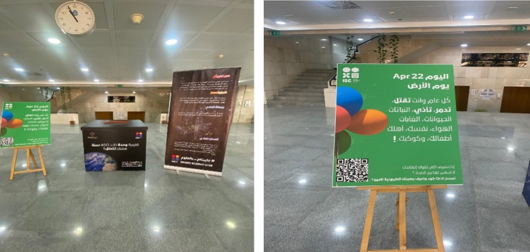
Earth Day Celebration
On the occasion
of "Earth Day," the
College of Sciences – represented by the
Clubs Unit – organized an introductory corner as part of its student
activities, on Sunday, 23/02/2025M,
in the college lobby. The corner
included an introductory brief about Earth Day and its history, in addition to
highlighting the origin
of this global
event and the reasons for celebrating it annually, and its impact on students and society.
Activity Link
Positive Impact on Students and Society
These initiatives
achieved a wide positive impact, contributing to raising the
awareness of students and
the community about climate change and sustainability
issues, and providing them with practical skills in disaster management and
sustainable practices. They also enhanced community confidence in facing
climate challenges and established a culture of collective cooperation towards
a more sustainable future. Furthermore, the University's efforts align with the National
Environmental Strategy (2018) launched by the
Ministry of Environment, Water
and Agriculture, which
includes an institutional framework and a long-term implementation plan. The University has also integrated national response
plans for chemical and biological
incidents into its safety protocols, enhancing coordination with various government agencies in emergency situations.Conclusion
Through its
educational, research, and awareness initiatives, Imam Mohammad Ibn Saud
Islamic University affirms its effective commitment
to supporting the achievement of the thirteenth goal of the Sustainable Development Goals in Saudi Arabia:
Climate Action. The University has given great attention to integrating climate
change issues into its academic
programs, launching workshops, lectures, and educational
exhibitions that contribute to raising the awareness of students and
the community about
the importance of environmental protection and preparedness to face climate disasters. It has also adopted distinctive environmental projects, such as participating in the Saudi
Green Initiative and developing energy rationalization and resource management
programs, reaching towards carbon neutrality,
in full alignment with Saudi Vision
2030 and national
climate strategies.
Thus, the University
stands out as a leading institution in linking its educational mission with
sustainability and climate action issues, instilling environmental and social
responsibility values in its students, thereby contributing to preparing an
aware generation capable
of leading future
efforts towards
a more sustainable and safer environment for future generations.