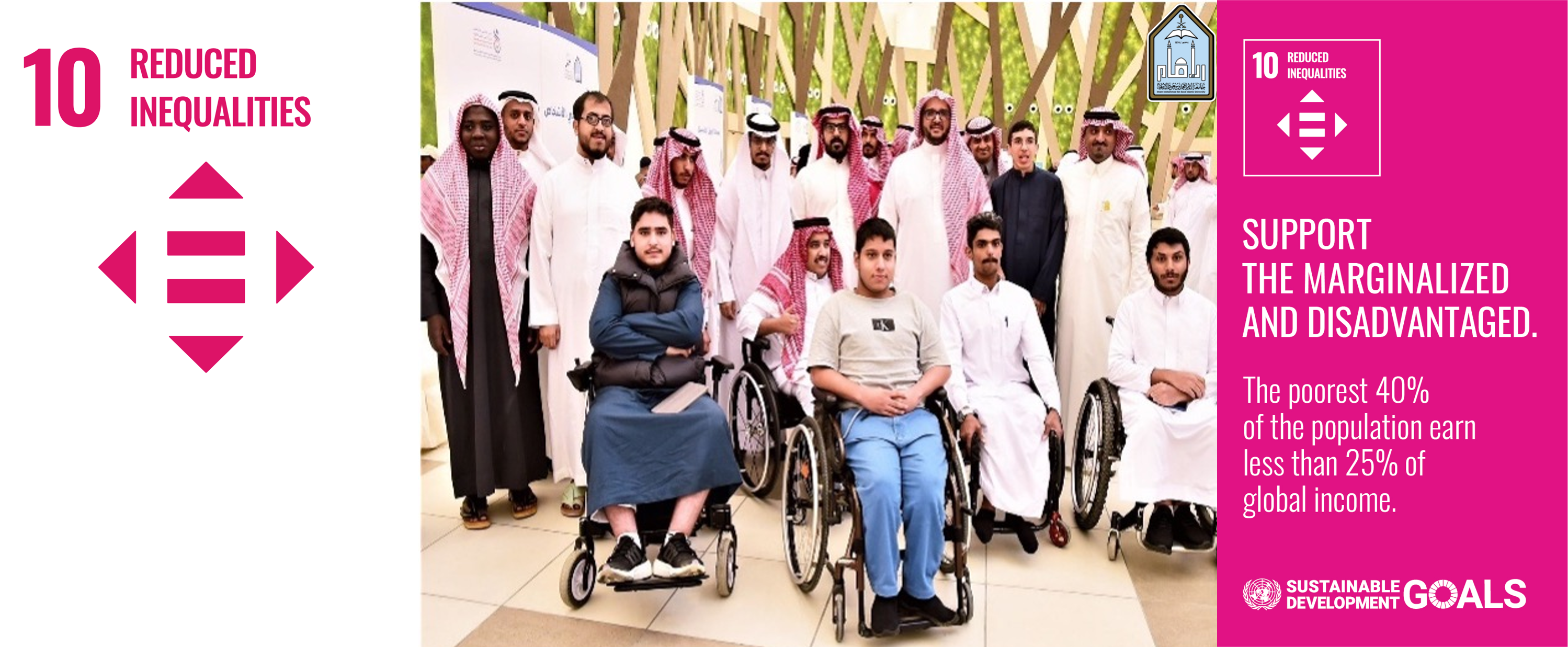
Executive Summary:
The tenth Sustainable Development Goal (SDG 10) aims to reduce inequalities within and among countries and is a key indicator in the Times Higher Education Impact Rankings, measuring higher education institutions' commitment to achieving the principles of justice and equality. This goal aims to promote the social, economic, and political inclusion of all segments of society, including women, people with disabilities, migrants, and marginalized groups, by ensuring equal opportunities and reducing disparities in income and treatment. Universities' contribution to achieving this goal includes adopting clear anti-discrimination policies, providing support to groups in need, providing equal educational opportunities for international students and students with special needs, and implementing initiatives that promote a fair and inclusive university environment. This approach represents an institutional commitment to building a knowledge society based on the principles of equity and sustainability. Goal 10 | Department of Economic and Social Affairs
The Sustainable Development Goals, particularly Goal 10 on reducing inequalities, align with the objectives of Saudi Vision 2030, which seeks to build a cohesive and inclusive society that ensures equal opportunities for all. The vision places special emphasis on empowering underrepresented groups and supporting their integration into national development, whether through promoting social justice, improving access to education and health services, or enacting policies that narrow economic and social gaps. This contributes to achieving comprehensive and sustainable development that places people at the heart of national priorities. Saudi Vision 2030
Therefore, the commitment of educational institutions - such as Imam Muhammad ibn Saud Islamic University - to achieving this goal enhances the vision's efforts towards a knowledge economy based on efficiency and fairness, and embodies the Kingdom's aspirations to enhance Social integration, providing higher education that supports diversity and inclusion, and equal opportunities for all, in line with the objectives of the National Transformation Program and human capacity development.
In support of achieving the tenth goal of the United Nations Sustainable Development Goals (SDG 10), related to reducing inequalities, the Kingdom of Saudi Arabia is working to consolidate the principles of justice and equal opportunity through a package of comprehensive legislation and regulatory policies. The state has also been keen to improve the regulatory environment within higher education institutions to ensure a fair educational and professional environment. The University Affairs Council platform is a prominent example of this approach, as it is a pivotal regulatory tool that contributes to implementing this goal at the level of higher education. The platform seeks to unify policies and procedures within Saudi universities to ensure justice and equal opportunities for all groups, and to reduce disparities based on gender, social background, or economic background. By supporting institutional governance and enhancing transparency in recruitment, admissions, and academic empowerment, this is a practical reflection of the Kingdom's Vision 2030 in its quest to build an inclusive and just society. To view the approved policies and regulations, visit the platform here: cua.gov.sa/regulations
The role of Imam Muhammad ibn Saud Islamic University in achieving the tenth goal (SDG 10)
Imam Muhammad ibn Saud Islamic University attaches great importance to achieving the Sustainable Development Goals (SDGs) adopted by the United Nations as part of the 2030 Agenda. Its institutional vision and mission are aligned with the principles of comprehensive and sustainable development. The university is committed to integrating these goals into its strategic plans and academic, research, and community programs by supporting quality education, empowering women, promoting innovation, preserving the environment, and upholding the principles of justice and equal opportunity. The university also contributes to achieving these goals through qualitative initiatives in the fields of scientific research, community service, and national and international partnerships. This reflects its institutional commitment to its role in supporting sustainable development locally and regionally, and confirms its presence in relevant international indicators and rankings, such as the Times Higher Education Impact Rankings.
THE 17 GOALS | Sustainable Development
Imam Muhammad ibn Saud Islamic University embodies its commitment to achieving the tenth Sustainable Development Goal (SDG) of "Reducing Inequalities" through its comprehensive institutional strategy, which focuses on promoting justice and equal opportunity in the educational and academic environment. The university works to implement clear policies to ensure fairness in admissions, academic support, and enrichment programs, without discrimination based on gender, nationality, or social background. These efforts are also linked to the university's vision of building an inclusive and stimulating educational environment that contributes to the empowerment of all segments of society. These directions are in line with the Kingdom's Vision 2030, which seeks a vibrant, just, and equal society and enhances the university's position in global rankings.imamu.edu.sa/Strategic Plan
Imam Muhammad ibn Saud Islamic University actively contributes to reducing inequalities by creating an inclusive academic environment that supports diverse groups, particularly students with disabilities and communities with limited economic backgrounds. The university provides scholarships and financial aid, accessible facilities, and integrated educational programs that enhance access to higher education. It also focuses on promoting gender equality by empowering women through specialized programs and leadership opportunities, in addition to providing technical and advisory support to students with disabilities, while organizing awareness campaigns to promote a culture of inclusion and respect.
In addition, the university implements youth empowerment initiatives through training programs and workshops aimed at developing practical skills, and supports entrepreneurship and student projects to achieve economic empowerment. The university is also committed to cultural and social awareness by hosting events focused on diversity and social justice, while integrating Islamic values into the academic curriculum to promote the concept of social responsibility. The university collaborates with local communities and governmental and non-governmental entities to expand its impact in reducing social and economic disparities at the regional and national levels.
Interconnection with other Sustainable Development Goals
Sustainable Development Goal 10, which aims to reduce inequalities within and among countries, is closely linked to a set of other goals that form the pillars of sustainable development. Persistent societal inequalities threaten sustainable and inclusive economic growth (SDG 8), undermine global efforts to eradicate poverty in all its forms (SDG 1), and contribute to the exacerbation of health problems and rising disease rates due to marginalization and lack of access to healthcare (SDG 3).
Moreover, inequalities exacerbate environmental degradation, particularly in marine and terrestrial ecosystems (SDG 14-15), where the most vulnerable communities are excluded from equitable access to and protection of natural resources. Therefore, truly sustainable development cannot be achieved without addressing the multiple aspects of discrimination and social exclusion, and providing equal opportunities for all in education, care, employment, and community participation, ensuring a more just, equitable, and inclusive future.
THE.ImpactRankings.METHODOLOGY.2024.pdf
Non-discriminatory admissions, anti-discrimination, and anti-harassment policies
The Kingdom of Saudi Arabia places great importance on promoting the principles of justice and equality among all members of society. Combating discrimination—in all its forms and manifestations, whether based on gender, race, social status, or other factors—is a fundamental pillar of national policies. This approach is based on the principles of tolerant Islamic Sharia, which emphasize human dignity, justice, and integration among all members of society and reject any practices that involve discrimination, injustice, or exclusion. This commitment is clearly embodied within the Kingdom's legal and legislative framework. Article 8 of the Basic Law of Governance states that: "Governance in the Kingdom of Saudi Arabia is based on justice, consultation, and equality, in accordance with Islamic Sharia." This reinforces the Kingdom's unwavering commitment to equality among citizens without any form of discrimination. Additionally, labor regulations, protection from abuse, and anti-harassment regulations aim to ensure equal opportunity and social justice for all citizens, without discrimination, whether in educational or employment opportunities. laws.b oe.gov.sa
The Kingdom has also acceded to several international agreements that promote human rights, such as the Convention on the Elimination of All Forms of Discrimination against Women (CEDAW) and the Convention on the Rights of Persons with Disabilities, as part of its global commitment to the principles of justice. Government agencies, including educational institutions, seek to implement these policies through clear practices and mechanisms that ensure equal opportunities for all in admission and access to university seats and job opportunities that ensure a decent life for citizens. They also provide official channels for receiving complaints and programs for empowerment and equality in the work and study environment, thus establishing an institutional culture based on inclusiveness and fairness. Public institutions and universities, including Imam Muhammad ibn Saud Islamic University, are working to develop institutional policies that enshrine the principles of non-discrimination, encourage equality, and establish clear mechanisms for reporting any potential violations, in line with relevant national and international standards.
Non-discriminatory admissions policy
The rules and regulations of Imam Muhammad ibn Saud Islamic University emphasize the principle of complete equality among all students, prohibiting any geographical discrimination in educational opportunities. For example, the university has clarified that its study and examination regulations do not include any clause restricting admission to students from a specific region, ensuring equal treatment for all students regardless of their place of residence or geographical background. This approach reflects the university's commitment to providing equitable educational opportunities for all students and promoting transparency in the admissions process, which contributes to creating an inclusive educational environment that promotes equal opportunities for all applicants.
The university adopts a non-discriminatory admissions policy based on the principles of justice and equal opportunity, consistent with national regulations and educational policies adopted in the Kingdom of Saudi Arabia. As a government institution, the university affirms its full commitment to implementing the regulations and instructions issued by the Ministry of Education and the Council of University Affairs, which ensure that the admissions process is conducted according to objective and transparent criteria based on academic merit, without discrimination on the basis of gender, race, social background, disability, or any other form of discrimination.
The university officially announces admission requirements and procedures on its website and official platforms, outlining the admission criteria for each program, including required grades and necessary documents, ensuring equal opportunities for all applicants. Some policies also consider affirmative action where appropriate, such as providing special programs for students with disabilities or facilities for international students or social groups deserving of support. This is within the framework of compensatory justice, not discrimination, while adhering to the relevant regulations. Deanship of Admission and Registration
This is evident in the University Admissions Guide issued by the Deanship of Admission and Registration, where all applications are subject to objective screening and comparison based on high school diploma (using a weight determined by the college), aptitude and achievement tests, and interviews, if applicable, without any subjective preference. Through its admissions committees and deanships of admission and registration, the university seeks to periodically review policies in line with the Kingdom's approach to achieving fairness, and to ensure that all its policies are publicly available and formally explained to ensure transparency and integrity in the educational process. Undergraduate and Admissions Guide
Imam Muhammad ibn Saud Islamic University is committed to instilling the principles of fairness and institutional transparency by launching an electronic system known as My Rights, a pioneering initiative empowering students to exercise their legal rights. This system allows male and female students to submit academic, administrative, or behavioral grievances and complaints electronically and in a structured manner, in accordance with the university's approved rules and regulations. This reflects the university's commitment to building a fair and stimulating educational environment that enhances student confidence in the educational institution and provides formal and fair channels of communication.
The My Rights system also falls within the university's efforts to develop its digital infrastructure and achieve good governance. This, in turn, contributes to improving the quality of university life, guaranteeing rights, and supporting the national goals associated with Saudi Vision 2030, particularly with regard to governance, justice, and accountability. This system is an example of how technology can be integrated with institutional values to ensure equality and transparency in addressing student issues. es.imamu.edu.sa/L egal System
Anti-discrimination policy
Imam Muhammad ibn Saud Islamic University is a public university in the Kingdom of Saudi Arabia. All its administrative, academic, and organizational policies are governed in accordance with the applicable national laws and regulations. These laws include policies to combat discrimination in all its forms, which fall under the umbrella of general regulations, such as the Basic Law of Governance, the Civil Service System, the Labor Law, and the Anti-Harassment Law, in addition to national and international commitments related to human rights, equality, and ensuring equality and equal opportunities in its academic and administrative environment. This commitment falls within the framework of the state's general policies and is based on several applicable legislative and regulatory systems.
Article 8 of the Basic Law of Governance confirms that: "Government in the Kingdom shall be based on justice, consultation, and equality in accordance with Islamic law." This constitutional provision obligates all government institutions, including universities, to operate in accordance with the principles of justice and equality and to reject all forms of discrimination, whether based on gender, race, social background, or any other factor. The university is subject to the Executive Regulations for Human Resources in the Civil Service, which regulate the affairs of employees in government agencies and stipulate the necessity of achieving equality in employment, promotion, and training, without discrimination. Article 11 of these regulations states that "Nominations for positions shall be made on the basis of merit and entitlement, without unjustified discrimination ."
Executive
Regulations for Human Resources
in Civil Service
Justice,
equality, and non-discrimination |
Ministry of
Human Resources and Social Development
Labor
Law
Code
of
Work Ethics
dedicated to adhering to the
regulations established by the Ministry of Education regarding admission and
registration procedures for government higher education institutions, through
the implementation of the National Unified Admissions Platform for Saudi
Universities. This service allows applicants to be nominated according to clear
and fair criteria that take into account academic competence and merit, without
discrimination based on gender, race, color, or any personal characteristics
unrelated to academic performance.
The
National Unified Admission
Platform
Based on these
laws and regulations, Imam University's anti-discrimination policy, although
not published separately as an "Anti-Discrimination Policy," is implicitly
implemented through its strict application of national
regulations, its institutional commitment to human rights, and its commitment
to providing a fair and inclusive educational and professional environment for
all its members.
Anti- harassment policy
As Imam Muhammad ibn Saud Islamic
University is a public educational institution, it is directly subject to all
national laws and regulations adopted in the Kingdom of Saudi Arabia, including
those related to anti-harassment policies. The Kingdom of Saudi Arabia has
issued a clear anti-harassment law, which was approved by Royal Decree No.
(M/96) dated 9/16/1439 AH, which is the regulatory framework upon which all
government agencies, including universities, rely in setting internal policies
that enhance a safe and just environment. The Anti-Harassment Law prohibits
any statement, action, or gesture with a sexual connotation directed by one
person toward another, which constitutes a violation of their dignity and
freedom. The law aims to protect the individual's privacy, dignity, and
personal freedom, as guaranteed by Islamic law and applicable regulations. Anti-Harassment
Law
In light of this system, Imam
Muhammad ibn Saud Islamic University is committed to creating an educational
and academic environment. Free from any form of harassment or abuse, and
applies what is stated in the national system through regular committees
specialized in receiving complaints, and procedures that preserve the
confidentiality of reports, and ensure protection and justice for all its members.
Diversity and Equality Office
As Imam Muhammad ibn Saud Islamic University is a public educational institution, all of its administrative and organizational systems and regulations are subject to state legislation, which clearly focuses on establishing the principles of justice and equality and preventing all forms of discrimination, including aspects of diversity, equality, inclusion, and human rights. In this regard, the university is guided by national laws, most notably the Basic Law of Governance, which stipulates in Article 8 that "government in the Kingdom of Saudi Arabia shall be based on justice, consultation, and equality, in accordance with Islamic law." laws.boe.gov.sa
Although there is no independent office called the Office of Diversity and Equity, the tasks of promoting inclusion and equality and providing advice on these aspects are distributed among a number of units and centers at the university, including:
1. Psychological and Social Guidance and Counseling Unit (Care Center)
The Psychological and Social Guidance and Counseling Unit (Care Center) is one of the cornerstones supporting the educational environment at Imam Muhammad ibn Saud Islamic University, playing a pivotal role in providing psychological and social support to male and female students. The unit seeks to create a safe and inclusive university environment that enhances students ' well-being and accommodates their diverse needs, while respecting their cultural and social backgrounds and appreciating individual diversity. The unit provides confidential individual and group counseling sessions under the supervision of specialists in the psychological and social fields, enabling students to overcome challenges associated with academic pressures or personal circumstances. The unit also implements ongoing awareness and preventative programs aimed at promoting the concepts of justice, tolerance, equality, and mutual respect, making it one of the most important institutional tools in consolidating the values of inclusion and non-discrimination within the university. Center for Psychological and Social Counseling (E'nayah)
2.
Student Behavior and Discipline Unit
The
Student Conduct and Discipline Unit, affiliated with the Deanship of Student
Affairs, is an active player in promoting behavioral discipline on campus and instilling a culture of mutual respect among students. The unit monitors
student behavior and addresses any violations of university regulations,
including cases of discrimination or abuse. It also receives, studies, and
processes complaints in accordance with approved regulatory procedures, ensuring fairness and transparency. Furthermore, the
unit implements periodic awareness and educational programs to educate students
about their rights and responsibilities, contributing to a safe and stimulating
academic environment that promotes the principles of justice, equality, and inclusion.
Student
Conduct and Discipline Awareness Unit3. Services Center for Persons with Disabilities
Center for Services for Persons with Disabilities at Imam University
aims to ensure equal opportunities for all students with disabilities to fully
and equally participate in various academic programs and university activities.
The Center seeks to provide a supportive and inclusive learning environment
that takes into account the special needs of each student by adapting the
services and facilities provided to align with international best practices in
this field. The Center also works to remove any obstacles that students with
disabilities may face, whether financial, educational, or social, to ensure
their effective participation, academic success, and full integration into
university life. This reflects the university's commitment to the principles of
justice, equality, and empowerment for all. Center
for Services
for
Persons with Disabilities
The tasks of the Center include:
- Providing
preventive guidance, counselling, and academic support (in coordination with
the academic advisor at the colleges) for male and female students with special
needs.
- Preparing and
implementing guidance and counselling programs for male and female students
with special needs.
- Improving the
educational environment for people with special needs.
- Coordination
with departments, colleges, and supporting deanships to serve male and female
students with special needs.
- Identifying
multiple disabilities, their characteristics, and ways to deal with them,
through public awareness.
- Contribute to
conducting studies and research that contribute to developing services provided
to people with special needs.
- Activating the
integration of students with special needs in all activities.
- Activating the
participation of people with special needs in all activities (cultural, sports,
etc.) inside and outside the university.
- Preparing
periodic reports on the Center's work.
- Participation in periodic events concerned with people with special
needs.
- Preparing and implementing plans for the Special Needs Services
Center.
- Preparing and implementing guidance and counselling programs for
male and female students with special needs. Center
for Persons with Disabilities
Imam
Muhammad ibn Saud Islamic University's practices align with the government's
efforts to achieve the goals of Saudi Vision 2030, particularly those related
to women's empowerment, achieving social justice, and expanding inclusiveness
in higher education. The university also aligns with the United Nations'
Sustainable Development Goals, particularly SDG 5 Gender Equality, SDG 10,
which is Related to reducing disparities, through its various initiatives that focus on supporting diversity and equality, providing
equal opportunities for all students, and ensuring a fair and safe educational
environment that enhances the participation of all segments of society in the
educational process.Services
and supports for people with disabilities
The Kingdom of Saudi Arabia is making
significant efforts to promote the rights of persons with disabilities and
provide them with support and services that guarantee them a dignified life and
effective participation in society. This is in line with the Kingdom's Vision
2030, which emphasizes the importance of comprehensive empowerment for all
segments of society. The Kingdom has launched several national initiatives in
this area, most notably the "Comprehensive Access Program" of the
Ministry of Municipal and Rural Affairs and Housing, which aims to prepare the
urban environment to be accessible and safe for persons with disabilities. The
Royal Commission for Riyadh City announced the launch of the Comprehensive
Access Program for Persons with Disabilities for the city of Riyadh, which aims
to provide an urban environment that allows persons with disabilities, both
residents and visitors, to access, move around, and engage in various
activities with ease and independence.
Universal Accessibility Program for Persons with
Disabilities
“National Transformation
Initiatives Bank” platform contains: The Ministry of Human Resources and Social
Development maintains an interactive database containing a series of planned or
ongoing initiatives within the National Transformation Programs. These
initiatives aim to improve the quality of community services and promote social
empowerment nationwide. These initiatives include empowering individuals,
particularly people with disabilities, through initiatives such as
"Creating a National Strategy for Persons with Disabilities,"
developing volunteer work, supporting non-profit organizations, and programs to
support women in the employment qualification program. Initiatives are
classified according to the targeted sector, making it easier for governmental
and non-governmental entities to view, benefit from, and coordinate
effectively, in line with the goals of Vision 2030. To transform the economy
and society in more expansive and inclusive ways.
National
Transformation Initiatives
Bank | Ministry of Human Resources and Social Development
The
Ministry of Human Resources and Social Development in the Kingdom also provides
integrated and comprehensive services to persons with disabilities, including
financial assistance aimed at supporting their living stability, providing
prosthetic devices that contribute to improving their quality of life, and
vocational rehabilitation programs that enhance their opportunities for
integration into the labor market. The Ministry also supports the establishment and operation of
daycare centers and specialized training centers, ensuring the provision of
advanced services that address their needs and support their empowerment in
various aspects of life. Empowerment
of Persons with Disabilities
In addition to the above, the
Kingdom of Saudi Arabia affirms its unwavering commitment to the rights of
persons with disabilities by issuing the law on the Rights of Persons with
Disabilities, which is an important legislative pillar in the process of
promoting equality and social justice. This law aims to protect the fundamental
rights of persons with disabilities and ensure that they are not subjected to
any form of discrimination based on disability, while emphasizing the provision
of reasonable accommodations that guarantee their full and effective
participation in various areas of life. This includes their right to inclusive
education, equal opportunities in the labor market, and access to quality and
efficient health and social services. This law embodies the national drive
towards achieving inclusiveness and empowerment, in line with the Kingdom's
Vision 2030 and the Sustainable Development Goals. It also reflects the state's
commitment to promoting human dignity and instilling the values of justice and
equality in all policies and practices. Law
on the Rights of People with
Disabilities.
As part of its ongoing commitment to supporting and empowering
persons with disabilities, the government established the Authority for the
Care of Persons with Disabilities, an independent government entity dedicated
to promoting the rights of this group and ensuring they have equal
opportunities in various areas of life. The Authority seeks to develop national
policies related to disability and to monitor the implementation of programs
and initiatives that ensure the social, economic, and educational empowerment
of persons with disabilities, in coordination with various government and
private entities. The Authority is also responsible for monitoring the
commitment of relevant entities to implementing relevant standards and
legislation, and proposing policies and regulations that ensure an inclusive
and supportive environment. General
Authority for the Care of Persons with Disabilities
The
Commission's role is further enhanced by the issuance of the Authority for the
Care of Persons with Disabilities System, which was officially approved. This
system defines the Commission's duties and regulatory and executive powers, and
establishes an effective legal framework that reflects the state's drive to
achieve the principles of social justice and inclusiveness. This system is an
important legislative pillar that supports the Kingdom's efforts to achieve
Vision 2030 and related sustainable development goals. Regulation
of the General Authority for the Care of Persons with Disabilities
The Kingdom of Saudi Arabia places great importance on empowering
persons with disabilities, in line with the objectives of Saudi Vision 2030,
which aims to build an inclusive society that ensures equal opportunities for
all its members, integrating persons with disabilities into all aspects of
life, particularly in the higher education sector. This vision reflects the
Kingdom's commitment to human rights principles and improving the quality of
life by creating a supportive educational environment that meets the needs of
all students without discrimination and providing appropriate facilities that
help them fully realize their potential and capabilities.
The
Ministry of Education also works to empower people with disabilities in
university education through a series of programs and facilities. The
methodology began with offering a preparatory year for the beneficiary group,
the first of its kind in the Arab world, followed bythe formation of specialized committees at universities—such as the
Scientific Committee, the Curriculum Committee, and the Support Services
Committee—to establish standards and conditions for accepting and training
people with disabilities, making these programs reference centers of expertise
in the field of preparing and qualifying educational and relevant personnel.
Imam Muhammad ibn Saud Islamic University has sought to embody
national trends in serving and empowering people with disabilities, based on
its academic and humanitarian vision and in line with the goals of Saudi Vision
2030, which aims to build an inclusive society that excludes no one. These
efforts have been translated into reality through the establishment of the "Center
for Services for Persons with Disabilities, " one of the university's most
prominent institutional initiatives to achieve the principle of comprehensive
justice in education. Law
on the Rights of Persons with Disabilities.
This Center is considered the cornerstone upon which the university
has relied in building an inclusive educational environment that takes into
account individual differences and ensures that students with disabilities can
access academic resources and university services with ease and independence.
The Center's role is not limited to providing support and logistical services,
but extends to developing internal policies and coordinating efforts among
various academic and administrative units to ensure an effective response to
the needs of this group.
Imam Muhammad ibn Saud Islamic University participated in the
celebration of the International Day of Persons with Disabilities, which was
held on December 10. 2024, as part of its commitment to achieving the
Sustainable Development Goals, particularly Goal 10 on reducing inequalities.
This participation embodies the university's tireless efforts to support and
empower persons with disabilities by creating an inclusive learning environment
and raising community awareness of their issues and rights. The celebration,
held under the patronage of His Excellency the University President and
organized by the Deanship of Student Affairs, included multiple activities with
the participation of 29 entities from both on and off campus, including
associations specializing in the care of people with disabilities. Activities
included awareness exhibitions, training courses, field experiences, and entertainment
and cultural segments, reflecting the university's commitment to activating
broad community partnerships and expanding access to equal opportunities and
services. This event serves as a practical model of the university's strategic
efforts to promote inclusion and equality within its academic institution. units.imamu.edu.sa
Accessible facilities for people with disabilities
The university has provided accessible and integrated facilities
that cater to the needs of people with disabilities, as part of its deep
commitment to implementing the principles of social justice and achieving
inclusiveness in its academic and service environment. This approach aligns
with the national aspirations set forth in Saudi Arabia's Vision 2030, which
emphasizes the importance of empowering all segments of society and ensuring
equal educational opportunities at all academic levels, including higher
education institutions.
Based on its strategic plan, the university has paid special
attention to equipping its facilities to enable people with disabilities to
safely and independently access all university facilities and services, without
this hindering their full participation in university life. These efforts are
not limited to construction or engineering alone, but also encompass
educational and organizational aspects, reflecting a clear institutional
approach to supporting and empowering this group.
These efforts are manifested through a set of integrated
initiatives and well-thought-out measures adopted by the university across its
various sectors, seeking to achieve an inclusive educational environment that
enables all students to interact and participate effectively, regardless of
their different abilities or special needs. The university has been keen to
develop its infrastructure to take into account the needs of people with
disabilities, by providing dedicated entrances and corridors to facilitate
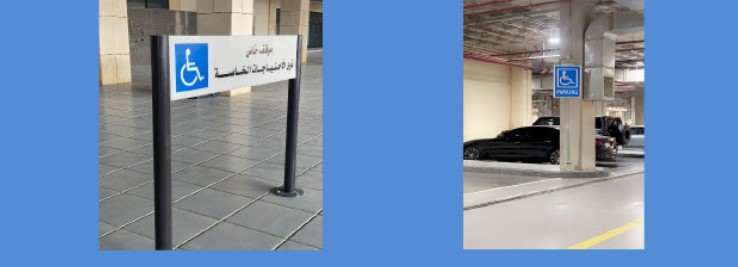
their movement within the campus, in addition to equipping elevators. To
accommodate wheelchair users, parking spaces have been allocated close to academic
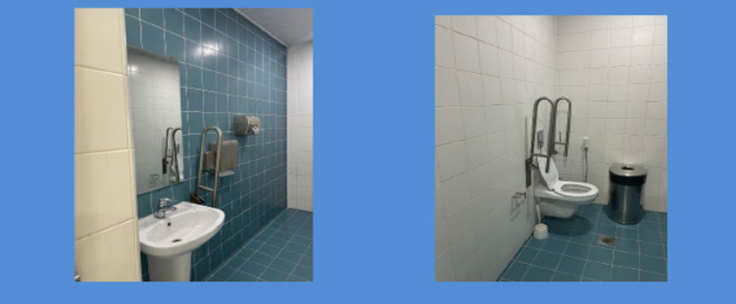
and administrative buildings. The facility also includes restroom facilities
suitable for people with disabilities, underscoring the university's commitment
to providing a safe and accessible learning environment.
The university works to provide classrooms and
educational facilities with equipment that helps students with disabilities
fully integrate into the educational process, such as adjustable tables,
electronic whiteboards, and supportive audio-visual devices, in addition to
providing electronic or printed copies of educational materials in a manner
that suits their needs (such as Braille for the blind or machine-readable
texts).
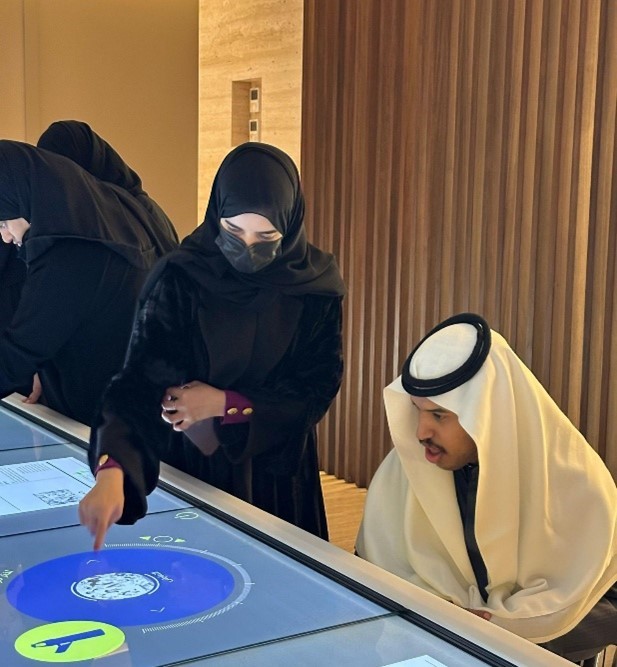
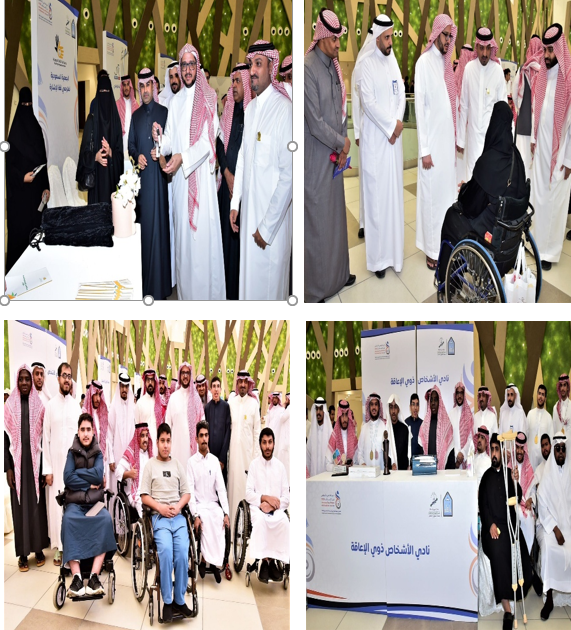
The university participated in the activities of the
International Day of Persons with Disabilities, held in December 2023,
affirming its unwavering commitment to supporting and empowering this group
within the university environment. The university organized a special
exhibition to mark the occasion, which witnessed a remarkable presence from
officials from relevant entities, along with representatives from specialized
associations and persons with disabilities themselves. This participation came
within the framework of highlighting the comprehensive facilities provided by
the university, such as designated wheelchair ramps, elevators, and
audio-visual equipment, which contribute to enhancing the independence of
students with disabilities and equalizing their educational opportunities. This
presence and institutional support reflect the university's commitment to empowering
persons with disabilities and their full integration into various aspects of
academic and community life.
International
Day of Persons with Disabilities
Services and access schemes for people with disabilities
Imam Muhammad ibn Saud Islamic University provides distinguished
support to students with disabilities through the Center for Disability
Services, affiliated with the Deanship of Student Affairs, which is dedicated
to empowering students with disabilities academically, socially, and
psychologically. This support includes academic guidance through specialized
advisors who work in collaboration with various colleges to monitor the study
plan and overcome any obstacles students may face. Educational awareness
programs are also implemented for faculty members and students to raise
awareness about disabilities and ways to address them, ensuring an inclusive
educational environment. The Center also contributes effectively to academic
support and guidance, working in coordination with academic advisors in
colleges to provide comprehensive guidance to students with disabilities,
helping them plan their studies and monitor their performance. This includes
launching awareness programs aimed at raising the level of interaction and
responsibility towards them by faculty and students. Center
for Persons with Disabilities
On the other hand, the university is making tangible efforts to
prepare the university environment to suit the needs of students with
disabilities. In addition to providing accessible facilities, it works to
provide distinguished services to support their academic progress. Regarding
exams, the university has provided a mechanism that ensures consideration of
Students with disabilities are offered accommodations, such as extended time,
alternative testing formats (including Braille or audio), and technical support
depending on their disability. This procedure is managed in coordination
between the colleges and the Disability Services Center, ensuring equal
opportunities for assessment and academic success. Guide
to Services for Persons with Disabilities
The Executive Regulations of the General Administration of Library
Affairs at the University affirm the university's commitment to providing
comprehensive library services accessible to all categories of beneficiaries,
whether university members or external members, without any form of
discrimination based on race, religion, gender, or physical disability. This
commitment is evident in several regulatory articles, most notably Article
Seven (Paragraph Four) of Chapter Three, which explicitly stipulates providing
the necessary facilities for people with disabilities to enable them to fully
benefit from library services. Article Nine also stipulates that lending
services are inclusive of non-university beneficiaries without reference to any
restrictions related to their personal backgrounds, while specifying loan
categories, number of books, and loan periods fairly. Regarding fines and
penalties, Article Eleven stipulates that policies apply to all borrowers,
including non-university members, in the event of lost or damaged books,
without discrimination or exceptions. These provisions reflect the university's
commitment to the principles of justice and equal opportunity, and to fostering
an inclusive knowledge environment that supports open access to information.
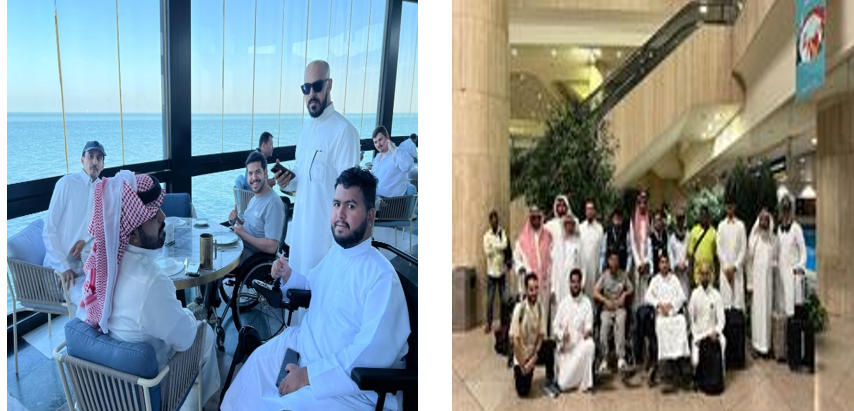
Regarding activities and events, the Center for
Services for Persons with Disabilities is organizing various events during the
years 2024 and 2025, including a workshop for teaching sign language and a
recreational trip to the Eastern Province with appropriate accompaniment for
students with disabilities, thus confirming the university's commitment to
empowering them socially and culturally.
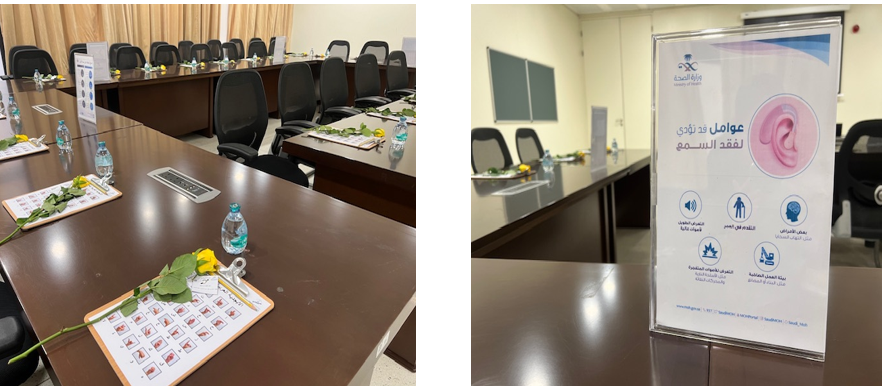
The Center organized a training workshop entitled "Sign
Language," targeting the Center's female staff and students. The workshop
included a combination of theoretical explanation and practical application,
and discussed several topics, most notably the definition of sign language, its
history, and learning methods, in addition to communication methods using
signs, facial expressions, and body movements. The workshop also covered sign
language letters and numbers, conversational terminology, and relevant educational
platforms. The workshop emphasized the importance of sign language in enhancing
communication with the deaf and mute, and its role in supporting mental and
social development, especially among individuals with autism spectrum disorder.
units.imamu.edu.sa
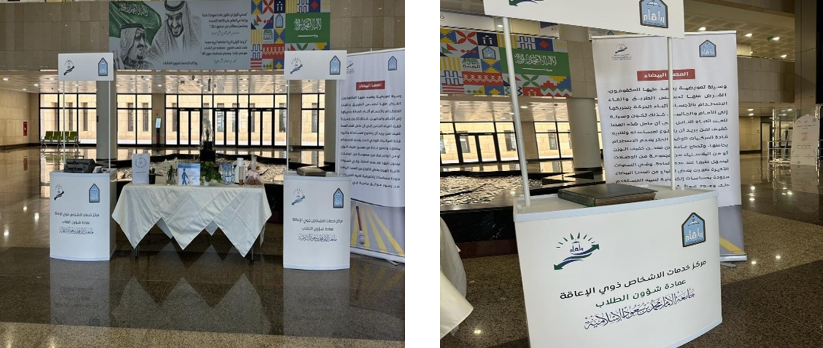
As part of Imam Muhammad ibn Saud Islamic University's efforts to
enhance support for people with disabilities and enable them to fully
participate in university life, the Disability Services Center, affiliated with
the Deanship of Student Affairs, organized an event under the slogan "Our
Will, Our Vision," coinciding with International White Cane Day. The event
aimed to introduce students to the importance and role of the white cane as a
tool that assists blind people in independent mobility and self-awareness in
their surroundings. It also included workshops to teach Braille and raise
awareness of its benefits in developing reading and writing skills among blind
students. This consistent initiative reflects the university's commitment to
building an inclusive university environment that contributes to enhancing the
independence and capabilities of students with disabilities. imamu.edu.sa
The Center for Persons with Disabilities at Imam Muhammad ibn Saud
Islamic University continuously cooperates with the Center for Psychological
and Social Counseling (Enaya) and the Deanship of Student Affairs to provide
comprehensive psychological and social support to students with disabilities.
The Center also actively participates in student activities, including
orientation meetings for new students. During these meetings, students are
introduced to the available services that meet their academic, psychological,
and social needs, contributing to a supportive university environment that
ensures their full integration and success within the university. units.imamu.edu.sa
The university also pays special attention to facilitating digital
access for people with disabilities, having incorporated the "Munir "
tool as a technical tool to improve accessibility and ensure that educational
platforms and digital content are accessible to all users, including those with
visual and hearing impairments. The "Munir" service is a technical
tool that aims to improve accessibility to website content and electronic
services for people with disabilities and the elderly. This tool offers over 35
features, including dyslexia support, and provides advanced assistance modes
for over 8 specific disabilities. Muneer complies with the Web Content
Accessibility Guidelines (WCAG) 2.0 and accessibility standards, improving the
experience for users with special needs. This tool can be found on all pages of the university's official website.
Undoubtedly,
the university, as a public university, complements the Ministry of Human
Resources and Social Development in the services and support it provides to
persons with disabilities. This is achieved by offering a package of
legislative, enabling, and regulatory services aimed at empowering and
integrating them into various aspects of life. These services provided by the
Ministry include the issuance of traffic facilitation cards and electronic
"disability cards," the provision of prosthetic devices, and
financial assistance programs, in addition to employment and vocational
rehabilitation support through the "Tamkeen" and "Tawafuq"
programs. The Ministry, in cooperation with the Authority for the Care of
Persons with Disabilities, also organizes relevant national policies and
supervises the implementation of facilities in the urban and digital
environment, in accordance with Universal Accessibility standards.
The
final report of the Deanship of Student Affairs at Imam Muhammad ibn Saud
Islamic University highlights a clear and comprehensive interest in supporting
students with disabilities and providing services to them. A number of
specialized programs and services have been provided to enhance their
integration into the university environment. The Center for Services for
Persons with Disabilities has provided its services to a large number of
students. The Center served male and female students from various colleges,
including those with visual, hearing, and motor disabilities, as well as
autism, multiple sclerosis, learning difficulties, and attention deficit. The
Center covered 14 types of disabilities across 10 colleges, demonstrating the
breadth of support provided and the diversity of beneficiary groups.
Collaboration was also established with several relevant entities, such as the
Sharaka Association, the Al Noor Institute for the Blind, and the Tawasul
Association for Assistive Technology, enhancing the quality and integration of
services.
Also distinguished
itself by organizing qualitative training programs targeting families of people
with disabilities, the most prominent of which are courses in family
counseling. Diagnosis,
psychological resilience, trauma coping techniques, and mindfulness demonstrate
a holistic approach to dealing with people with disabilities by supporting them
and their family environment. Students with disabilities also participated
actively in a number of activities, including visits to the King Abdulaziz
Center for National Dialogue and the Authority for the Care of Persons with
Disabilities. These efforts culminated in the participation of university
students in the Kingdom's Athletics Championship for People with Disabilities,
achieving outstanding results. This confirms the university's commitment to
empowering people with disabilities academically, athletically,
psychologically, and socially. Deanship
of Student
Affairs annual report
The Disability Services Center at
Imam Muhammad ibn Saud Islamic University plays a key role in supporting the
university admission process for students with disabilities, through direct and
regular coordination with the Deanship of Admissions and Registration. The
Center carefully examines the disability circumstances of each applicant, with
the aim of identifying the type of disability and its potential impact on
academic performance, and determining the extent to which the condition aligns
with the requirements of various university programs and majors. This is done
within a framework of individualized care and objective assessment, ensuring
fairness and equal opportunity in the admissions process. The Center also
prepares official reports and recommendations that are submitted to the
relevant authorities within the university to support admission decisions and
specifically address the needs of these students. This contributes to creating
an appropriate and sustainable educational path for them from the moment of
admission until their actual integration into university life. This joint
effort between the Center and the deanship reflects the university's full
commitment to implementing the principle of inclusivity and promoting the
participation of all segments of society in higher education.
The Center also accompanies students
during the application process, providing personalized guidance that includes a
simplified explanation of admission procedures and close monitoring of the
application status until the results are announced. It also coordinates with
relevant colleges to ensure that students are admitted in a manner that meets
their academic and professional needs. This integration between the Center and
academic institutions reflects the university's deep commitment to empowering
people with disabilities and providing fair and equal educational opportunities
that ensure their effective and successful participation in university life.
The Disability Services Center
contributes to implementing academic integration standards after a student is
admitted by developing an individual support plan tailored to the type of
disability and the student's specific needs. This plan includes allocating
appropriate study facilities that allow students easy and comfortable access to
classrooms, laboratories, and other university facilities. It also facilitates
course registration procedures in coordination with academic departments,
ensuring flexibility that suits the student's circumstances. The Center also
ensures the provision of necessary assistive tools, such as technical devices
and adapted teaching aids, and even sign language interpreters when needed, to
ensure equal access to information. These procedures are implemented in
partnership with colleges and student affairs entities, within the framework of
institutional cooperation that seeks to create an inclusive and comprehensive
educational environment that enables students to achieve academic excellence
and fully participate in university life. Center
for Persons with Disabilities
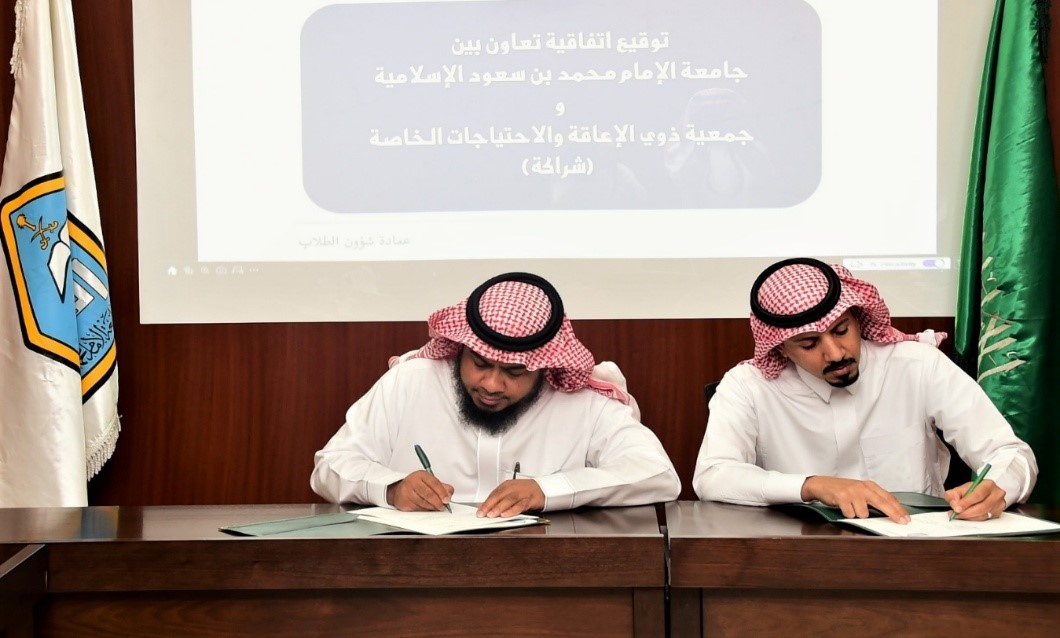
Furthermore, on May 25, 2023, the
Center for Disability Services at Imam Muhammad ibn Saud Islamic University
signed a strategic memorandum of cooperation with the Partnership Association
for People with Disabilities and Special Needs, in the presence of the Dean of
Student Affairs and the Association's Executive Director. This partnership aims
to build an effective collaborative network with community institutions inside
and outside the Kingdom to provide a supportive environment for people with
disabilities and achieve full integration through rehabilitation, vocational,
and training programs that enable beneficiaries to acquire practical skills for
social and professional integration. It also seeks to position the university
as a leading center for providing integrated expertise and programs with the
support of distinguished partners in the field of people with disabilities.
This reflects the Center's commitment to enhancing institutional support and
organizing professional programs to hone students' skills and open broader
horizons for academic and professional integration. ima mu.edu.sa
The university also signed a
memorandum of understanding with the Authority for the Care of Persons with
Disabilities, with the aim of enhancing knowledge exchange and increasing the
acceptance of persons with disabilities in academic disciplines. The memorandum
includes preparing the university's physical and digital environment to comply
with universal accessibility standards, activating awareness-raising
participation in events dedicated to people with disabilities, and leveraging
research and studies conducted by both parties to ensure the empowerment and
integration of people with disabilities into society. It also aims to provide
the Authority with data and statistics on persons with disabilities at the
university as employees and students to enhance services and programs provided
to them. Authority for the Care of
Persons with Disabilities
Financial
and in-kind support for persons with disabilities.
Students with disabilities receive monthly stipends on a par with their full-time peers. They can also benefit from tuition waivers for paid programs, such as distance learning and postgraduate studies, if their disability prevents them from regular study or requires special arrangements. The university also connects students with charitable organizations and government institutions that provide additional support, such as the Authority for the Care of Persons with Disabilities.
The Deanship of Student Affairs at Imam Muhammad ibn Saud Islamic University, represented by the Center for Persons with Disabilities Services, is responsible for disbursing student stipends (disability allowances) to persons with disabilities, in accordance with the criteria specified in the stipend regulations. These stipends are regularly disbursed to students with disabilities who are enrolled in their studies. This step is part of the university's efforts to enhance the academic and social empowerment of this group and to provide financial support that helps alleviate the financial burden and encourages students to continue their education. Students with Disabilities Eligible for Student Allowances
As Imam Muhammad ibn Saud Islamic University is a public educational institution, it is committed to implementing the regulations and policies issued by official government agencies, primarily the Ministry of Human Resources and Social Development. Based on the Ministry's official portal regarding the empowerment of persons with disabilities, persons with disabilities are entitled to comprehensive support, including financial, in-kind, educational, and rehabilitation support. This support is a legal right guaranteed to them under national regulations, such as the Care of Persons with Disabilities System issued by royal decree.
Guide to Services for Persons with
Disabilities, issued in December 2024, outlines the Ministry's efforts to
provide an integrated package of services aimed at empowering persons with
disabilities and their full integration into society, in line with Saudi Vision
2030 and human rights principles. Services provided to this category include
direct financial support through monthly stipends and the provision of medical
devices and technical aids to meet their daily needs. Services also include
comprehensive assessment and rehabilitation programs through specialized
centers that seek to raise the professional and social competence of
beneficiaries, qualifying them for integration into the labor market. In
addition, facilitation cards such as the "Tasheel Card" are issued, granting
beneficiaries priority in obtaining a number of government services, enrollment
in private daycare centers, the decision to reward university students with
disabilities, and reduced fares for commuters and transportation. This guide
reflects the Ministry's commitment to enhancing the quality of life for persons
with
disabilities and providing a more
inclusive and equitable environment for them. The
Guideline for the Services of the Ministry of Human Resources and Social
Development for Persons with Disabilities.pdf
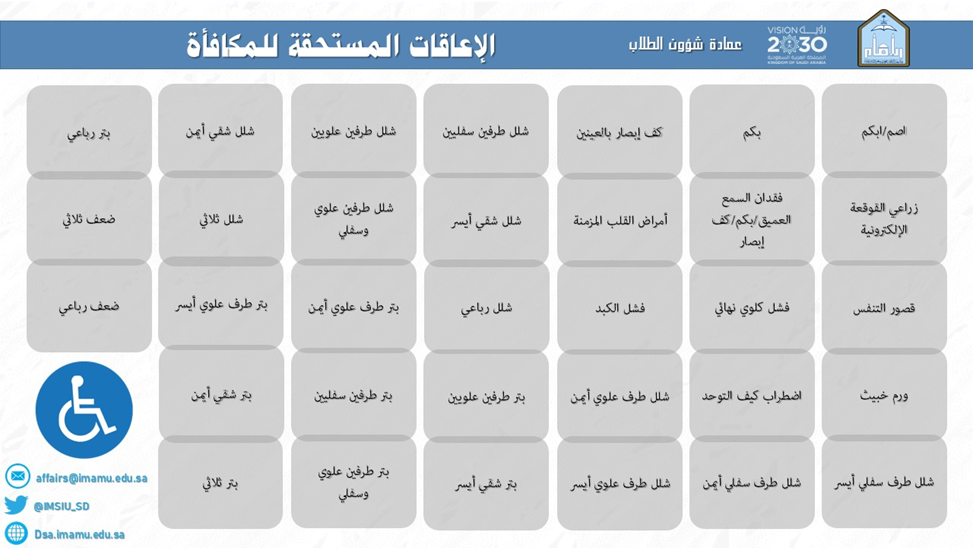
Accordingly, Imam University
students with disabilities are considered among the groups covered by these
rights, and are entitled to benefit from all forms of support provided by the
state, including financial aid, the provision of assistive devices and
equipment, the provision of academic and vocational rehabilitation services,
and the provision of necessary facilities in the educational environment.
Through the Center for Services for Persons with Disabilities, the university
works to activate these rights on campus through direct coordination with
relevant government agencies, primarily the Ministry of Human Resources and
Social Development, in order to achieve the principle of comprehensive integration
and integrated empowerment stipulated in the Kingdom's Vision 2030.
Financial Aid
for Persons with Disabilities
Provision of
Assistive Medical Devices
Access and support for
underrepresented groups
Imam Muhammad ibn Saud Islamic
University plays an active role in supporting, accepting, and employing
underrepresented groups, as part of the Kingdom of Saudi Arabia's overall
national drive toward social justice and equal opportunity. These efforts are
based on the Kingdom's Vision 2030, which constitutes the supreme framework for
government policies. It emphasizes the importance of empowering all segments of
society, including people with disabilities, women, and those with limited
income, to have equal access to educational and employment services. The vision
seeks to build a vibrant and inclusive society that provides a conducive
environment for all citizens without exception. A
Vibrant Society
Based on this vision, the Ministry
of Education has adopted policies that expand the admission base to higher
education institutions and provide academic and social support to groups facing
additional challenges in accessing education. These policies include providing
grants and financial rewards to low-income students, empowering female
students, and providing academic and administrative facilities for students
with disabilities, in addition to cooperating with other government agencies to
ensure comprehensive services. The Ministry is committed to implementing the
principle of equal opportunity as part of its commitment to achieving
educational justice.
reflects a clear institutional
commitment to the concepts of equity, diversity, and inclusion. The plan
includes explicit objectives to "promote educational equity" and
"empower groups with university education needs," in addition to
improving the learning environment by providing facilities and services that
suit all student groups. The plan also includes pathways for collaboration with
local and international entities to support the employment of graduates from
targeted groups and ensure their qualifications for the labor market. Thus, the
university's role is not limited to providing education alone, but extends
beyond that to real empowerment that contributes to building a more just and
inclusive society.
The
Imam Muhammad ibn Saud Islamic University's admissions guide for the year 1447
AH emphasizes that admission requirements are designed to ensure equal
opportunities for all applicants without discrimination, through clear and
transparent criteria that take into account academic competence and merit. The
guide provides admission opportunities for all segments of society, including
students from underrepresented groups such as those with disabilities and
students from remote areas, applying preferential criteria that ensure fairness
and equal opportunities. This policy reflects the university's commitment to
promoting inclusiveness and diversity within the educational
environment, in line with its mission to build an integrated and balanced
knowledge society. Admission
Guide for the Academic Year 1447 AH
the university implements a set of
initiatives and programs aimed at supporting underrepresented groups within its
academic community. For example, the Center for Persons with Disabilities
provides specialized services, including facilitating an accessible study
environment, providing assistive technology devices, sign language
interpretation services, and psychological and academic support, in addition to
coordinating with the Ministry of Human Resources and Social Development to
provide financial and rehabilitation aid. The university also provides monthly
stipends to all regular students, enhancing support for low-income students and
giving them equal opportunities to continue their education.
Center
for Persons with Disabilities
Measure/track applications &
admissions of underrepresented
One of the most prominent categories
that the university pays direct attention to is the category of Students with
disabilities , where the university, through the Center, The Student Affairs
Deanship's Services for Persons with Disabilities systematically monitors their
situation. This includes tracking their numbers and providing appropriate
support from admission through graduation. This includes facilitating learning
environments, providing assistive technology devices, sign language
interpretation services, and providing psychological and academic support. This
is in addition to ongoing coordination with the Ministry of Human Resources.
Human and social development to activate national systems for the rights of
persons with disabilities. Center
for Persons
with Disabilities
As for students from for those with
limited income, the university provides financial support by disbursing monthly
student stipends to all full-time students, without discrimination based on
family income. These stipends are part of the government's support policies for
university students, especially those from disadvantaged groups. Students can
also benefit from government social welfare programs such as social security
and Citizen Account support to cover their educational and living needs.
For female students, the university
has dedicated an integrated learning environment, including independent
buildings and dedicated administrative and academic services, while ensuring
equal opportunities for admission and study between the sexes. Female student
admission rates and academic participation are continuously monitored as part
of the university's commitment to empowering women in higher education, in line
with Saudi Vision 2030.
Considering
Imam Muhammad ibn Saud Islamic University as a governmental educational
institution, it is committed to implementing the regulations. Nationalism that
guarantees fairness and equal opportunities for all applicants without
discrimination, in accordance with the decisions of the Ministry of
Education in the Kingdom of Saudi Arabia. Although the university does not
publish detailed reports on certain groups, such as refugees or ethnic
minorities, it does work
Within the framework of general
admission policies that ensure transparency and equality for all, as long as
they meet the specified academic requirements.
Recruiting
students/staff/faculty from under-represented groups
As a public educational institution,
Imam Muhammad ibn Saud Islamic University is committed to implementing national
policies aimed at promoting diversity and employment equity by attracting and
hiring students, faculty, and staff from underrepresented or under-represented
groups, in line with the general directions of Saudi Vision 2030. The vision
emphasizes the need to enable all segments of society, especially people with
disabilities and women, to have equal access to educational and employment
opportunities, as a pillar of an "ambitious nation" and a
"vibrant society." These directions constitute a frame of reference
for all government agencies, including higher education institutions. Saudi Vision 2030
The university places great
importance on attracting diverse faculty and staff talent, ensuring that its
hiring plans incorporate criteria that consider competency and balanced
representation. The university also implements the principle of "equal employment
opportunity" when advertising academic and administrative positions and
works to remove organizational barriers that may limit access to leadership and
senior positions for certain groups, particularly women and people with
disabilities.
Formation The Imam Muhammad ibn Saud
Islamic University's recruitment portal is an electronic platform and a central
channel for announcing academic vacancies within the university. Managed by the
Deanship of Human Resources, it organizes the recruitment process in a structured
manner, from announcing vacancies to receiving applications, through interviews
and final procedures. jobs.imamu.edu.sa
Counseling and support
programs for students, staff, and faculty from underrepresented groups.
Imam Muhammad ibn Saud Islamic
University's efforts to support underrepresented groups are an extension of
Saudi Arabia's Vision 2030, which emphasizes the importance of empowering all
segments of society and promoting the values of justice and equal opportunity.
The Kingdom has prioritized improving the quality of life and providing
inclusive educational environments that cater to the needs of people with
disabilities and underrepresented social groups. This is achieved by enacting
legislation and implementing supportive national programs across various
sectors, most notably the education sector.
Imam University implements the
Ministry of Education's policies aimed at achieving an inclusive educational
environment. Regulations stipulate that the rights of all students, including
those with disabilities, are guaranteed, and that they are provided with the
necessary psychological, academic, and social support. The university also
bases its strategic plan on a number of institutional values. These values are
translated into practical initiatives, including providing advisory services,
mentoring programs, and facilitating academic and administrative procedures for
underrepresented groups, thus fostering a culture of equity and institutional
inclusion. Annual
Report
The university seeks to facilitate
and support the admission of students from underrepresented groups by offering
scholarships to refugee and low-income students, facilities and services to
students with disabilities, and providing the opportunity for all students from
various segments of society to apply and be admitted through the National
Unified Student Admissions Platform. Applying for Scholarships
The university operates within the
National Unified Admission Platform, which was launched with the aim of
standardizing admission procedures at Saudi universities and achieving the
highest levels of transparency and fairness in the distribution of educational
opportunities. Through this platform, the university receives admission
applications from male and female students to its numerous academic programs
according to announced criteria and accurate electronic comparison, which
contributes to facilitating admission procedures and promoting the principle of
equal opportunity among applicants regardless of their categories. The National Unified Admission Platform
The Enaya Center also provides
comprehensive counseling, psychological, and social services to all university
students and staff of all categories, including developmental, preventive, and
therapeutic aspects, while ensuring complete confidentiality in dealing with
all cases. These tasks are undertaken by a specialized team of psychological
and social specialists. The Center aims to promote psychological and social
harmony, in addition to providing individual consultations and professional
support for cases facing psychological or social difficulties, thus contributing
to the creation of a healthy and safe university environment that encourages
academic and personal success. Center for Psychological
and Social Counseling (Enayah).