Role of Al-Imam Muhammad Ibn Saud Islamic University
(IMSIU) in Achieving Goal 12
Al-Imam Muhammad Ibn Saud Islamic University (IMSIU) actively contributes to achieving Goal 12 by fostering a culture of sustainability on campus, integrating the principles of responsible consumption and production into its operations, and spreading environmental awareness through education and scientific research.
Waste Reduction and Recycling:
- Implementing waste management systems within the campus, including recycling stations and initiatives for converting organic waste into compost.
- Campaigns encouraging students and faculty to reduce waste and participate in recycling programs.
Energy and Water Conservation: - Adopting energy-saving technologies and implementing water rationalization practices to reduce resource depletion.
- Awareness campaigns to educate the university community about the importance of energy and water conservation.
Sustainable Campus Operation: - Integrating sustainability principles into the campus infrastructure, including the use of eco-friendly building materials and renewable energy sources.
- Adopting sustainable procurement policies that favor environmentally friendly products and services.
Education and Research: - Including courses on sustainability, environmental science, and resource management to equip students with knowledge about responsible consumption and production.
- Faculty members and students participating in research on topics such as waste reduction, circular economy models, and sustainable supply chains.
Community Engagement: - The university's efforts extend beyond the campus through community awareness programs that encourage responsible consumption and sustainable living practices.
- Establishing partnerships with local organizations and government bodies to enhance the university's impact on achieving sustainability goals.
The Islamic Perspective on Sustainability: - Integrating Islamic
teachings on moderation and resource stewardship into the
university's sustainability initiatives, with a focus on ethical consumption
and environmental preservation.
- Organizing workshops and events
that highlight the compatibility between Islamic values and global
sustainability efforts.
Cooperation Agreement with Green Solutions Company
Al-Imam
Muhammad Ibn Saud Islamic University
signed a cooperation agreement with Green Solutions Company, which
specializes in sustainable energy and eco-friendly technologies. This agreement aims to enhance
cooperation in design,
training, and awareness, with a special focus on
renewable energy systems and electric vehicle charging technologies. This initiative promotes
the transition towards
clean energy sources and reduces reliance on fossil
fuels, which falls within the scope of responsible consumption and
production of resources.
University
Cooperation Agreement with Green Solutions Company
Workshop on Spending Efficiency
and Financial Planning to Ensure the Sustainability of Saudi Universities
The university organized a workshop entitled “Spending Efficiency and Financial Planning Plan to Ensure the Sustainability of Saudi Universities", which focused on developing effective mechanisms for managing financial and human resources responsibly and sustainably. Although the workshop did not directly address the issue of waste or plastics, it falls under the umbrella of the rational consumption of financial resources and sustainable governance, ensuring optimal utilization of resources
and minimizing waste.
Workshop on Spending Efficiency and
Financial Planning to Ensure the Sustainability of Saudi Universities
Participation in the "Promising Technologies and
Innovations" Exhibition accompanying the Sustainable Partnerships Conference
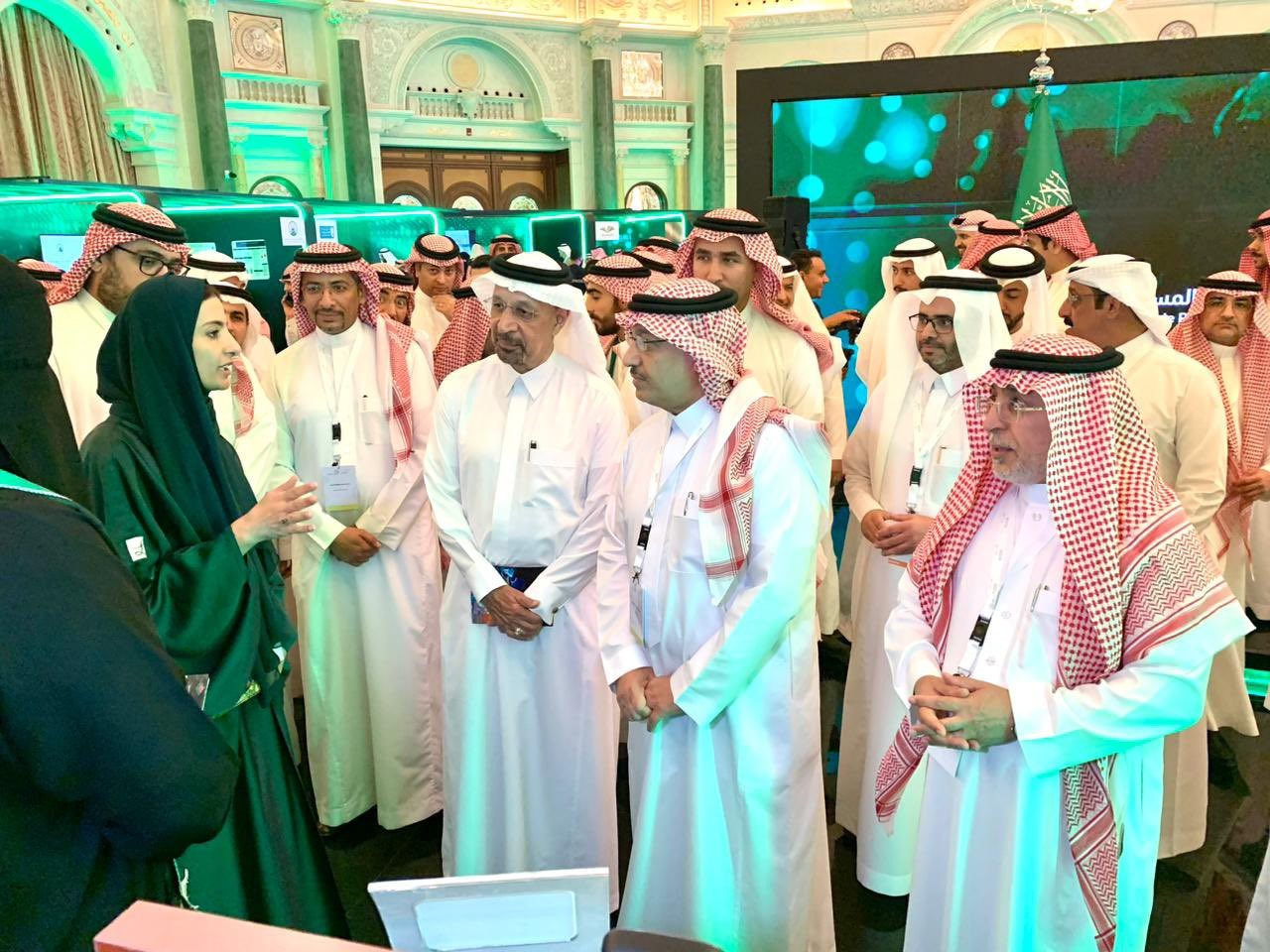
Al-Imam Muhammad Ibn Saud Islamic University participated in the Promising Technologies and Innovations Exhibition accompanying the Sustainable Partnerships Conference. The university presented research models and innovations in various fields aimed at promoting sustainability, some of which are related to resource consumption efficiency and the search for alternative solutions to traditional production patterns. This participation highlights the university's role in innovation and scientific research to support more sustainable consumption and production.
Promising Technologies and
Innovations” exhibition held alongside the Sustainable Partnerships Conference
Al-Imam
Muhammad Ibn Saud Islamic University (IMSIU) actively contributes to achieving Goal 12 by fostering a culture of sustainability on campus, integrating the principles of responsible consumption and production into
its operations, and spreading environmental awareness through education and
scientific research.
Student Affairs Agency
Organizes a Workshop Titled "Recycling Materials"
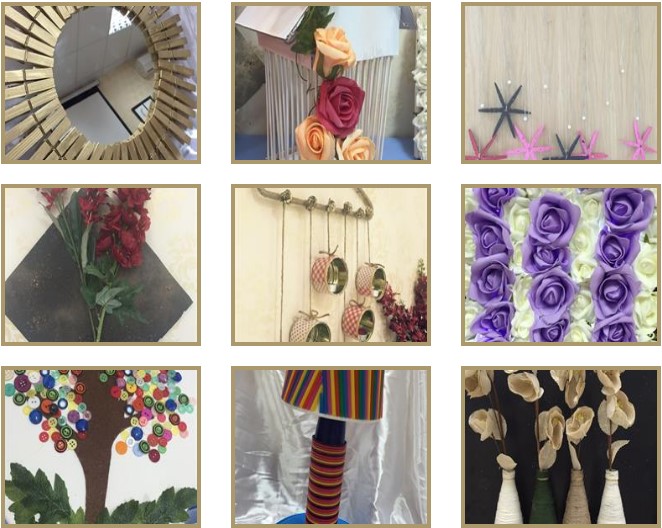
The Deanship of Student Affairs, represented by the Student Affairs Agency, and under the supervision of the Student Activities and Clubs Department, organized a workshop titled "Recycling Materials" in the cloister building, from Sunday 21/04/1437 AH to Monday. The workshop aimed to develop students' creative and artistic aspects through recycling materials and utilizing them in various artistic formations.
News Link
Deanship Agency for Student Affairs Organizes an Artistic Workshop Titled "Material
Composition"
The Deanship of Student Affairs, represented by the Deanship Agency for Student Affairs, and under the supervision of the Student Programs and Activities Department, organized an artistic workshop titled "Material Composition," from Tuesday 21/07/1438 AH to Thursday 23/07/1438 AH. The workshop aimed to educate students about the importance of environmental preservation and recycling used materials, and to learn how to compose materials from the environment to produce reusable artworks.
News Link

Global Green Economy Day
In celebration
of this occasion, the Economics Club at the College of Economics and Administrative Sciences organized the Global Green Economy Day event, in partnership with the National
Company for Environmental Recycling in the field
of electronic waste,
on Monday morning, 15/02/1441 AH, in the
main lobby of building (322). The event lasted for four days and aimed to educate students about the importance
of environmentally friendly disposal of electronic waste and contribute to
raising economic efficiency through producing a clean energy source by recycling that waste. The recycling corner
included practical explanations and information about the company's idea and
the importance of proper environmental recycling of electronic waste, in
addition to allocating containers to collect
electronic waste for recycling and converting it into renewable energy after the
event.
During the
same event, the
Environment Club was
launched at the Deanship of Student Affairs for the female student section. The vision, mission, and
objectives of the club were presented,
which are to strive towards a healthy, pollution-free environment in an aware
society, improve individual behaviors in using harmful materials to the environment, and
educate female students about the harms of environmental pollution. The event focused
entirely on encouraging the adoption of sound
environmental behaviors to promote sustainable development.
News Link
Physics Department in the University City for Female
Students (King Abdullah City) Organizes an Activity on "Electronic Waste" to Improve its Management Efficiency
The Physics
Department at Al-Imam Muhammad Ibn Saud Islamic University organized a cultural
activity titled "Electronic Waste" in cooperation with Saudi DAZ factory
and the Civil
Environmental Recycling Company. The participating
entities provided information and awareness leaflets supporting the activity
under the supervision of Dr. Marwat Al-Zamie
(Physics Department Coordinator and faculty member). Electronic and electrical waste
is considered one of the most dangerous types of waste to the
environment and human health, as it contains more than a thousand different substances, most of which are
toxic components.
When these devices are disposed of randomly, their toxic elements seep into
natural resources such as water and soil, causing severe damage. From this
standpoint, the female students of the Electronics Lab in the Physics Department carried out an awareness
activity and an introductory corner
aimed at raising
awareness about the
dangers of electronic waste.
The campaign aimed to define electronic waste, clarify its harms and problems, and introduce the
environmental impacts of its mismanagement. The female students also expressed their happiness and
gratitude to the Physics Department and the college that gave them the opportunity to participate
and organize. The department expressed its thanks
and appreciation to Ms. Sajy Al-Qasir
and her team for their fruitful efforts in improving the efficiency of
electronic waste management, wishing them success. Special thanks were extended to the department secretary,
Ms. Hana Al-Juma'i, for her tangible
efforts in coordinating such
successful initiatives.
News Link
Green Buildings and Environmental Policies
The university
has adopted sustainable building practices in its modern development projects,
where buildings have been designed
according to eco-friendly standards focusing on energy efficiency and resource conservation. This approach not only reduces
the environmental impact
of the campus but also serves
as an educational model for students
and the community in sustainable architecture and
urban planning. The university also signed an agreement with the National
Energy Services Company (Tarshid) to rehabilitate university buildings and enhance their
energy consumption efficiency.
Link to the
Rehabilitation of University Campus Buildings with the National Energy Efficiency Company
Contribution of the Nutrition
Department to Responsible Consumption
- Providing Healthy
Food: Ensuring the provision
of balanced and healthy meals in
university cafeterias, thereby
promoting healthy food
consumption patterns.
- Nutritional Education: Launching awareness campaigns and
programs to promote healthy
habits among students.
Affordable Nutrition: Offering meals at symbolic
prices to ensure equitable
access to healthy food.Waste Management and Recycling- Commitment to the national waste
management system, including medical and hazardous
waste.
- Cooperation with the National Waste Management Center and licensed companies to enhance recycling efforts.
Innovation and National Participation
The university participated in national exhibitions such
as the Promising Technologies and Innovations Exhibition, where it showcased 12
research products, including projects on:
- Recycling
batteries and plastics.
- Using artificial intelligence in Arabic
linguistic analysis.
Drone technologies for search
and rescue. Thus,
Imam Muhammad Ibn Saud
Islamic University contributes to instilling a culture of sustainability,
promoting research and innovation, and linking its academic and research efforts with Saudi Vision 2030 and the Sustainable Development Goals.Student and Community Engagement The university places great importance on engaging
students and the community in its sustainability efforts. Through various awareness campaigns and student
initiatives, the university encourages the adoption of sustainable consumption patterns. Among its most prominent efforts are:- Student
Projects in Sustainability: The university provides students
with the opportunity to lead
projects focused on waste reduction and promoting eco- friendly practices within the
campus, contributing to student awareness and creating a lasting
impact on their
consumption habits.
Green
Campus Ambassadors: Through the "Green Campus
Ambassadors" program, the university empowers students to play a
leadership role in sustainability, by raising
awareness and advocating for responsible
consumption practices among
their peers.Promoting Sustainability Through Education In addition to its initiatives, the university integrates
sustainability principles into its academic curricula, offering core courses
that support Goal 12 and equip students
with essential skills
to promote sustainable
practices.These
courses include:- Principles
of Microeconomics: Studies consumer behavior and
market efficiency to guide
responsible consumption and production practices.
- Applied Physics:
Promotes the development of sustainable products
and processes that reduce
environmental impact and resource consumption.
- Principles
of Marketing: Helps organizations understand
strategies for promoting sustainable
products and practices in line with ethical considerations.
- Advanced
Accounting: Addresses concepts such as cost
management and financial analysis to support responsible business practices and sustainability.
- Cost
Accounting: Focuses on principles that support
responsible business practices, including waste
reduction and optimized resource use.
- practices,
including waste reduction and optimized resource use.
- Corporate
Finance: Encourages organizations to adopt
sustainable investments and operations that align with
environmental and social
goals.
- General
Microbiology: Highlights sustainable
agricultural practices and food
waste reduction through
the study of microbial contamination.
- Biochemistry: Supports sustainable agriculture and the development of biodegradable plastics while
reducing the use
of hazardous chemicals.
- Organic Chemistry: Contributes significantly to the development of biodegradable materials and reducing the use of harmful chemicals.
Polymer Chemistry: Contributes to the development of sustainable materials and practices.Conclusion From what has been presented, it is clear
that Al-Imam Muhammad
Ibn Saud Islamic University (IMSIU)
plays a pivotal role in supporting and achieving Sustainable Development Goal 12 (SDG
12) related to Responsible Consumption and Production. The
university has successfully integrated sustainability principles into its infrastructure, educational, and research
programs, and has worked to spread environmental awareness among its students and staff through
various initiatives,
workshops, and events.
It has also been keen to implement practical policies for waste management, encourage recycling, reduce
waste, and establish concepts of rational energy and water consumption.At the
academic level, the university has utilized its courses and educational
programs to prepare a conscious generation capable of adopting environmentally and socially
responsible practices, while
empowering students to lead initiatives and projects in the circular economy and sustainability. At the community level, the university's efforts have extended to include
partnerships and awareness activities that highlight the compatibility between
the tolerant values of Islam and global sustainability principles, thereby enhancing
its pioneering role in serving
society and the environment.Therefore, it can be said that Al-Imam Muhammad Ibn Saud
Islamic University's efforts are not limited
to achieving a specific sustainable goal, but actively
contribute to building an institutional and societal culture based on
responsibility and environmental awareness, making it a role model in
supporting Saudi Vision 2030 and enhancing its position in the field of
sustainable development locally and internationally.