Executive Summary :
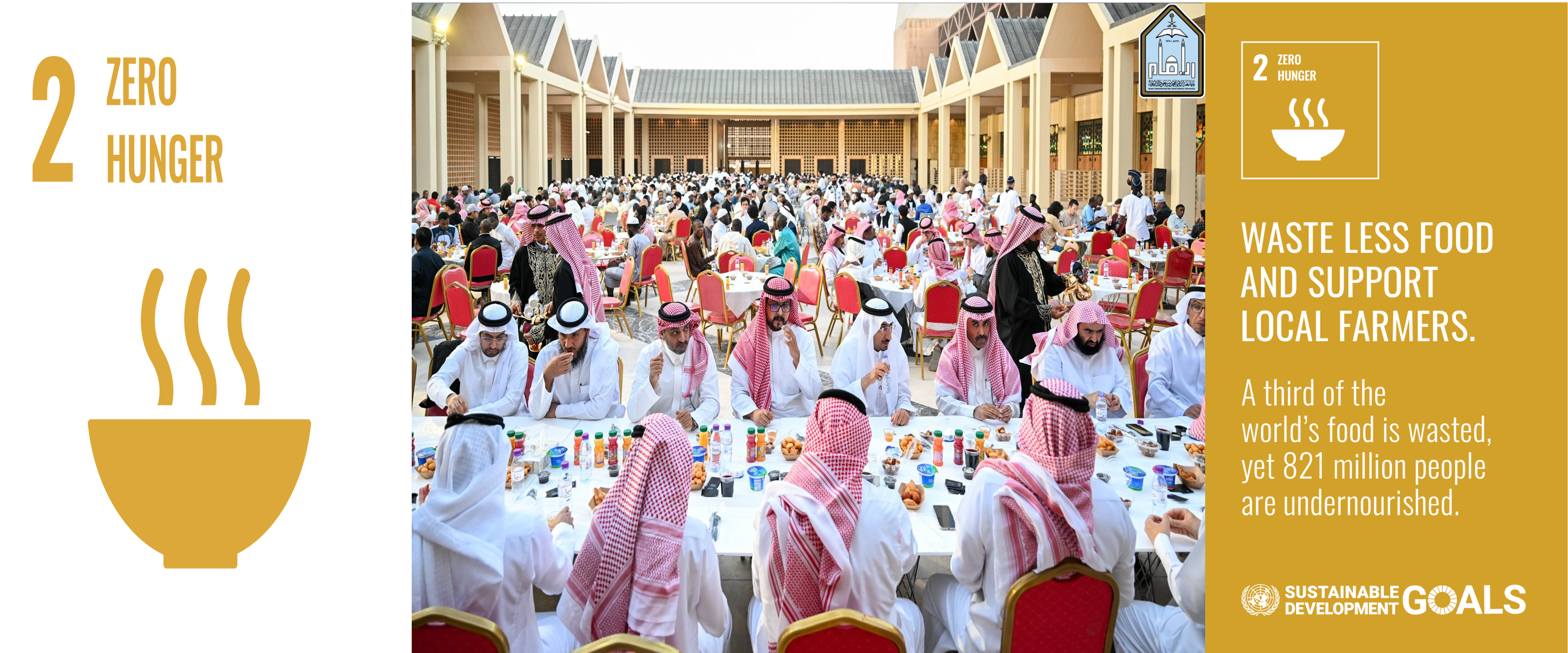
Food security and the fight against hunger represent some of the most pressing global challenges of our time. According to United Nations reports, more than 800 million people worldwide suffer from chronic undernutrition. In this context, the 2030 Sustainable Development Goals (SDGs)—particularly Goal 2: Zero Hunger—serve as a strategic framework to address these challenges. Imam Mohammad Ibn Saud Islamic University stands out as one of the leading academic institutions in Saudi Arabia that has seriously embraced this goal through a comprehensive vision that integrates education, scientific research, and practical implementation.
The university's efforts in this domain are built upon three core pillars:
- Enhancing food security within the university community by providing healthy and affordable meals for students and staff.
- Reducing food waste through monitoring systems and data analysis.
- Supporting local farmers and disseminating knowledge on sustainable agricultural practices.
These efforts are deeply rooted in Islamic values that emphasize gratitude and discourage wastefulness, adding a moral and spiritual dimension to the university's strategy in this field.
National context and Institutuional Role
The university's initiatives align with Saudi Arabia's Vision 2030, which places significant emphasis on achieving food security and environmental sustainability. Given the country's desert climate and limited water resources, food security poses unique challenges. In this context, the university is evolving from a traditional educational institution into a platform for innovation and societal transformation.
Several competitive advantages enable the university to play a leadership role in this area:
- A wide network of partnerships with government entities and the private sector.
- Advanced research infrastructure in agriculture and environmental sciences.
- A large and diverse student body.
- An institutional commitment to integrating sustainability concepts into academic curricula.
This commitment is reflected in the establishment of specialized units such as:
- The Deanship of Scientific Research, which oversees applied research projects in food security.
- The Nutrition Department, responsible for ensuring the quality of meals served on campus.
- The Student Fund, which provides food support to students in need.
Additionally, the university recently launched the “Aoun" system to support international students, including food assistance, demonstrating a holistic approach to addressing hunger within the university community.
Future Vision
The university aspires to transform its campus into a regional model for sustainable food security, not only at the national level but also across the Arab world. Future plans include:
- Establishing a dedicated center for food security.
- Launching a national program to monitor food waste.
- Expanding partnerships with international research institutions.
In conclusion, Imam Mohammad Ibn Saud Islamic University represents a unique model of an institution that integrates its educational mission with social responsibility to address one of the world's most critical issues. Its efforts go beyond food provision to foster a sustainable and values-driven culture that respects resources and ensures future generations' right to safe and sufficient food.
Campus Food Waste Management
Imam Mohammad Ibn Saud Islamic University fully recognizes the importance of food waste reduction as a core component of its commitment to Sustainable Development Goal 2 (SDG 2): Zero Hunger. Although food services on campus are primarily managed by external providers, the university diligently ensures that all operations adhere to sustainability standards.
The university is also acutely aware of the environmental impact of food waste, particularly the methane emissions resulting from decomposing food in landfills. To mitigate this impact, the university has adopted practices aimed at reducing emissions and converting food waste into valuable resources such as organic compost, bioenergy, or animal feed, thereby contributing to a more sustainable food system.
This approach is deeply rooted in Islamic values, which emphasize gratitude and discourage wastefulness. Accordingly, the university actively promotes these principles among students and staff through awareness campaigns and daily practices that foster a culture of respect for food and waste reduction.
Although a comprehensive food waste measurement system is still under development, the university is committed to integrating this practice into its institutional sustainability framework. It aims to establish a transparent mechanism to raise awareness among students, staff, and service providers.
These efforts reflect the university's broader vision of cultivating a responsible campus culture that aligns with both national and global sustainability goals.
Community Food Waste Initiatives
Beyond campus boundaries, Imam Mohammad Ibn Saud Islamic University has launched several local community initiatives focused on food security. These programs have empowered internal communities with practical skills in resource management, encouraging individuals to adopt sustainable practices in their daily lives.
The university's broader societal impact includes reducing food waste in local communities and increasing public awareness of sustainability issues. A notable milestone in this effort is the cooperation agreement signed with the General Food Security Authority, aimed at conducting field research on food loss and waste across the Kingdom.
This agreement seeks to develop innovative solutions to mitigate food waste and enhance national food sustainability. Key outcomes include:
- Raising community awareness.
- Improving food security policies.
- Reducing food waste.
These initiatives are fully aligned with Saudi Vision 2030 and its sustainable development objectives.
Addressing Student Food Insecurity
In its commitment to tackling food insecurity and hunger among students, Imam Mohammad Ibn Saud Islamic University has implemented a range of effective programs through the Deanship of Student Affairs, specifically via the Student Fund, which offers targeted support to students in need.
Among the most prominent initiatives are:
- Family Assistance Program: Provides regular financial aid to students facing difficult economic conditions, helping them meet essential needs, including access to food.
- Marriage Assistance
- Transportation Support
- Eyewear Assistance (Glasses/Contact Lenses)
- Educational Materials Support
- Skills and Specialization Development Grants
Additionally, the fund offers exceptional assistance, including:
- Support for children of fallen service members
- Humanitarian aid for orphans
The Student Fund is one of the university's key strategic tools for delivering financial support and loans to students, as well as funding local and international participation in events through incentive awards and excellence grants. It also covers costs related to training, qualification, travel, and accommodation, thereby fostering a stimulating academic environment and encouraging creativity and positive competition among students.
From a financial sustainability perspective, the Student Fund is distinguished by its financial independence and diversified income sources, which grant it high flexibility in implementing its programs. This makes it one of the main drivers in enriching the university experience and ensuring the sustainable development of student activities and support services.
https://units.imamu.edu.sa/administrations/ssf/PFS/Pages/default.aspx
https://x.com/SsfImamu/status/1908855354651267149
https://units.imamu.edu.sa/administrations/ssf/profile/Pages/default.aspx
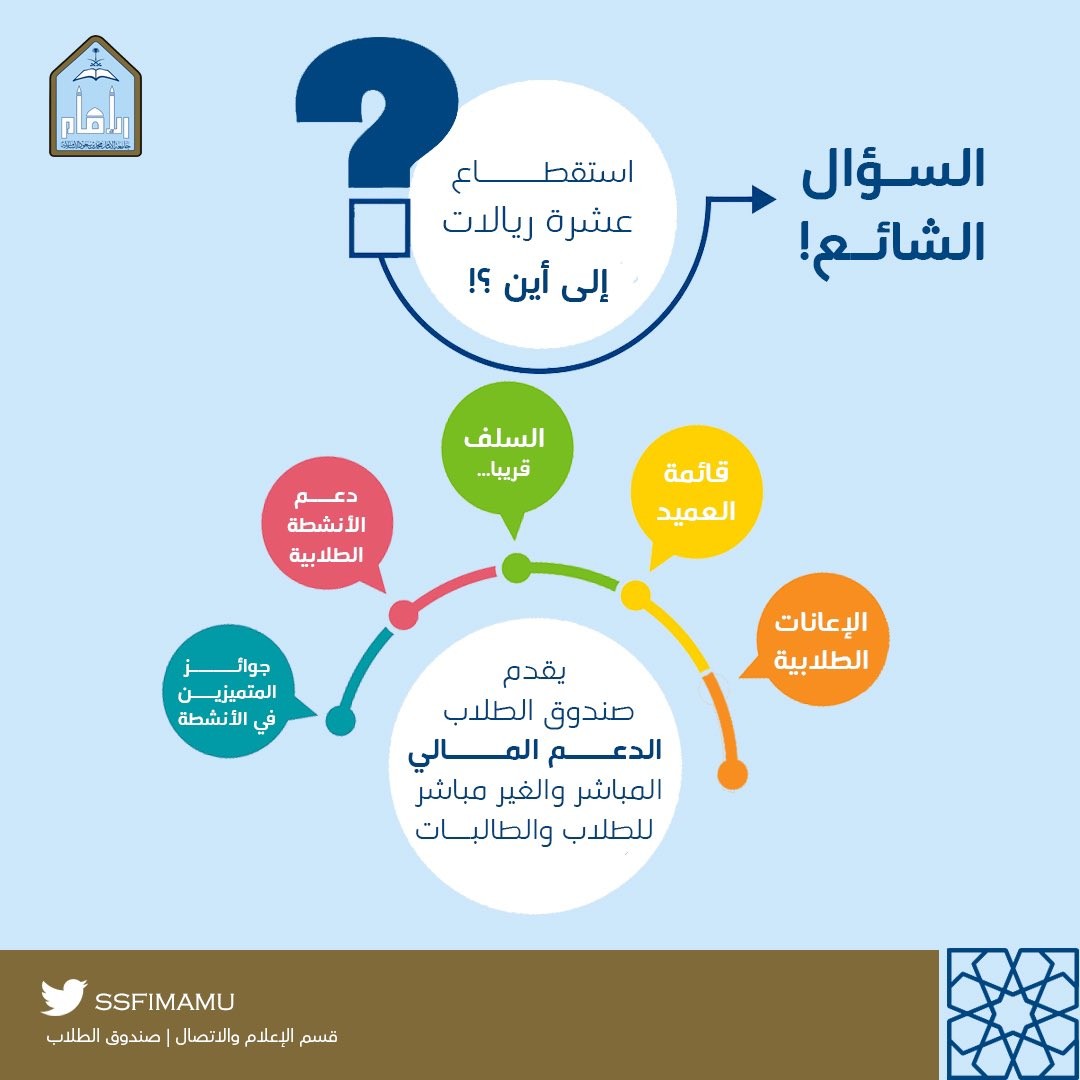
The primary objective of the Student Fund is to provide financial aid and loans to male and female students, in accordance with the regulations governing student funds in universities."
https://www.cua.gov.sa/wp-content/uploads/2023/08/%D8%A7%D9%84%D9%84%D8%A7%D8%A6%D8%AD%D8%A9-%D8%A7%D9%84%D9%85%D9%86%D8%B8%D9%85%D8%A9-%D9%84%D8%B5%D9%86%D8%A7%D8%AF%D9%8A%D9%82-%D8%A7%D9%84%D8%B7%D9%84%D8%A8%D8%A9-%D8%A8%D8%A7%D9%84%D8%AC%D8%A7%D9%85%D8%B9%D8%A7%D8%AA.pdf
Nutrition Services and Student Support
Nutrition Services and Student Support
The Nutrition Department at Imam Mohammad Ibn Saud Islamic University plays a pivotal role in addressing food security on campus. Operating under the Deanship of Student Affairs, the department oversees catering contracts and food services provided to students. Its core objectives include:
- Providing healthy and balanced meals in university-supervised dining facilities.
- Promoting healthy eating habits among students to enhance their nutritional awareness and overall well-being.
- Offering meals at subsidized prices, thereby easing the financial burden on students and supporting their academic journey.
These programs are part of the university's broader commitment to creating a fair and inclusive educational environment, ensuring that students can focus on their academic success without being hindered by living challenges. This aligns directly with Sustainable Development Goal 2 (SDG 2): Zero Hunger and the promotion of food security.
Scholarship Program and International Student Support
As part of its commitment to inclusive and equitable education at the international level, Imam Mohammad Ibn Saud Islamic University offers a distinguished scholarship program for both international and domestic students. This initiative reflects the university's dedication to empowering students from diverse social and educational backgrounds—especially those who are the first in their families to pursue higher education.
The program provides a comprehensive package of benefits that ensures a stable and supportive learning environment, including:
- Subsidized meals
- A monthly financial stipend to help cover living expenses
This initiative contributes to educational equity and expands access to higher education for international students, reinforcing the university's alignment with the Sustainable Development Goals, particularly SDG 4: Quality Education for All.
https://units.imamu.edu.sa/deanships/admission/Pages/Scholarships.aspx
His Excellency the President of Imam Mohammad Ibn Saud Islamic University Launches the “Aoun" System to Support International Students
![]()
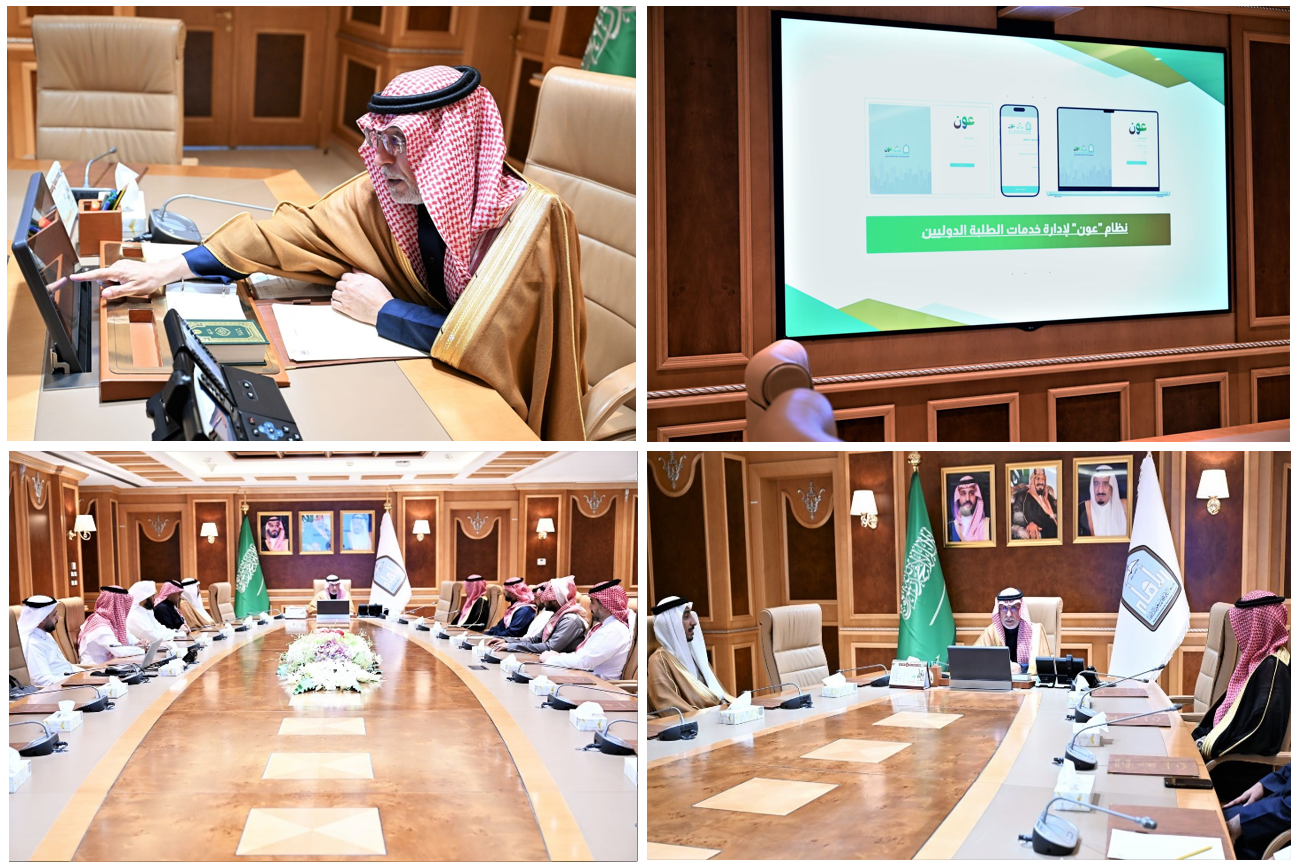
Launch of the “Aoun" System to Support International Students
As part of Imam Mohammad Ibn Saud Islamic University's commitment to achieving the Sustainable Development Goals, particularly SDG 2: Zero Hunger, His Excellency the University President, Prof. Dr. Ahmed bin Salem Al-Amri, officially launched the “Aoun" system on Wednesday, March 5, 2025. The initiative is generously supported by the Ibrahim bin Mohammed Al-Subaie & Sons Charitable Foundation (GHOROOS).
“Aoun" is a strategic step toward creating an inclusive and sustainable educational environment that addresses the essential needs of international students, including food security and social support. The system offers comprehensive solutions encompassing academic, social, and cultural services, with a focus on academic guidance, psychological support, and cultural orientation.
In alignment with SDG 2, the system provides:
- One-time financial assistance
- Travel and shipping allowances
These components directly alleviate financial burdens that may affect students' ability to meet their basic nutritional needs.
The system also includes:
- Organized Hajj and Umrah trips
- Professional training courses and certifications
These offerings enhance students' psychological and social stability, positively impacting their overall health and nutrition. The system currently supports approximately 600 seats, managed through a fully automated digital platform to ensure efficiency and fairness in service delivery.
His Excellency the University President emphasized that this initiative reflects the university's dedication to developing innovative solutions for the challenges faced by international students, particularly those related to food and nutrition. He stressed the importance of integrated efforts to fulfill the university's and the Kingdom's vision for inclusive and sustainable higher education.
The Secretary-General of GHOROOS expressed pride in supporting the project, reaffirming the foundation's commitment to digital literacy, economic empowerment, and social support for international students, contributing to improved quality of life—including nutritional well-being.
Dr. Abdullah bin Abdulrahman Al-Asmari, Vice President for Educational Affairs, concluded by highlighting that this initiative marks a transformational shift in student services. It empowers students to acquire technical and life skills that enhance their academic experience and support their access to adequate and nutritious food, in line with the objectives of SDG 2.
https://imamu.edu.sa/news/pages/news_5_3_2025_02.aspx
https://ghoroos.sa/%D8%A8%D8%AF%D8%B9%D9%85-%D8%AD%D8%B5%D8%B1%D9%8A-%D9%85%D9%86-%D8%BA%D9%8F%D8%B1%D9%88%D8%B3-%D8%A7%D9%84%D8%AE%D9%8A%D8%B1%D9%8A%D8%A9-%D9%85%D8%B9%D8%A7%D9%84%D9%8A-%D8%B1%D8%A6%D9%8A%D8%B3-%D8%AC/
Interventions to Prevent or Alleviate Hunger Among Students and Staff
In alignment with its commitment to the Sustainable Development Goals, particularly SDG 2: Zero Hunger, Imam Mohammad Ibn Saud Islamic University places significant emphasis on providing both nutritional and financial support to students and staff. The university has implemented a range of effective intervention programs aimed at preventing or alleviating hunger within the campus community.
Through the Student Fund, the university offers specialized financial support programs that help students meet their basic needs, including access to food. These programs include direct financial assistance, support allowances, and other services that contribute to improving the quality of life for students in need. The fund serves as a vital tool to ensure that students' academic performance is not compromised by economic hardship or food insecurity.
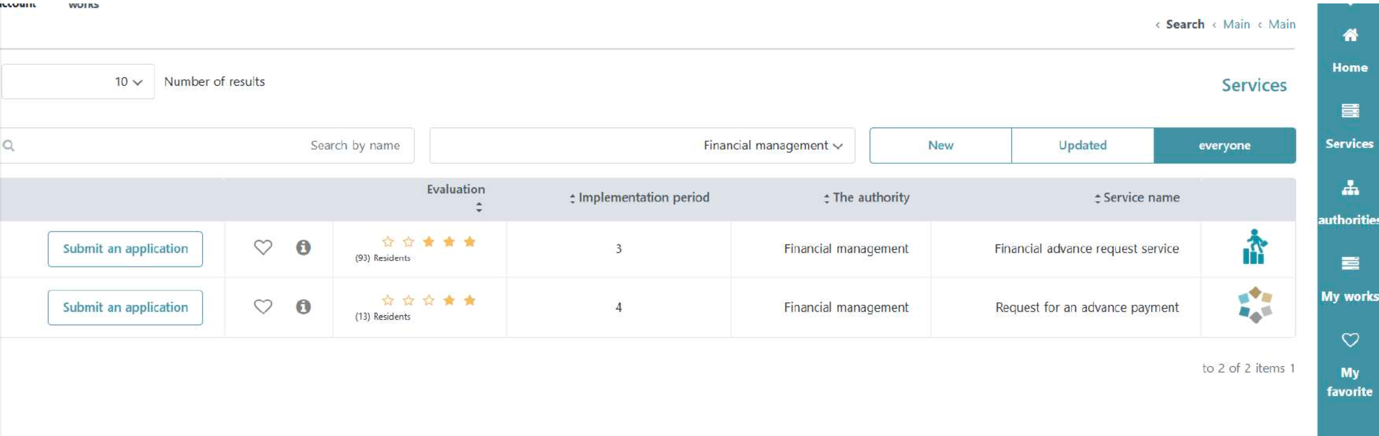
For university staff, a dedicated financial advance program has been established, allowing employees to access temporary financial support to help them overcome emergency situations that may affect their ability to meet essential needs, including food. This initiative promotes social and professional stability within the university and reflects its commitment to providing a comprehensive and sustainable work environment.
Through these initiatives, the university demonstrates a practical and inclusive approach to achieving SDG 2—not only through research and education, but also by caring for its internal community and ensuring that all members have access to sufficient and nutritious food and the support necessary for a dignified life.
![]()
![]()
Accessibility of Food Supplies and Staff
As part of its efforts to meet the nutritional needs of its community members, Imam Mohammad Ibn Saud Islamic University, through its General Directorate of Business Development and Investment, has signed contracts with more than 41 companies. These include restaurants, cafés, healthy food suppliers, bakeries, vending machine providers, and catering services. These services are strategically distributed across the campus to ensure easy access for all students and staff.
The university's Nutrition Department also plays a key role in overseeing meal preparation and delivery. It monitors the health standards of food service personnel, ensures the cleanliness of equipment, and regulates portion sizes in campus dining facilities. The department encourages students to take only what they need and enforces specific standards for food services across the university.
Additionally, the department ensures that all food products are fresh, high-quality, and sold at declared and affordable prices, contributing to a healthy and sustainable food environment on campus.
Charitable Initiatives at Imam Mohammad Ibn Saud Islamic University
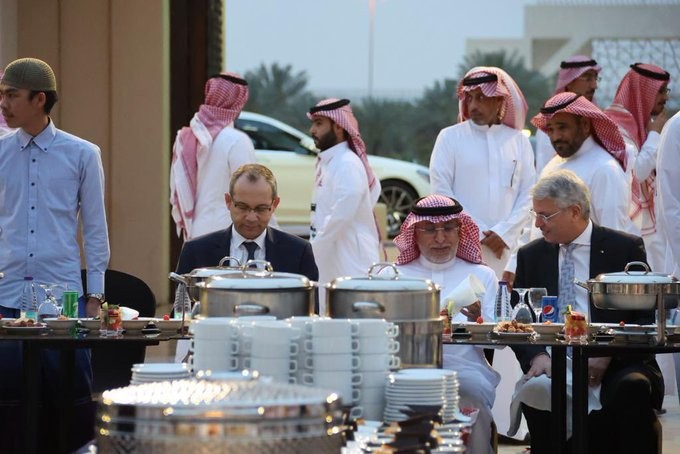
Imam Mohammad Ibn Saud Islamic University has launched several charitable initiatives, one of the most recent being the organization of a Ramadan Iftar event for fasting individuals, attended by the University President, ambassadors, students, and university officials.
![]()
University Safety and Security Department Hosts Ramadan Iftar for Field Staff
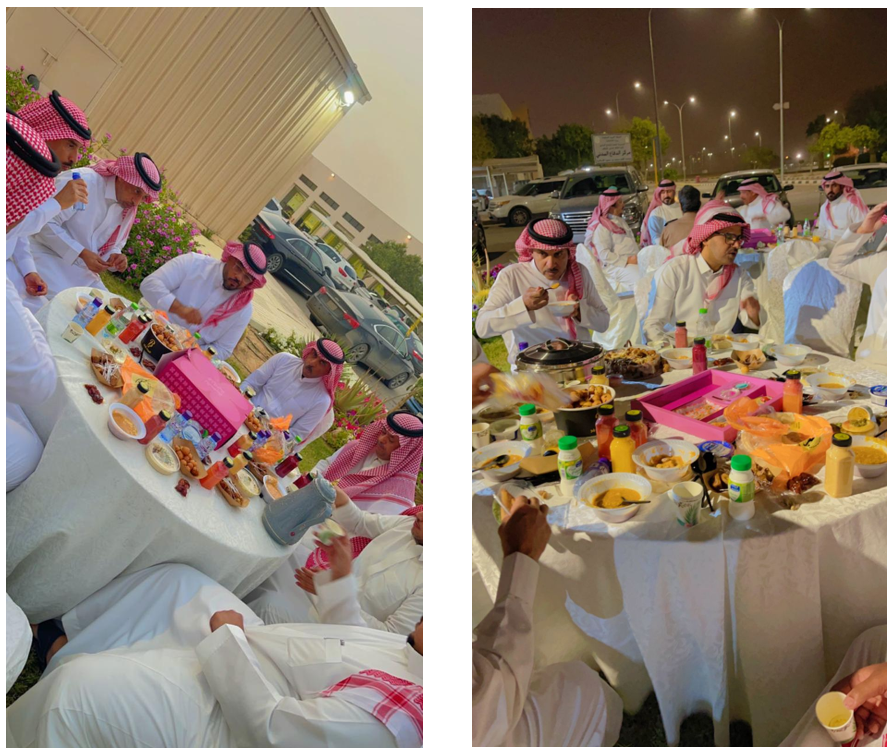
The General Department of Safety and Security at Imam Mohammad Ibn Saud Islamic University organized a Ramadan Iftar gathering for its field personnel at the department's operational headquarters on Friday, 9 Ramadan 1444 AH. The initiative, held under the theme “Your Iftar Is On Us", was aimed at honoring and supporting the department's frontline staff.
At the beginning of the event, Mr. Sultan bin Hussein Al-Buqmi, Director General of the Safety and Security Department, extended his congratulations to the staff on the arrival of the holy month of Ramadan, praying for the acceptance of their fasting and worship. He praised their dedicated efforts in managing traffic flow, ensuring safety, and maintaining security across university facilities—efforts that have positively impacted the department's operations.
Mr. Al-Buqmi emphasized that this initiative reflects the department's administrative commitment to engaging and appreciating its field personnel. The gathering took place in a spiritual and communal Ramadan atmosphere, where attendees shared the meal and exchanged well wishes.
At the conclusion of the event, Mr. Al-Buqmi expressed his gratitude to the security staff, reminding them of the noble responsibility and honorable mission they carry in serving the university and its community.
![]()
![]()
https://units.imamu.edu.sa/administrations/security/news/Pages/31-3-2023.aspx
Annual Ramadan Iftar
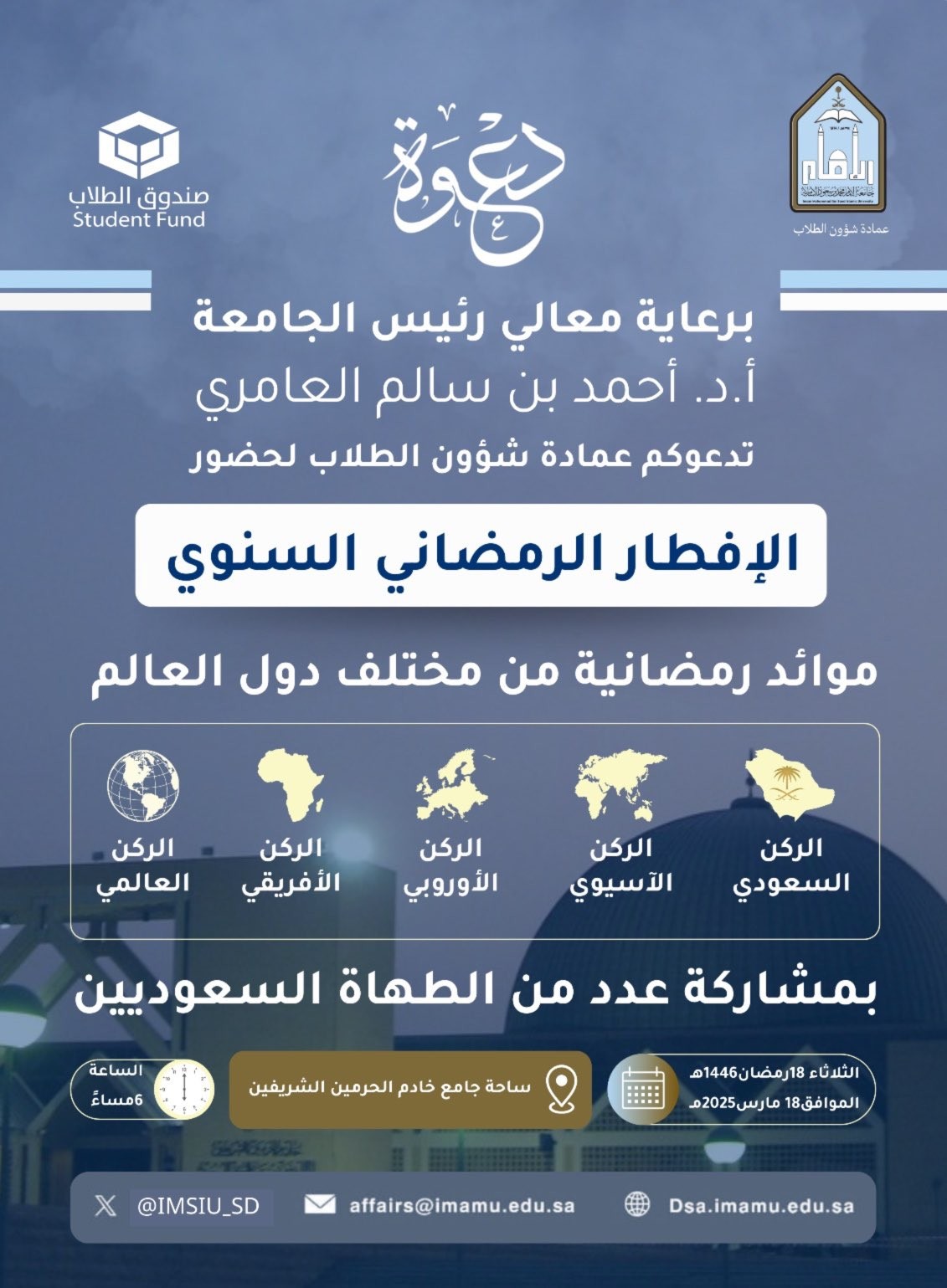
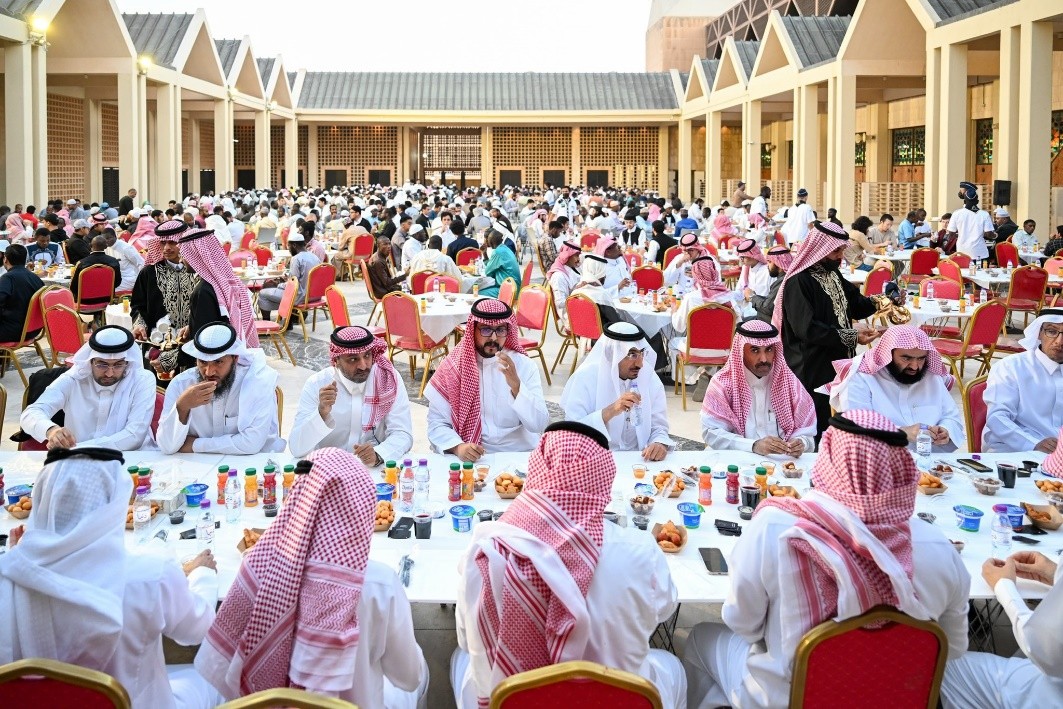
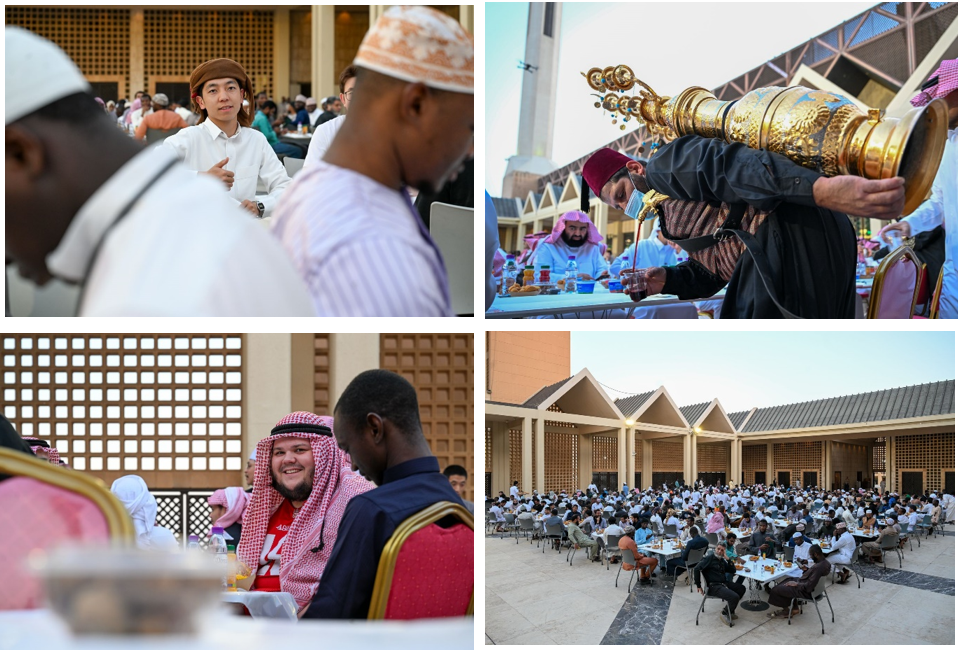
Under the patronage of His Excellency Prof. Dr. Ahmed bin Salem Al-Amri, President of Imam Mohammad Ibn Saud Islamic University, the Deanship of Student Affairs organized the Annual Ramadan Iftar on Tuesday, March 18, 2025, in the courtyard of the Custodian of the Two Holy Mosques Grand Mosque on campus.
The event was attended by:
- Dr. Naif bin Mohammed Al-Otaibi, Vice President for Graduate Studies and Scientific Research
- Dr. Abdullah bin Abdulrahman Al-Asmari, Vice President for Educational Affairs
- Dr. Abdulrahman bin Mohammed Al-Kharashi, Dean of Student Affairs
- Several college deans, heads of supporting deanships, and center directors
- A number of Saudi and international chefs from various Arab and Islamic countries
The Iftar witnessed a large turnout of students, with diverse Ramadan dishes representing cultures from around the world. The event featured themed food stations, including Saudi, Asian, European, African, and international sections, offering a unique opportunity to foster brotherhood and intercultural exchange among students of different nationalities in a spiritual Ramadan atmosphere.
This initiative is part of the Deanship of Student Affairs' ongoing efforts to strengthen social bonds among students and promote the values of coexistence and cultural diversity within the university community.
![]()
![]()
![]()
https://imamu.edu.sa/news/Pages/news_18_3_2025_01.aspx
https://x.com/IMSIU_edu_sa/status/1902065718704947314
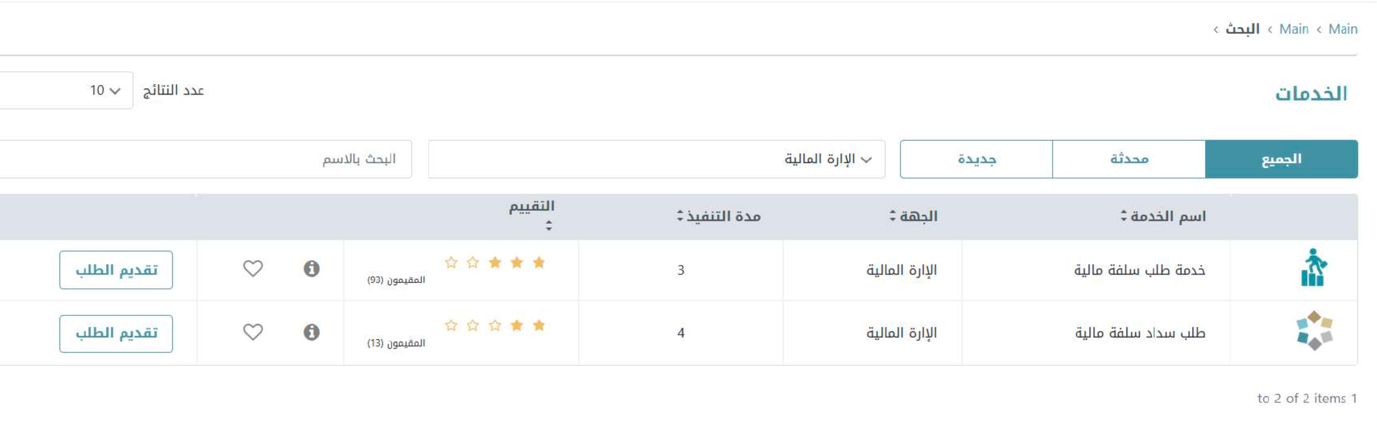
The Salary Advance Request Service for employees, available through the Wafi platform, is one of the initiatives that reflects Imam Mohammad Ibn Saud Islamic University's commitment to supporting the financial and social stability of its staff. This service allows employees to obtain temporary financial assistance to meet essential needs, including food, thereby contributing to enhanced food security within the university community. The initiative aligns with Sustainable Development Goal 2 (SDG 2) by providing effective interventions to reduce hunger and promote a more equitable and sustainable work environment.
https://units.imamu.edu.sa/administrations/AdministrativeAndFinancial/profile/OrganizationalUnits/Finance/Pages/Services.aspx
Sustainabile Food Choices On Campus
In line with its commitment to the Sustainable Development Goals, particularly SDG 2: Zero Hunger and SDG 12: Responsible Consumption and Production, Imam Mohammad Ibn Saud Islamic University strives to provide healthy and sustainable food options for all members of its campus community.
These efforts include:
- Offering vegetarian and vegan meals in university dining facilities to accommodate dietary diversity and reduce the environmental impact associated with meat production.
- Promoting healthy eating habits through awareness campaigns organized by the Nutrition Department and the Deanship of Student Affairs.
- Providing meals at affordable prices, ensuring accessibility for all students while maintaining nutritional value and ingredient quality.
- Prioritizing locally sourced food whenever possible to support the local economy and reduce the carbon footprint associated with transportation.
These initiatives are part of the university's broader vision to build a healthy and sustainable campus environment, enhance students' awareness, and encourage environmentally responsible lifestyles.
https://units.imamu.edu.sa/vrectorate/FSAVR/university-life/Pages/default.aspx
Collaboration with Local and Internaitonal Organizations
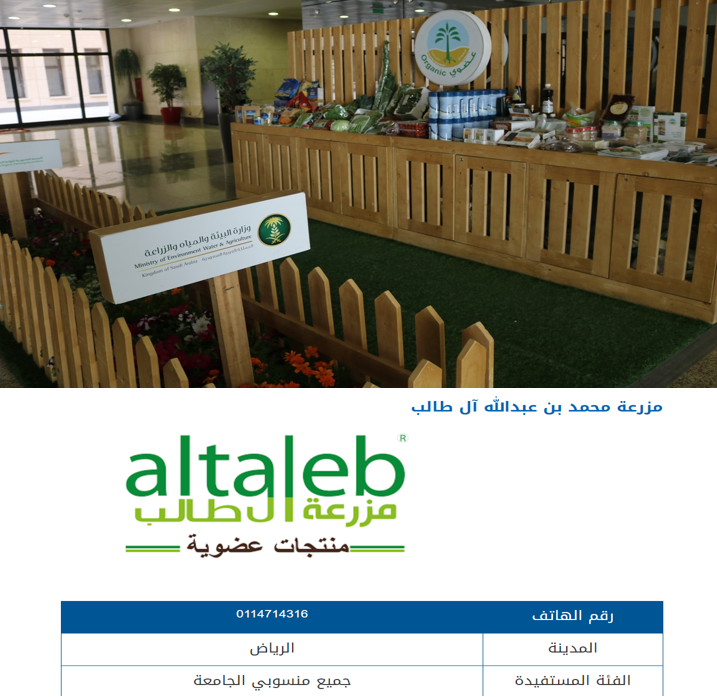
Imam Mohammad Ibn Saud Islamic University actively collaborates with local agricultural organizations and international bodies to promote and develop organic farming and its products. Through these partnerships—such as the awareness event held on Organic Food Day in cooperation with the Saudi Organic Farming Association—the university participates in initiatives like the “Your Food is Your Medicine" program.
This program, launched in collaboration with the Ministry of Environment, Water and Agriculture, aims to raise awareness about the importance of organic agriculture. It also seeks to educate students on the current state of organic farming in Saudi Arabia, the outlets that sell organic products, and the regulations that govern organic agriculture to protect it from harmful practices.
In addition, the university strengthens its cooperation with local organizations by partnering with farms to offer their products at discounted prices to university staff and students, thereby supporting both food accessibility and the local economy.
![]()
Imam Mohammad Ibn Saud Islamic University Signs MoU with Laeq Food Safety Company
On Tuesday, December 17, 2024, Imam Mohammad Ibn Saud Islamic University, represented by the Prince Naif Institute for Research and Consulting Services, signed a Memorandum of Understanding (MoU) with Laeq Food Safety Company.
The agreement aims to strengthen cooperation in areas such as scientific research, development, training, consulting, quality assurance, and knowledge exchange, contributing to the strategic objectives of both parties.
The MoU was signed by Dr. Sulaiman bin Abdullah Al-Sugair, Dean of the Prince Naif Institute, on behalf of the university, and Ms. Huda bint Muneer Al-Zara, CEO of Laeq Food Safety Company.
This partnership supports the university's efforts to achieve its targeted outcomes and enhance the readiness of several accredited training programs and specialized diplomas in food safety and food security, by aligning educational outputs with labor market needs.
The agreement includes the development of:
- A training program to qualify university staff to supervise food safety.
- Specialized diploma programs to prepare graduates for employment in the food sector.
- A practical curriculum for diploma holders in inspection and auditing related to food safety.
- Job placement opportunities for outstanding graduates in food establishments.
- Workshops and awareness campaigns to promote food safety, in line with national initiatives in this field.
https://imamu.edu.sa/news/Pages/news_17_12_2024_01.aspx
Nutritional Awareness
As part of its commitment to promoting a culture of nutrition and health among its students, Imam Mohammad Ibn Saud Islamic University has introduced a course titled “Health Culture" as a core university requirement. This course is one of the educational initiatives that directly contribute to achieving Sustainable Development Goal 2, which focuses on ending hunger, achieving food security, and improving nutrition.
The course aims to foster positive attitudes among students toward adopting healthy lifestyles, emphasizing the importance of proper nutrition as a key factor in disease prevention and the promotion of overall health. It also highlights healthy practices related to food and raises awareness of the impact of balanced nutrition on both physical and mental performance.
Topics covered in the course include: concepts of health and healthy living, human body composition, vital systems and related diseases, in addition to food, nutrition, and physical fitness. Through this content, the university contributes to building a generation that is aware of the importance of healthy nutrition and capable of making informed dietary decisions, thereby supporting the Kingdom's efforts to achieve sustainable food security.
https://units.imamu.edu.sa/administrations/Psychology/Documents/%D9%85%D8%B4%D8%B1%D9%88%D8%B9%20%D8%AA%D8%B7%D9%88%D9%8A%D8%B1%20%D8%A7%D9%84%D9%85%D8%AA%D8%B7%D9%84%D8%A8%D8%A7%D8%AA%20%D8%A7%D9%84%D8%AC%D8%A7%D9%85%D8%B9%D9%8A%D8%A9.pdf
Awareness Event Under the Theme “Healthy Food" as Part of Health Week
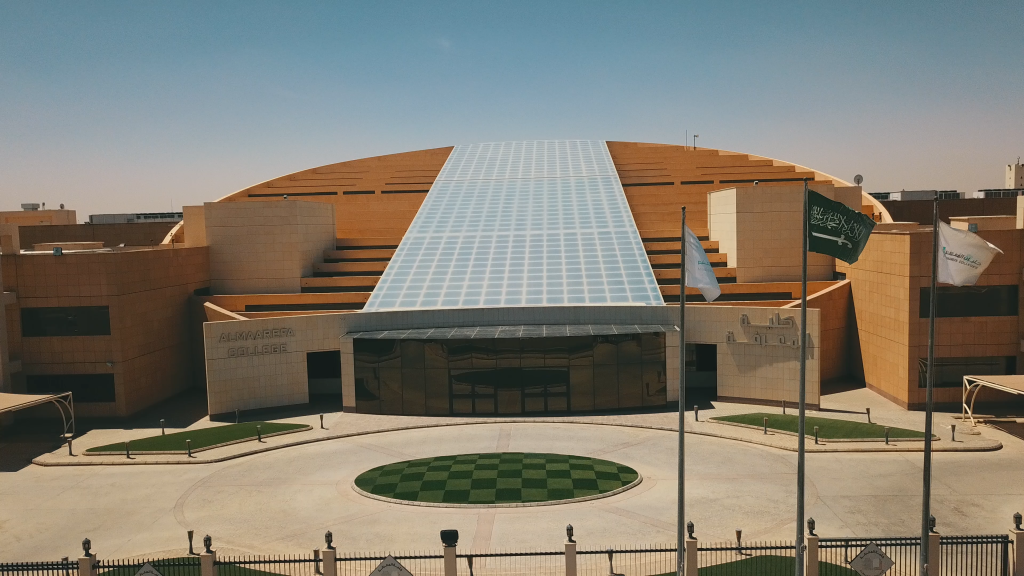
As part of Imam Mohammad Ibn Saud Islamic University's efforts to achieve Sustainable Development Goal 2 (SDG 2)—which focuses on ending hunger and promoting proper nutrition—Almaarefa Colleges for Science and Technology, in collaboration with the Scientific Institute in Al-Diriyah Governorate, organized an awareness event under the theme “Healthy Food" during Health Week.
The event featured a lecture titled “Obesity: Types, Causes, and Treatment", delivered by Mr. Abubakr Hamed, a lecturer in the Nursing Department at the colleges. The lecture addressed common unhealthy eating habits among students, particularly during critical developmental stages, and emphasized the healthy behaviors necessary to prevent obesity and promote a healthy lifestyle.
The lecture was attended by more than 300 students from intermediate and secondary school levels, with notable engagement and strong interest in the topic. It concluded with a discussion session where the speaker answered students' questions related to nutrition and obesity.
This event was organized under the supervision of the Student Affairs Department at the colleges, represented by Mr. Mohammed Al-Ghashayan, a social specialist.
This initiative serves as a practical example of the university's commitment to raising nutritional and health awareness among students, in alignment with the Sustainable Development Goals and Saudi Vision 2030, which aims to build a healthy and informed society.
رابط
فعالية توعوية تحت شعار "غذاء صحي" ضمن الأسبوع الصحي
![]()
Community Awareness
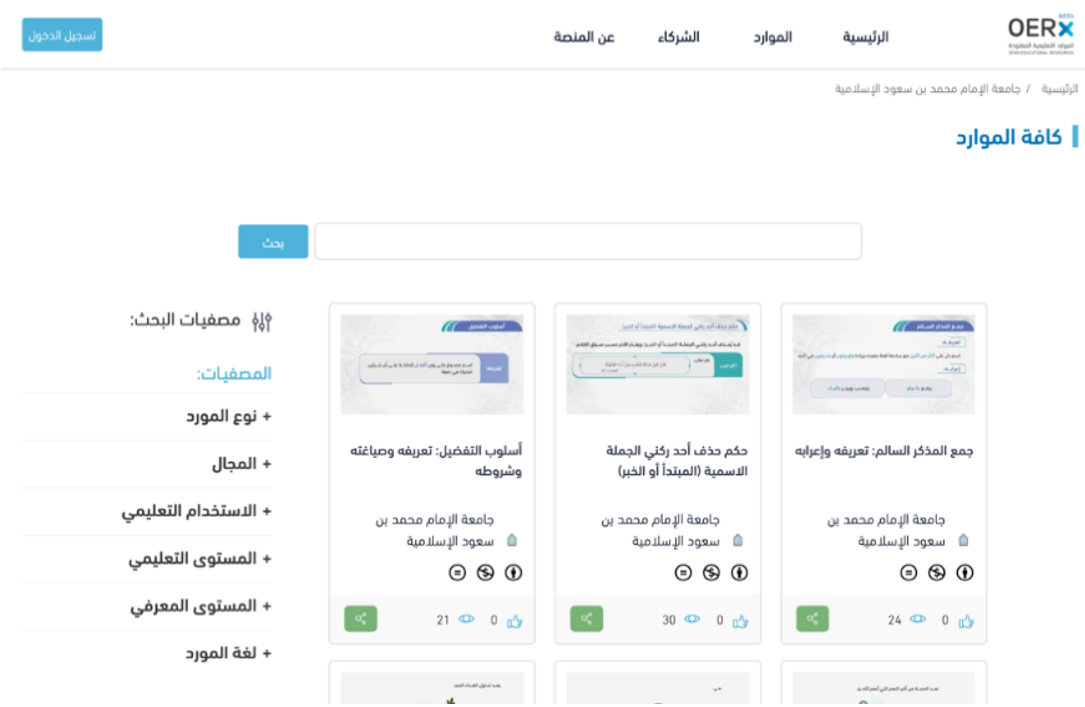
As part of its commitment to its educational and societal mission, Imam Mohammad Ibn Saud Islamic University continues to implement distinguished educational and awareness activities that extend beyond the university campus, targeting various segments of society. These efforts are part of the university's contribution to the National Open Educational Resources Program (OERx), overseen by the National eLearning Center, through which the university enriches digital educational content in accordance with quality standards, thereby enhancing opportunities for sustainable education and lifelong learning.
These activities include targeted lectures and specially designed presentations to meet the needs of the local community, schools, and educational institutions, with a focus on equal opportunity, community engagement, and modernity in delivery. These initiatives reflect the core values of the National Open Content Program, namely: credibility, participation, modernity, and equal opportunity.
![]()
Among the contributions of Imam Mohammad Ibn Saud Islamic University to enriching content within the National Open Educational Resources Program (OERx), we highlight the following examples:
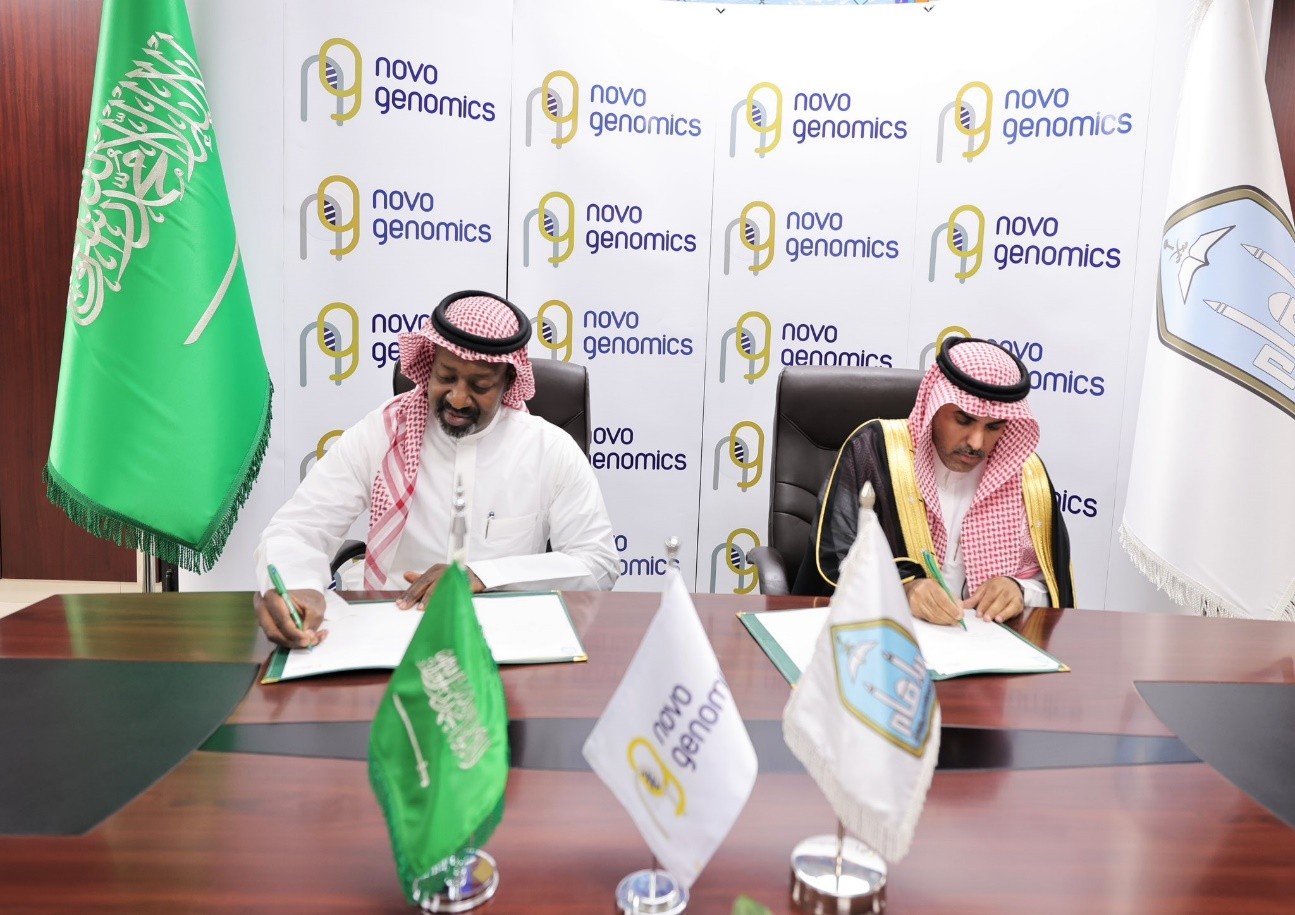
Enhancing Food Security Through Research Partnerships: Novo Genomics as a Model
In line with Imam Mohammad Ibn Saud Islamic University's efforts to achieve Sustainable Development Goal 2 (SDG 2)—which focuses on ending hunger, achieving food security, and promoting sustainable agriculture—the importance of collaboration with leading national biotechnology entities, such as Novo Genomics, becomes evident.
Novo Genomics is a Saudi company specializing in genome analysis and its applications in agriculture and aquaculture. Its technologies contribute to:
- Improving crop quality and increasing resistance to harsh environmental conditions.
- Enhancing fishery productivity through gene analysis related to growth and immunity.
- Providing precise scientific solutions that help farmers make data-driven decisions based on genetic insights, thereby reducing food waste and increasing production efficiency.
By leveraging these technologies in university research or through future scientific partnerships, Imam University can play a pivotal role in transferring knowledge and technology to local farmers, empowering them to adopt more sustainable and effective agricultural practices.
This integration of academic research and biotechnology strengthens the university's capacity to contribute meaningfully to national food security, and reflects its commitment to Saudi Vision 2030 and the Sustainable Development Goals.
رابط توقيع ىالجامعة مذكرة تفاهم مع شركة "نوفو جينومكس الطبية"
![]()
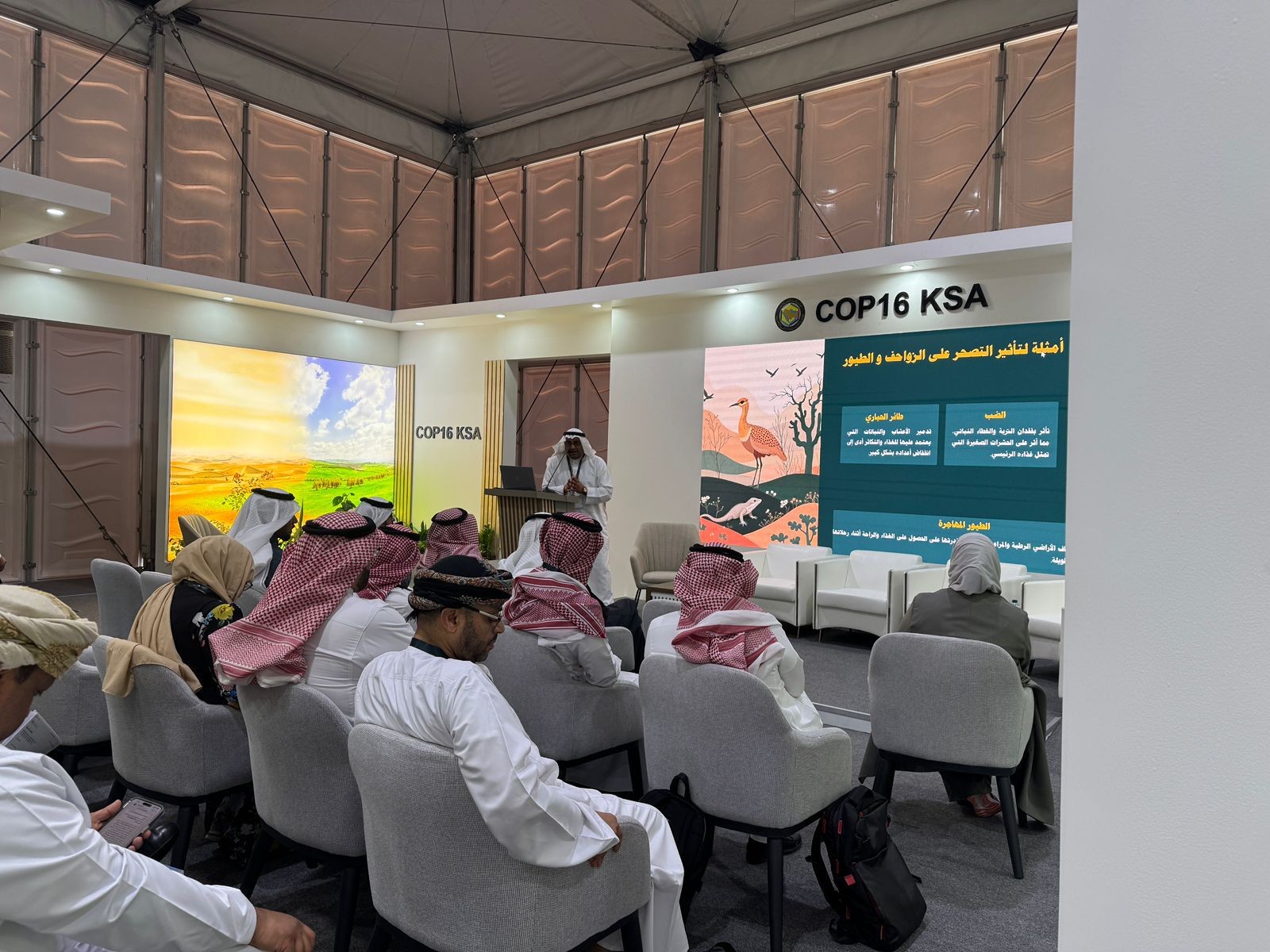
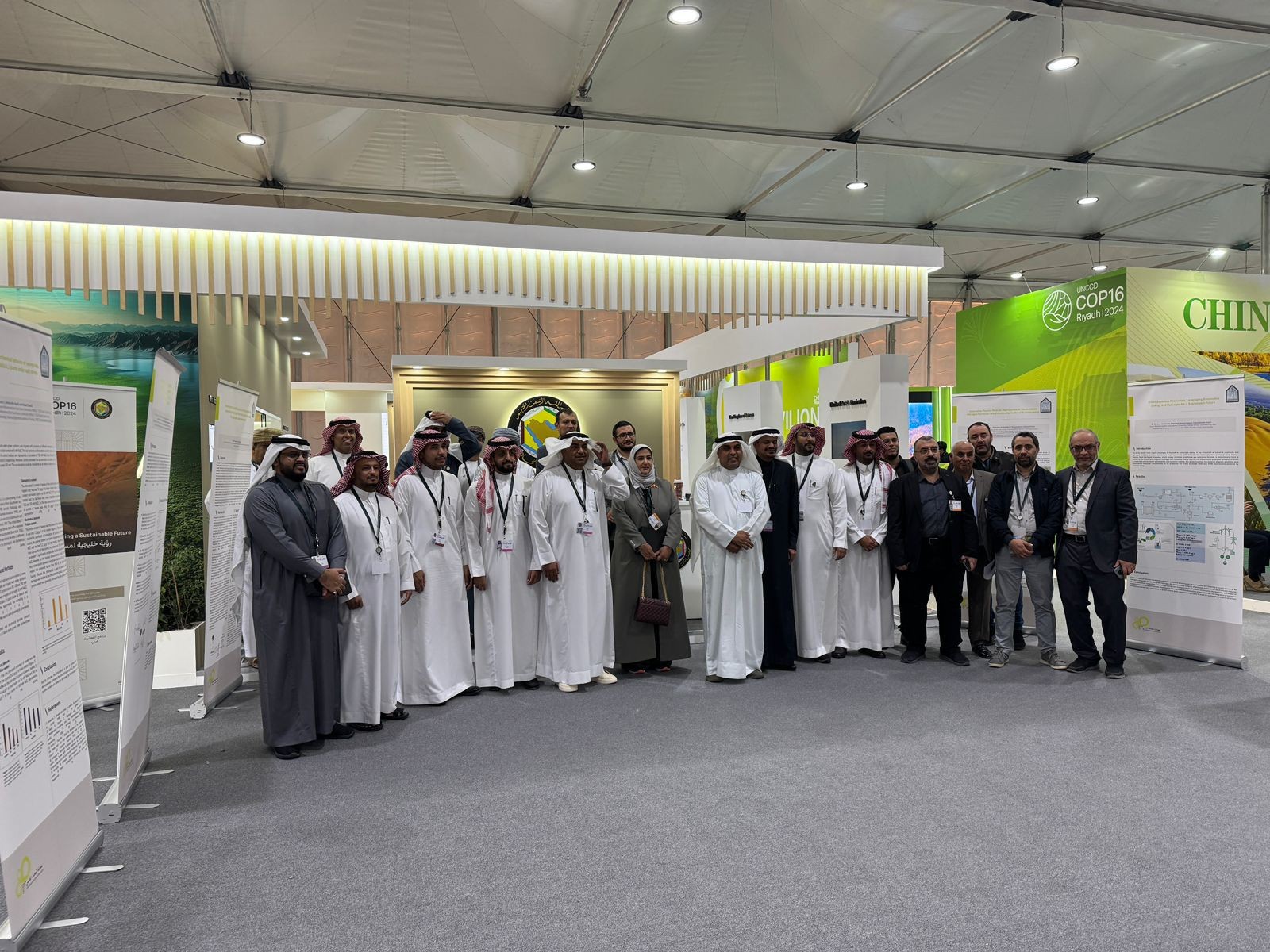
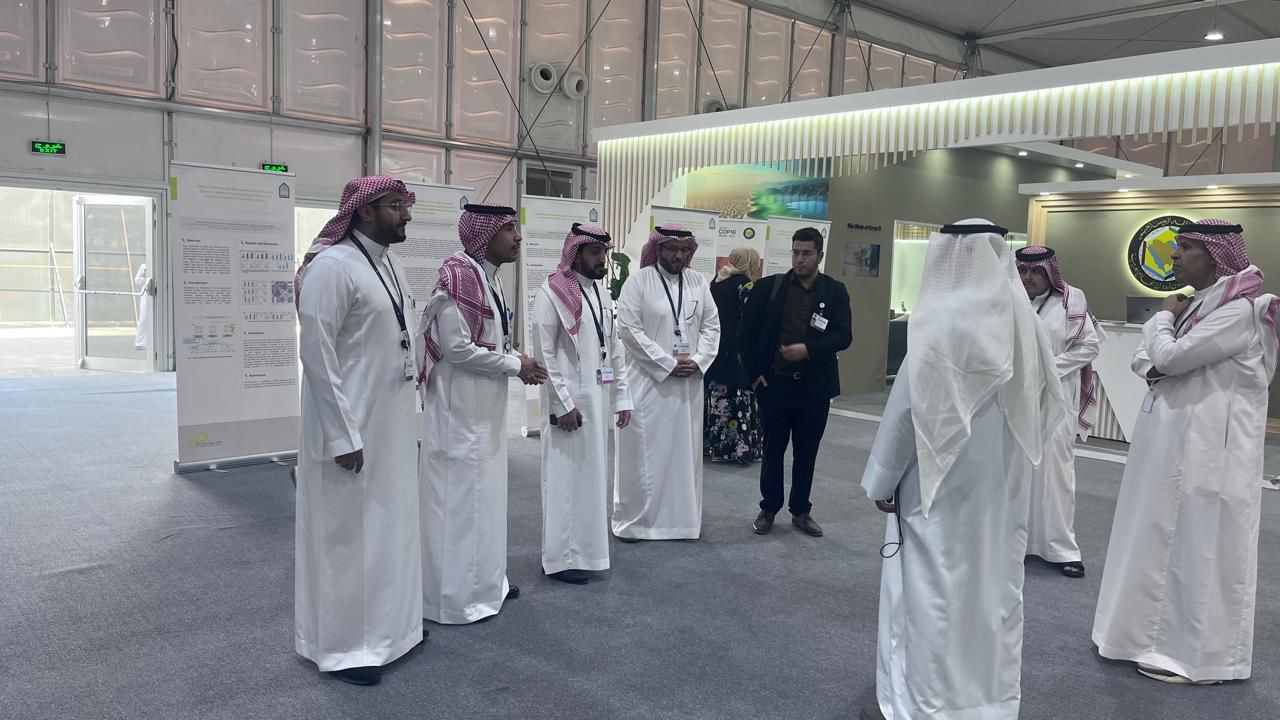
Participation in the Gulf Cooperation Council (GCC) Pavilion at the United Nations Convention to Combat Desertification (UNCCD) COP16 Conference:
https://imamu.edu.sa/news/Pages/news_9_12_2024_05.aspx
As part of its commitment to knowledge exchange and community engagement beyond the university campus, Imam Mohammad Ibn Saud Islamic University, represented by its research centers under the Deanship of Scientific Research, participated in the Gulf Cooperation Council (GCC) Pavilion during the Conference of the Parties to the United Nations Convention to Combat Desertification (COP16), held in Riyadh from December 2 to 13, 2024.
The university's participation was held under the theme:
“Imam Mohammad Ibn Saud Islamic University's Research Efforts in Combating Desertification."
It showcased a range of pioneering research initiatives that go beyond addressing desertification and land degradation, extending to the transfer of knowledge, skills, and sustainable agricultural technologies to local farmers. These initiatives included innovative scientific solutions in areas such as soil quality improvement, water resource management, and food security enhancement, all aimed at supporting and empowering rural communities to face environmental challenges.
The university's presence concluded with strong engagement from visitors, who expressed admiration for the quality of the research and initiatives presented. This reflects the university's dedication to environmental issues, its commitment to strengthening international partnerships, and its role in enabling local farmers to access the knowledge and technologies necessary for sustainable and food-secure agricultural production.
![]()
![]()
![]()
General / SFDA and Imam Mohammad Ibn Saud Islamic University Sign Cooperation Agreement to Leverage Shared Capabilities
His Excellency Dr. Hisham bin Saad Aljadhey, CEO of the Saudi Food and Drug Authority (SFDA), signed a cooperation agreement today with His Excellency Dr. Ahmed bin Salem Al-Ameri, President of Imam Mohammad Ibn Saud Islamic University, at the university's headquarters in Riyadh.
The agreement aims to establish a strategic partnership and foster a distinguished relationship that enables both parties to jointly leverage their material and human resources.
The agreement includes efforts to enhance collaboration and exchange expertise, in line with Saudi Vision 2030, by promoting integration between the SFDA and the university to build a strategic partnership that results in the optimal utilization of shared capabilities.
Key areas of cooperation outlined in the agreement include:
- Supporting scientific research and studies in the fields of food, nutrition, and public health.
- Exchanging data and statistics available to both parties.
- Sharing consulting services and scientific materials.
- Collaborating in awareness campaigns, external events, exhibitions, conferences, and scientific seminars.
- Joint efforts in media coverage and publication related to the topics of the memorandum.
The agreement also includes the establishment of a Sharia Research Unit for Halal at Imam University, aimed at conducting social studies and publishing Sharia-based research in international journals, in addition to providing studies on Prophetic medicine.
Furthermore, the SFDA will work to raise university students' awareness of pharmacovigilance and the importance of reporting medical device incidents and adverse drug reactions, through the development of scientific publications by the National Pharmacovigilance Center and the National Center for Medical Devices Reports, as well as organizing scientific lectures and workshops.
https://www.spa.gov.sa/2333988
Supporting Local Farmars and Producers
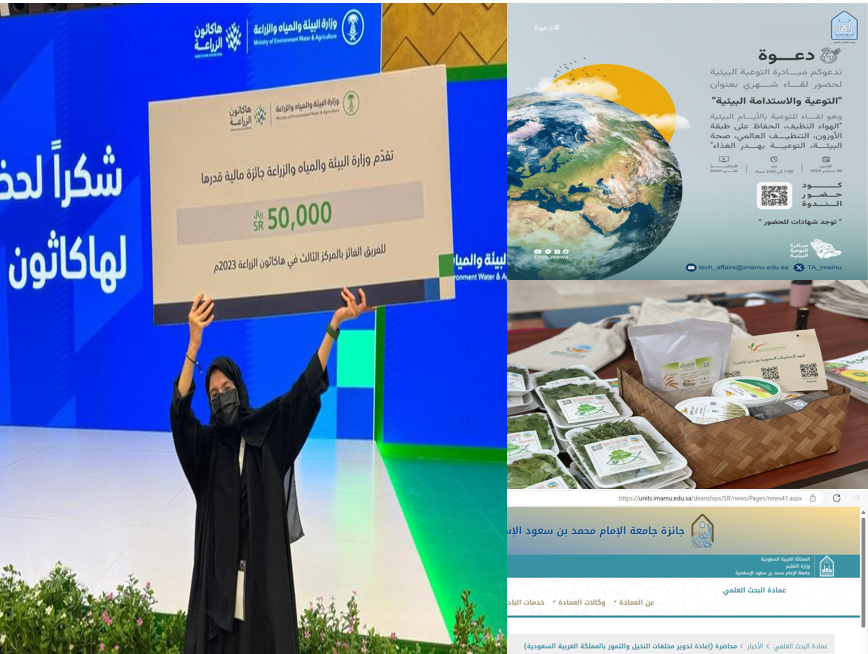
Imam Mohammad Ibn Saud Islamic University supports initiatives that provide access to knowledge, skills, research, and technology to ensure food security and sustainable agriculture for local farmers. Programs such as “Environmental Awareness and Sustainability" aim to preserve environmental health and raise awareness about food waste.
An awareness event was organized in celebration of Organic Food Day, in collaboration with the Saudi Organic Farming Association, through the university's Environmental Club. The event aimed to introduce participants to the general principles and objectives of agriculture, how to establish a sustainable management system, and how to produce safe, high-quality products.
Faculty members also contribute to agricultural support through published research, such as a lecture titled:
“Recycling Palm and Date Waste in Saudi Arabia and Utilizing It to Extract High-Value Natural Materials,"
presented by Dr. Noufel Ali bin Hammadi.
Additionally, students from Imam Mohammad Ibn Saud Islamic University participated in the Agriculture Hackathon organized by the Ministry of Environment, Water and Agriculture, which encourages technological competitions that develop solutions to the challenges faced by farmers and the agricultural sector, and transforms those solutions into practical projects.
![]()
SiCC 2025: A Platform Connecting Local Farmers to Global Food Innovation
![]()
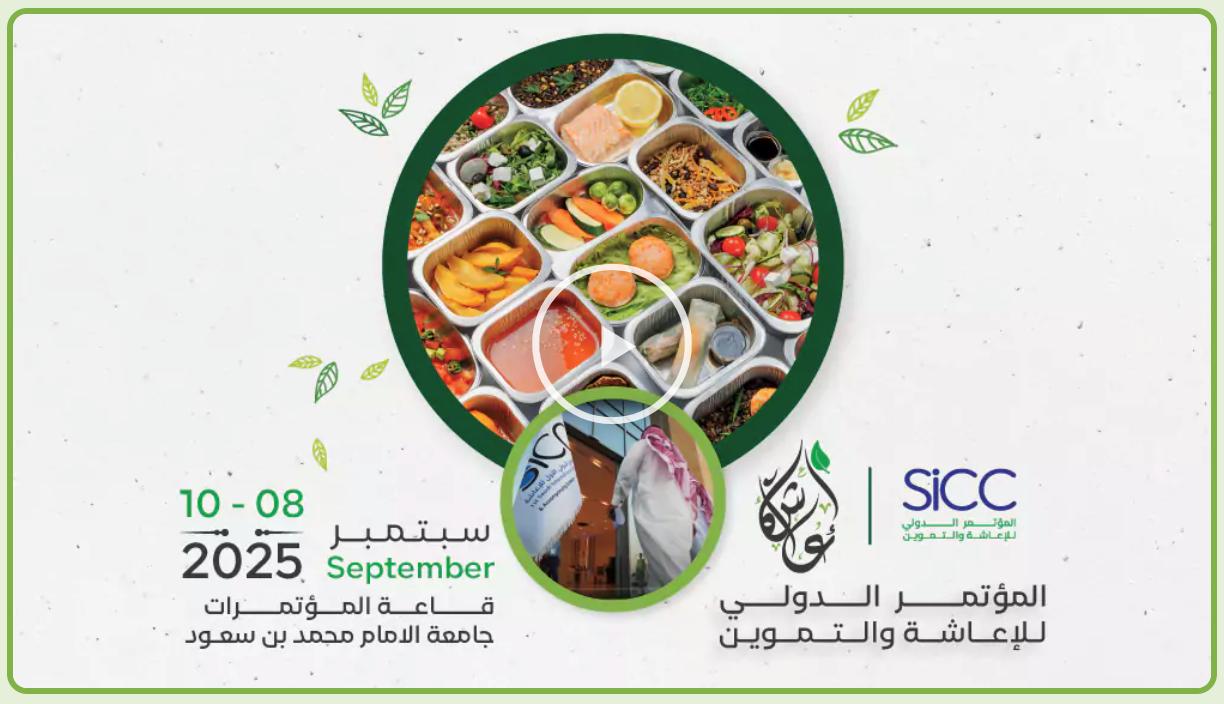
In support of food security and the promotion of sustainable food systems, Imam Mohammad Ibn Saud Islamic University is hosting the International Catering and Commissary Conference (SiCC) from September 8 to 10, 2025. The conference serves as a global platform aimed at empowering local farmers and food producers by connecting them with industry experts to facilitate knowledge transfer and the exchange of best practices.
The conference presents a strategic opportunity to enhance the capabilities of local producers through specialized workshops focused on restaurant and cost management, as well as the development of entrepreneurial skills in the food sector. These efforts contribute to improving local food production efficiency and achieving economic sustainability for rural communities.
SiCC 2025 also highlights sustainable logistical solutions, such as recycling and food waste reduction, and showcases the latest innovations in the food and hospitality sectors. Key industries participating include logistics, coffee, bakeries, food products, and meat, supporting the integration of food supply chains and advancing Sustainable Development Goal 2 (SDG 2).
https://sicevent.com/wp-content/uploads/PPE_SICE_PROFILE-2025-Ar.pdf
https://sabq.org/saudia/q5c30ep02h
https://www.spa.gov.sa/N2392458
https://rmp.alriyadh.gov.sa/ar/news/riyadh-news-274
Targeted Research for Sustainable Development: Imam University's Role in Food Security
As part of its commitment to supporting research aligned with the Sustainable Development Goals (SDGs), Imam Mohammad Ibn Saud Islamic University, represented by the Vice Presidency for Graduate Studies and Scientific Research and the Deanship of Scientific Research, launched the Targeted Research Support Program, which focuses on four strategic priorities:
- Human health
- Environmental sustainability and basic needs
- Leadership in energy and industry
- Future economies
This program has led to the production of high-impact research that directly and indirectly contributes to SDG 2: Zero Hunger. The research covers key topics such as food security, nutrition and public health, sustainable food systems, smart agriculture, and fertilizer development. It also incorporates circular economy concepts as effective tools to reduce food waste and improve resource efficiency in agriculture.
Through this research direction, the university offers innovative scientific solutions to challenges related to hunger and malnutrition, supporting the development of resilient and sustainable food systems in alignment with Saudi Vision 2030 and global SDGs. The program serves as a leading model for directing scientific research toward addressing critical societal and humanitarian issues.
In support of sustainable agriculture and food security, the university provides its research and technical facilities to local farmers and food producers, including laboratories, advanced technologies, and plant repositories. These initiatives are implemented through training programs and practical workshops that transfer knowledge from the academic environment to the local community, enabling farmers to benefit from university research in areas such as soil quality improvement, fertilizer development, and smart farming technologies.
These efforts empower farmers to adopt innovative scientific solutions to environmental and food-related challenges, enhancing the productivity of the local agricultural sector and contributing to food security at both the local and national levels. This initiative is a practical extension of the Targeted Research Support Program, translating research outputs into real-world applications that serve society and support sustainable development goals.
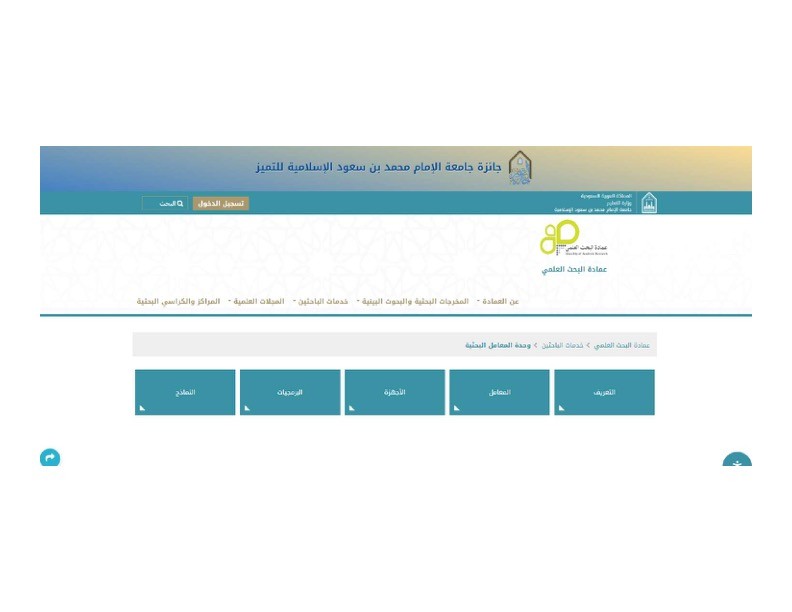
The Research Laboratories Unit at the Deanship of Scientific Research plays a pivotal role in transferring and localizing modern technologies and building knowledge capacity within the local community. It provides advanced analytical and consulting services to academic, industrial, and environmental entities, enabling farmers to access modern skills and technologies in sustainable agriculture, fertilizer development, and smart farming applications.
To ensure integration, the university's research centers work to strengthen collaboration and partnerships in sustainable development within the local community by building alliances with other research institutions and facilitating knowledge and expertise exchange. These centers also offer scientific and developmental consultations to support community efforts in addressing food security and hunger challenges.
The Prince Naif Institute for Research and Consulting Services plays a strategic role in supporting these efforts by offering specialized research and consulting services, including:
- Conducting studies focused on food security and agricultural sustainability
- Activating expert houses to enable academics to provide practical solutions to farmers and producers
- Offering consulting services that contribute to agricultural policy development and improving food production efficiency
The institute serves as a strategic platform for linking academic knowledge with community needs, reinforcing the university's role in achieving sustainable development—particularly in the areas of ending hunger and enhancing food security.
These services are part of the university's broader strategy to empower local farmers by providing access to skills, knowledge, and modern technologies in sustainable agriculture and food security. The university also works to strengthen partnerships with community institutions by offering technical and scientific support, organizing workshops and training courses, and providing access to laboratories and research equipment.
These efforts reflect the university's strategy to enhance community partnerships and integrate scientific research with practical application, positively impacting agricultural productivity and contributing to a more sustainable future, in harmony with Saudi Vision 2030.
![]()
https://units.imamu.edu.sa/deanships/SR/rs/ResearchLaboratories/Pages/default.aspx
https://units.imamu.edu.sa/deanships/SR/rs/fp/Pages/msar1.aspx
https://units.imamu.edu.sa/deanships/PrinceNaifInstitute/Pages/default.aspx
https://units.imamu.edu.sa/deanships/SR/rs/ResearchLaboratories/Pages/default.aspx
https://units.imamu.edu.sa/deanships/SR/Agencies/VDRCCA/Pages/Centers.aspx
Imam Mohammad Ibn Saud Islamic University: A Model for Supporting SDG 2 Through Sustainable Procurement
Imam Mohammad Ibn Saud Islamic University serves as an effective model in supporting the Sustainable Development Goals, particularly SDG 2: Zero Hunger, through its commitment to prioritizing the purchase of products from local and sustainable sources. Within the framework of SDG 2 reporting, the university assumes a clear responsibility in promoting sustainable food systems and fostering an environment that supports food security, through responsible procurement policies that favor local production and reduce reliance on imports.
Imam Mohammad Ibn Saud Islamic University adheres to the Government Tenders and Procurement System, its executive regulations, and the Local Content Preference Regulation, which prioritizes local small and medium enterprises and companies listed in the financial market for business and procurement. This commitment is based on Cabinet Resolution No. (245), dated 29/3/1441 AH, which emphasizes the preference for local content in purchases and tenders related to national products. This reflects the university's direct and indirect prioritization of purchasing products from local and sustainable sources.
The university plays a leading role by developing procurement policies that prioritize local suppliers who adhere to environmental and ethical practices, thereby supporting the local economy and enhancing the community's capacity to achieve food security. It also promotes awareness among students and staff about the importance of sustainability and responsibility in the supply chain, encouraging the adoption of responsible purchasing practices that support natural resource sustainability, organic farming initiatives, and smart agriculture technologies, aligning with SDG 12: Responsible Consumption and Production.
Moreover, the university's partnerships with local farmers and suppliers contribute to improving community access to high-quality, sustainable products, creating job opportunities, and reducing food waste, thereby supporting sustainability and food security at both the local and national levels. The university's initiatives—including training and awareness programs—serve as key drivers in promoting the concept of sustainable purchasing within the community, effectively enabling the achievement of SDG 2 in a sustainable and impactful manner.
https://lcgpa.gov.sa/p/ar_SA/Systems___Guidelines![]()
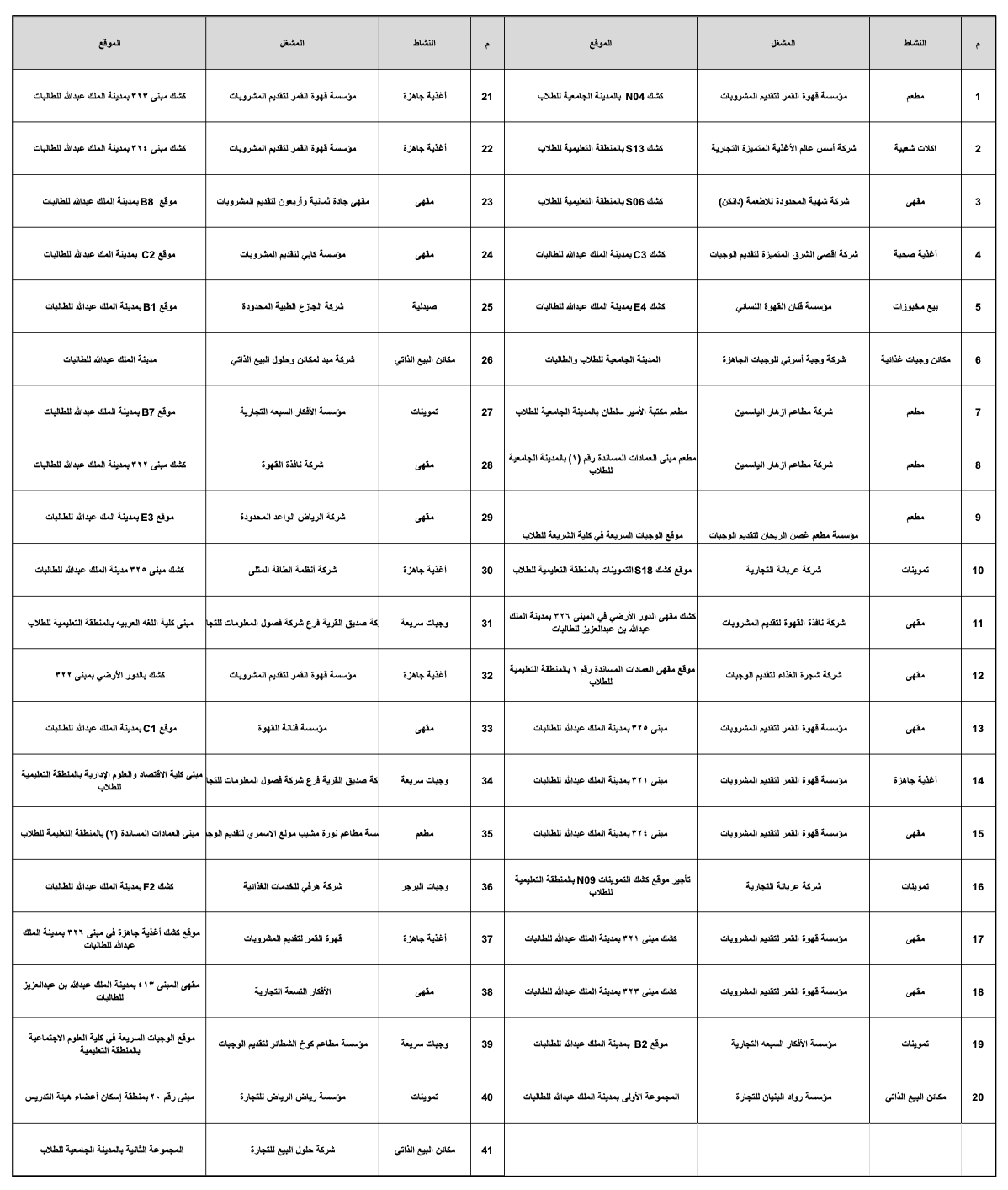
University Restaurants – Women's Campus
رابط تفصيلات عن مطاعم الجامعة قسم البنات
Shops or Stores
رابط تفصيلات عن المتاجر في الجامعة