Executive Summary:
The fifth Sustainable Development
Goal (SDG 5)، adopted by the United Nations, is dedicated to achieving gender
equality and empowering all women and girls. It aims to eliminate all forms of
discrimination and violence against women and ensure their full and effective
participation in all spheres of life, including education, employment, and
decision-making. This is considered a fundamental element for achieving
comprehensive and sustainable development.
In this context, SDG 5 focuses on promoting gender equality and empowering women and girls at all levels. The Kingdom of Saudi Arabia has clearly adopted this objective within its Saudi Vision 2030, which places a pivotal emphasis on women's empowerment, eliminating discrimination, and expanding their participation across various social, economic, and scientific sectors. This reflects the Kingdom's tangible commitment to translating this UN objective into concrete reality. Saudi Vision 2030.
Within this framework, the Kingdom implements a range of regulatory legislation. This includes prohibiting any form of gender-based discrimination in wage s and employment, standardizing the retirement age for both genders, opening opportunities for women in various professional sectors—including leadership and academic positions—and improving the regulatory environment within educational institutions, such as universities, to ensure equal opportunities.
The Council of Universities Affairs platform is a modern regulatory model that embodies this direction, seeking to enhance governance and entrench the principle of gender equality throughout the Saudi university system.
Access the platform at: cua.gov.sa/regulations
The Role of Imam
Mohammad Ibn Saud Islamic University in Achieving SDG5
In line with the strategy of Imam Mohammad Ibn Saud
Islamic University to foster academic excellence and build an inclusive and
equitable educational environment, the university is committed to the principle
of equal opportunity, equality, and the empowerment of women in higher
education. This aligns with national directives, Saudi Vision 2030, and global
ranking standards, particularly the fifth Sustainable Development Goal (SDG 5): Gender Equality.imamu.edu.sa/Strategic PlanThe university demonstrates its firm commitment to supporting and consolidating the United Nations Sustainable Development Goals (SDGs) by integrating them into its educational, research, and community frameworks. The university strives to contribute effectively to sustainable development by developing academic programs, promoting scientific research linked to national and international priorities, and activating community and institutional partnerships. This is consistent with Saudi Vision 2030 and the UN 2030 Agenda, THE 17 GOALS | Sustainable Development establishing a culture of sustainability within the university environment and enhancing its role in building a conscious and responsible knowledge-based society.
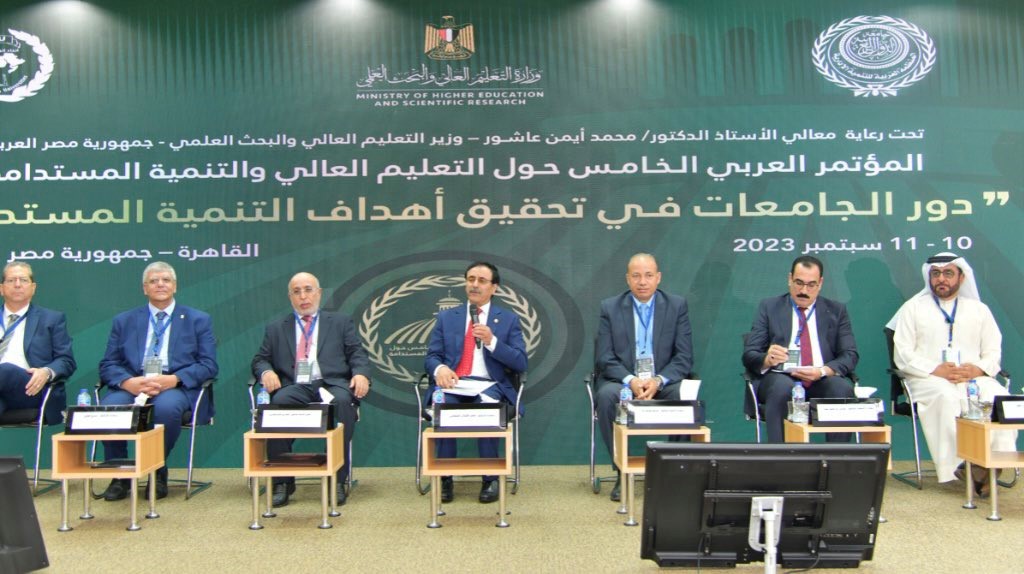 In this context, His Excellency
the President of Imam Mohammad Ibn Saud Islamic University, Prof. Ahmed
Al-Ameri, participated in the Fifth Arab Conference on Higher Education and
Sustainable Development: The Role of Universities in Achieving Sustainable
Development Goals, held in Cairo, Egypt. He presented a paper reviewing the
university's efforts and initiatives in activating the SDGs. He emphasized the
vital role of Arab universities in addressing developmental challenges and achieving a balance between education, research, and community service, thereby strengthening the position of higher education as a primary driver of sustainable development in the Arab world. imamu.edu.sa
In this context, His Excellency
the President of Imam Mohammad Ibn Saud Islamic University, Prof. Ahmed
Al-Ameri, participated in the Fifth Arab Conference on Higher Education and
Sustainable Development: The Role of Universities in Achieving Sustainable
Development Goals, held in Cairo, Egypt. He presented a paper reviewing the
university's efforts and initiatives in activating the SDGs. He emphasized the
vital role of Arab universities in addressing developmental challenges and achieving a balance between education, research, and community service, thereby strengthening the position of higher education as a primary driver of sustainable development in the Arab world. imamu.edu.sa
Stemming from its vision of "Excellence in education, scientific research, and community service, in accordance with Islamic and national values," Imam Mohammad Ibn Saud Islamic University is firmly committed to supporting the Sustainable Development Goals, especially SDG 5 concerning gender equality. Through its vision, which elevates the status of women in scientific, research, and professional fields, and its strategic objectives, the university has become a model for entrenching gender equality and integrating principles of justice and empowerment into its academic and administrative systems. Its strategic objectives include:
- Empowering women academically and administratively in a fair and safe educational environment.
- Ensuring equal opportunities in admission, employment, and promotions without discrimination.
- Promoting awareness of the importance of women's role in national development through scientific and cultural activities.
- Supporting women's participation in research and innovation and increasing their representation in research centers and scientific committees.
The university has become a role model for promoting gender
equality and integrating the principles of justice and empowerment into its
academic and administrative system, achieving
balance and contributing to sustainable development .
Interconnection with other Sustainable Development Goals
Gender Equality, is interconnected with other Sustainable Development Goals. It serves as a cornerstone in efforts to eradicate poverty and hunger (Goals 1 and 2). Empowering women through education is a crucial pathway to reducing social and economic inequalities (Goal 10). Furthermore, the active participation of women contributes to promoting principles of justice and equality, which helps build a safe, just, and inclusive society for all (Goal 16).
THE.ImpactRankings.METHODOLOGY.2024.pdf
Given the importance of this goal in achieving gender equality and empowering women and girls, measuring progress relies on criteria that determine the effectiveness of policies and practices. This helps in understanding existing strengths and challenges and ensures the achievement of true equality in various educational, social, and economic fields. Progress in this vital area can be demonstrated by reviewing the university's most significant achievements.
Childcare Facilities
Imam University has been keen to provide a supportive environment for student mothers by establishing a model nursery within the King Abdullah City for Female Students campus. Located in a separate building (H3), the university's Department of Nurseries and Kindergartens announced in October 2020 that the nursery's license had been issued under the supervision of the Ministry of Education. This nursery offers daycare services for the children of university affiliates, including postgraduate students, student mothers, staff, and faculty members, while they are in lectures, labs, or offices. The license was the result of significant efforts and coordination between the university and the Tatweer Education Holding Company, aiming to provide a high-quality educational environment for children's development and preparation for primary school.
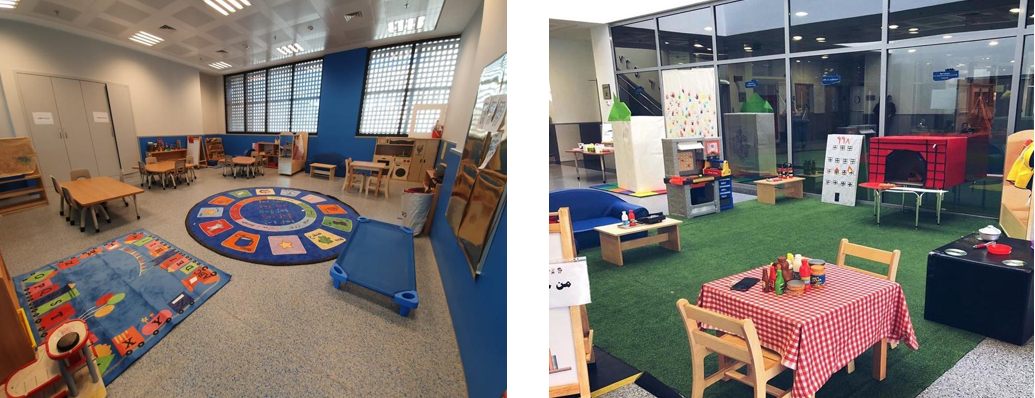
The
nursery operates under the official license and supervision of the Ministry of
Education, ensuring its adherence to safety and care standards. The
university's Self-Investment and Development Fund partially finances the
nursery's operations to maintain nominal fees suitable for students.
Coordination with the University Security Department ensures safe entry and
exit for children and their parents. This demonstrates that the nursery is an
effective, administratively and financially supported facility, ensuring its
continuity and quality of services.imamu.edu.sa
As an extension of Imam Muhammad
ibn Saud Islamic University continuous pursuit of development and in line with
its institutional commitment to work-life balance, the university's nursery and
kindergarten is a pioneering initiative that provides an integrated educational
and nurturing environment for the children of female students, staff, and
faculty members. The nursery is based on a clear vision to "build an
ambitious, social, and active child in their community" through an
educational and cognitive mission focused on creating a stimulating environment
for the child's holistic development in its physical, psychological, cognitive,
and social dimensions. imamu.edu.sa/Child Care Vision and Goals
The nursery aims to achieve several key objectives, including:
- Instilling moderate religious values in the child's personality.
- Developing social behavior and building psychological and
behavioral balance.
- Fostering pride in national identity and belonging.
- Equipping the child with life skills and knowledge appropriate
for their age.
- Providing a healthy and safe environment that meets early
childhood needs.
- Accommodating individual differences and providing educational
care according to each child's need
The nursery's services stem from a system of institutional
values based on excellence in performance, continuous learning, encouraging
creativity and innovation, and a commitment to justice in treatment and care.
This enhances the quality of services provided and supports the university's
role in building a conscious and responsible generation from its earliest
years.
The nursery and kindergarten
facility includes a qualified educational staff, comprising an educational
supervisor, a learning corners supervisor, and specialized teachers for the
Holy Quran, Arabic, mathematics, and English. The nursery provides care for the
children of female students and staff under the supervision of qualified
caregivers. Educational programs are delivered according to age-appropriate
stages, including:
- Early
Care/Daycare: (from 3 months to 3 years)
- Level 1 -
Nursery: (from 3 to 4 years)
- Level 2 -
Junior Kindergarten: (from 4 to 5 years)
- Level 3 -
Senior Kindergarten: (from 5 to 6 years)
The curriculum covers religious,
linguistic, and mathematical aspects. The Holy Quran and Prophetic Hadiths are
taught in a manner suitable for each level, with a focus on values and ethics.
The Arabic language curriculum includes the gradual teaching of letters and numbers,
from recognition and coloring to writing and usage in words. English is also
taught at all stages through interactive and enjoyable activities and songs
that develop the child's language skills. imamu.edu.sa/Child
Care
The
nursery is located in a secure building on campus and is equipped with care
rooms, beds, and recreational and educational corners, supervised by qualified
educators. It operates from 7:00 AM to 3:00 PM to accommodate students'
schedules. It also provides healthy meals and a mini-educational program to
develop children's skills. The university has confirmed that registration
priority is given to the children of female students and staff.
Since
the nursery opening, the number of applications each semester often exceeds
capacity. Therefore, the university is currently considering expansion by
opening another branch or increasing the capacity of the existing one,
especially after its notable success and positive feedback from beneficiaries.
A 2021 survey showed that 92% of users were satisfied with the on-campus
nursery services and requested its continued support.
In
addition to the nursery, the university has allocated dedicated parking spaces
near the facility to facilitate mothers' commutes. Student mothers may also
request morning-only class schedules, where
feasible, to accommodate their childcare responsibilities, and colleges have shown flexibility
in this regard when needed. These measures send a clear message that the
university is mindful of the circumstances of student mothers and ensuring that
academic challenges are proactively managed through practical support.
Integration of Childcare
Services with Maternity Leave Policies
The establishment of the nursery complements the Maternity Leave policy Maternity Leave After the maternity leave ends and the student or employee returns to her studies or work, she finds childcare services readily available for her child. The General Supervisor of Kindergartens at the university, Ms. Huda Al-Huwairini, stated that this achievement was realized through the guidance and follow-up of the university's senior management, demonstrating the leadership's belief in the importance of supporting mothers. The on-campus location of the nursery also makes it easier for a mother to visit her child during the day if needed (e.g., for breastfeeding during breaks).
As part of its ongoing efforts to foster a flexible and supportive work environment, Imam University pays special attention to empowering working mothers and providing facilities that help them balance their family and professional responsibilities. Although the full on-site work system has resumed post-pandemic, some university units apply informal flexible practices. These allow female employees, when necessary and in coordination with their direct supervisor, to work partially remotely during specific periods, such as their children's final exams, reflecting management's understanding of mothers' circumstances. The presence of an on-campus nursery supports for flexible work policies, whether by utilizing the nursery or working remotely, depending on work requirements and the mother's convenience.
When these initiatives are combined with the university's comprehensive family leave policies, including maternity and paternity leave in accordance with the regulations of the Ministry of Human Resources and Social Development as a government institution, it emphasizes the university's dedication to fostering a family-friendly work environment.
Women's Leaves | Ministry of Human Resources and Social Development
This comprehensive package of policies and facilities directly contributes to enhancing the work-life balance for university employees and supports female staff members in balancing family responsibilities, particularly motherhood, without hindering their professional growth. This approach is part of the university's vision to invest in the quality of working life, based on the firm conviction that employee satisfaction positively impacts academic and administrative performance and contributes to achieving sustainable development goals.
Nursery Activities and Events
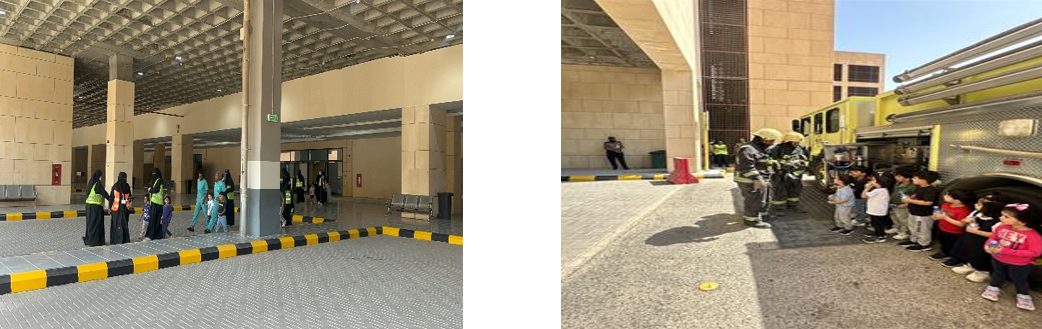
The
General Department of Safety and University Security at Imam Mohammad Ibn Saud
Islamic University conducted a periodic mock evacuation drill at the Nursery
and Kindergarten building (H3) in King Abdullah City for Female Students. The
drill was supervised by the Riyadh Civil Defense and involved relevant
authorities. The Director-General of the department, Mr. Sultan bin Hussein
Al-Bugami, explained that the administration is keen on providing comprehensive
protection for individuals and facilities by preparing thorough emergency plans.
Participants included
the General Department of Technical Affairs, the University Medical Center, and
the nursery and kindergarten staff.units.imamu.edu.sa/Child
Care News
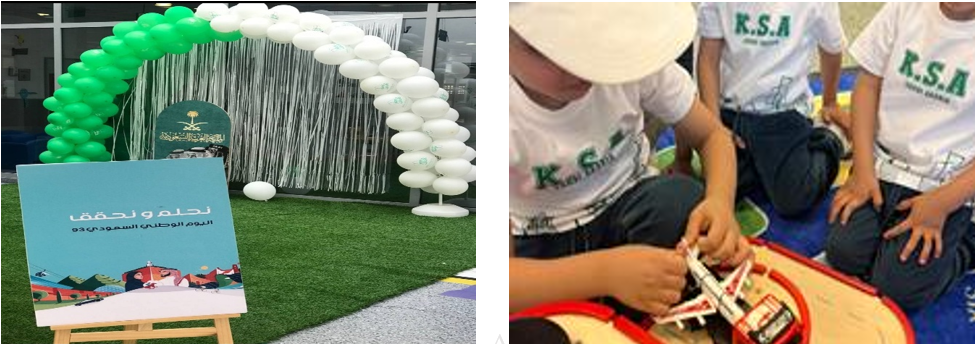
The nursery and
kindergarten at Imam Mohammad Ibn Saud Islamic University held a celebration
for the 94th National Day. The event aimed to cultivate a sense of patriotism
and national pride among the children while educating them about the history
and significance of the Kingdom of Saudi Arabia. The celebration included various
engaging activities, including drawing, coloring, and constructing national
symbols, in an interactive environment that provided enjoyment for the children
and promoted the early development of national values. units.imamu.edu.sa/Child
Care Events
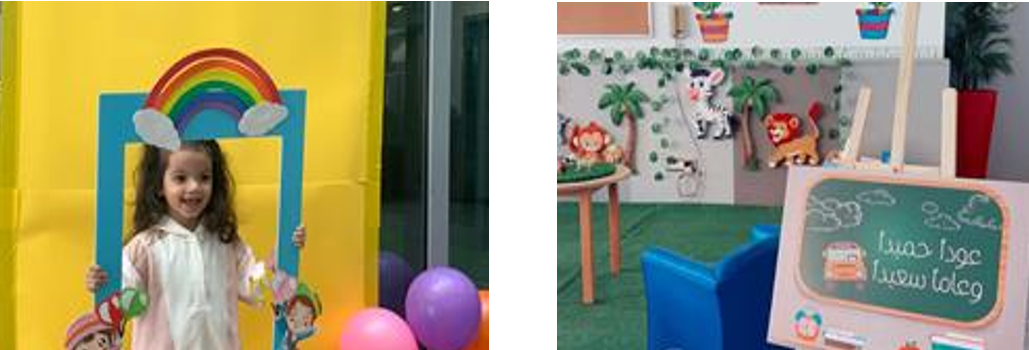
The nursery and kindergarten at King
Abdullah City for Female Students held welcoming events to greet new children
at the beginning of the academic year. These activities aim to foster a
positive relationship between the child and the teacher or caregiver and to
strengthen the children's sense of comfort and belonging within the educational
environment of the nursery. The celebration was conducted in a joyful and
engaging manner, helping to psychologically prepare the children for a safe and
reassuring start to their education. units.imamu.edu.sa/Child Care
Events
Parental Care Policies
Maternity Leave for
Staff and Faculty
The Kingdom of Saudi Arabia places great importance on supporting working women, especially mothers, through regulations and legislation that guarantee their professional and family rights. This aims to achieve a balance between work and family life, enhance family stability, and ensure the healthy development of children. This is evident in the Saudi Labor Law and the Executive Regulations for Human Resources in the Civil Service, issued by the Ministry of Human Resources and Social Development, which serve as the primary reference for regulating leave for women in the public sector. As a government institution, the university applies all relevant governmental regulations.
According to these regulations, a female government employee is entitled to a paid maternity leave of 70 days, starting no more than 28 days before the expected delivery date, based on a certified medical report. This leave can be extended by an additional month without pay, bringing the total to 80 days if extended, providing the mother with sufficient time for primary care of her newborn without affecting her job status or salary. Women's Leave | Ministry of Human Resources and Social Development
In line with legislative developments, Article 151 of the Labor Law was amended by a royal decree in 2023, extending the maternity leave to 12 weeks with full pay. This includes six mandatory weeks after childbirth and six weeks that can be taken flexibly before or after delivery, giving employees more choice in planning their leave. units.imamu.edu.sa/Leaves Regulations
Furthermore, the regulations allow a female employee to request unpaid leave to care for her newborn for up to three years during her service, provided the child is below school age. This is an important option that allows mothers to fully dedicate themselves to childcare in the early stages if needed, without losing their job or future employment benefits. Executive Regulations for Human Resources . The regulations also consider the rights of breastfeeding mothers, granting them a one-hour nursing break daily during the child's first year, which is not deducted from official working hours.
As a government institution, Imam Mohammad Ibn Saud Islamic University affirms its full commitment to applying these regulations to its female faculty and administrative staff. The university works to implement them flexibly, considering both work interests and the employee's comfort, based on its belief in the importance of supporting working mothers and providing a stable work environment, enables them to balace their professional and famliy resposiblilities.
Paternity Leave for Staff and Faculty
The Executive Regulations for
Human Resources in the Civil Service, issued by the Ministry of Human Resources
and Social Development, grant male government employees a paid paternity
leave of three days upon the birth of a new child, to be taken within the
first week of the birth. This measure is part of a package of policies aimed at
promoting work-life balance and supporting Saudi families in their early
stages. This leave applies to all civil and military public sector employees,
based on a Council of Ministers decision in June 2022. Executive Regulations for Human Resources
In
this regard, Imam Mohammad Ibn Saud Islamic University, as a government entity
subject to civil service regulations, confirms its full commitment to applying
this provision to its male faculty and administrative staff. The university
ensures that the procedures for requesting this leave are streamlined, enabling
employees to benefit from it within the specified time. This leave is part of
the university's efforts to foster a supportive work environment for families,
reflecting a belief in the father's active role in welcoming a newborn, both in
terms of providing psychological support to the mother and participating in
childcare from the earliest moments. This policy also reflects the university's
commitment to achieving family balance for its employees, which contributes to
improving quality of life, job satisfaction, and institutional loyalty.
Paternity leave is a clear example
of the wise leadership's commitment in the Kingdom of Saudi Arabia to
developing human resources systems in line with the objectives of the Kingdom's
Vision 2030. This vision places supporting the family, and empowering both men
and women to balance their family and professional commitments, at the
forefront of its priorities.
 University's
Commitment to Implementing Leave Policies
University's
Commitment to Implementing Leave Policies
All
male and female employees and faculty members at Imam University enjoy their
full rights to maternity and paternity leave as stipulated by law. They can
apply for these leaves through the "Wafi" system, an
electronic platform dedicated to managing application processes for university
affiliates and others.es.imamu.edu.sa/Wafi
The
university's Human Resources Department follows up on any updates issued by the
Ministry of Human Resources and Social Development or the Ministry of Education
regarding these leaves and disseminates them immediately. For example, upon the
issuance of the amendment extending maternity leave to 12 weeks, the university
promptly informed its female staff of their right to the additional period via
an internal circular.
As a result of these supportive policies, the
job satisfaction index among female university employees has risen. In an
internal survey in 2021, 89% of female participants expressed satisfaction
with the maternity leave procedures and the ease of obtaining them. Many
mentioned that they were able to balance work and motherhood responsibilities
thanks to this paid leave. Similarly, male employees who became fathers
reported that receiving paternity leave, despite its short duration, had a
positive impact on supporting their wives and being present with their
newborns. This positive impact demonstrates that the university's policies in
this area contribute to the family and psychological stability of its employees.
Gender Equality and Anti-discrimination Policies
The Kingdom of Saudi
Arabia places great importance on promoting gender equality and combating
discrimination against women, based on the principles of Islamic Sharia, which
emphasize justice and complementarity between men and women. This commitment is
reflected in several policies and legislations aimed at empowering women and
ensuring their rights in various fields. Within the legislative framework,
Article 8 of the Basic Law of Governance states that "Governance in the
Kingdom of Saudi Arabia is based on justice, consultation, and equality, in
accordance with Islamic Sharia," confirming the Kingdom’s commitment to
the principle of equality among all citizens without discrimination. laws.boe.gov.sa
National legislation
guarantees full equality between men and women. A report by the Saudi Human
Rights Commission (HRC) affirmed that the Kingdom's regulations, derived from
Islamic Sharia, ensure equal opportunities and reduce inequalities by
eliminating discriminatory practices. hrc - Equal opportunities The report states that
the definition of "discrimination against women" in the CEDAW
convention aligns with the reality in the Kingdom, as its regulations do not
contain any distinction or exclusion that undermines the recognition of women's
rights. There is absolute equality between men and women in human rights in
fields such as work, education, and health.
This legal framework
constitutes a binding public policy of non-discrimination against women. hrc.gov.sa . The Human Rights Commission in the Kingdom
monitors the implementation of policies related to women's rights and makes the
necessary recommendations to strengthen these right. The commission also participates in international
conferences and events to showcase the Kingdom's efforts in this area .
The Kingdom of Saudi
Arabia has been a member of the International Labor Organization (ILO) since
1976 and has ratified 19 conventions, including 8 fundamental conventions
concerning basic labor rights. southsouthpoint.net
Among
the key conventions ratified are Convention No. 100 on Equal Remuneration
(1951), which calls for equal pay for work of equal value, and Convention No.
111 concerning Discrimination in Respect of Employment and Occupation
(1958), which aims to eliminate discrimination in employment. These
ratifications demonstrate the Kingdom's commitment to promoting gender equality and
non-discrimination in the workplace in line with international standards.The Kingdom of Saudi Arabia has
launched numerous initiatives and reforms as part of Vision 2030, aiming to
empower women in the economic, social, and political spheres. These reforms
have included:
- Empowering women in the labor market by enacting legislation
that ensures equal opportunities and prevents discrimination in employment.
- Enhancing women's participation in public life, including
allowing them to drive and hold leadership positions in the public and private
sectors.
- Protecting women from violence by issuing the
Protection from Abuse Law and providing mechanisms for reporting cases of
domestic violence. Human Rights | GOV.SA
These efforts demonstrate the
Kingdom's commitment to achieving gender equality and promoting women's rights,
in line with the principles of Islamic Sharia and international human rights
standards.
University Policy on
Gender Equality and Non-Discrimination
Imam
Mohammad Ibn Saud Islamic University applies the regulations of the Ministry of
Education, which stipulate equality. The Code of Professional Conduct and
Ethics for University Employees, issued by the Ministry, emphasizes respectful
treatment of all individuals without unlawful discrimination. The Law of the
Council of Higher Education and its executive regulations also state that no
student shall be discriminated against in rights and duties for non-academic
reasons, meaning no differentiation in treatment or opportunities based on
gender. moe.gov.sa/Code
of Professional Conduct
The
university adopts a clear policy of non-discrimination between male and female
students in admissions and services. The University President has affirmed that
the university has made significant efforts towards SDG 5 (Gender Equality) to
empower women and enhance their roles. These efforts include ensuring
equal opportunities and providing female students with distinguished education
in all specializations, enabling them to pursue postgraduate studies. This
demonstrates the university's commitment to a policy of non-discrimination
based on gender in the educational process; female students receive the same
quality of education and development opportunities as male students. imamu.edu.sa/News
As
part of its ethical policy, the university emphasizes respect for the personal
privacy of students. Inquiring about personal identity or private preferences
in any official context is not permitted. Students are evaluated solely based
on their academic performance and general conduct. This institutional culture
provides an indirect umbrella against discrimination, as the focus remains on the
student as a learner, regardless of any other classification. imamu.edu.sa/Code
of Professional Ethics for Faculty Members
The university's achievements in women's
empowerment—such as appointing a female Vice President, deans, vice-deans, and
department heads; increasing the number of female faculty members; and the
implementation of equal financial rewards for male and female students—are all
evidence of its non-discrimination policy. The university has achieved a
qualitative leap in women's empowerment indicators, as recognized by the media,
Media/Women's
empowerment highlighting a fair environment. For instance,
the percentage of Saudi female academics on the faculty has significantly
increased, and several women have assumed leadership positions (deans of
colleges such as Science and Humanities). This professional parity is a result
of the institutional policy of non-discrimination.
The University's
Policy on Protecting Those Reporting Discrimination
In
2023, the Kingdom of Saudi Arabia enacted a law for the Protection of
Whistleblowers, Witnesses, Experts, and Victims (Royal Decree M/148 of 1445
AH), which aims to encourage the reporting of violations and protect those who
report any abuses. Under this law, any adverse employment action against a
protected person is prohibited, meaning they are shielded from retaliation or
discrimination for providing information. Within the university context, if someone
experiences abuse or discrimination and reports it, they are protected from any
action against them. This general legal framework fosters a safe environment
for reporting any discrimination.
System for the Protection of Whistleblowers, Witnesses, Experts and
Victims
The
law establishes a special protection program under the supervision of the Public
Prosecution, which includes measures such as concealing data and identities,
taking steps to protect the whistleblower in case of danger, and prohibiting
any retaliatory actions. Specifically, the law prohibits any employment or
administrative actions against the protected person and penalizes violators
with imprisonment and fines. This decree provides a strong legal framework that
can benefit anyone reporting discrimination in any entity, as it ensures they
will not be harmed as a result of their report. As a government educational
institution, the university fully adheres to and applies this law. The Public Prosecution/News
The university is committed to
promoting the principles of justice, transparency, and equality in the work and
study environment, and ensuring the right of all its members to submit a
complaint when they are subjected to any unfair treatment or discrimination
based on gender, race, or color.
The university has established a
comprehensive system for receiving and handling complaints and grievances in
accordance with approved regulations. It has several official and reliable
channels that allow students, staff, and faculty of both genders to submit
their reports and observations with complete confidentiality.
Key channels include:
- Huqooqi System: An electronic system for
students to submit grievances confidentially. The complaint is reviewed by the
relevant authority and is not closed without the applicant's approval, ensuring
transparency. It allows for complaints related to student rights, including
administrative abuses or academic/behavioral discrimination. es.imamu.edu.sa/Legal System
- Tawasul System: An electronic service for the
university community to raise inquiries or complaints related to various
university sectors, which are handled by the relevant authorities such as colleges
and deanships. imamu.edu.sa/tawasul
- Complaints and Suggestions Form – Human Resources: The General Department of Human Resources provides an online
form on its official website for receiving employee complaints, organizational
feedback, and reports concerning unfair employment practices or violations of
the professional code of conduct. Complaints and suggestions
Women’s Access,
Graduation Rate and Monitoring Schemes
Stemming from the strategic
direction of Imam Mohammad Ibn Saud Islamic University towards building a fair,
inclusive, and empowering academic environment, the university is committed to
providing a comprehensive system of institutional programs and initiatives that
support female students. This commitment aligns with its policy of promoting
equal opportunities and achieving educational justice between genders. It is
also part of the broader framework of Saudi Vision 2030 and the university's
pursuit of the highest standards of institutional quality and excellence, as
well as its efforts to align with the indicators of the Times Higher Education Impact
Rankings, particularly concerning SDG 5. This
is achieved by supporting women's participation in higher education and
facilitating their academic and professional success within a stimulating and
safe educational environment.
Women's Access Schemes
The university provides specialized guidance services for female
students through academic advising units in the Deanship of Admission and
Registration and within the colleges. These services aim to:
- Guide new students in identifying and selecting a suitable
specialization based on their interests and abilities, in line with labor
market needs.
- Support students facing academic difficulties by providing
guidance and helping them develop plans to improve their academic performance.
- Nurture outstanding students by monitoring their progress and
offering programs that enhance their capabilities and support their continued
excellence.
- Inform students about regulations and university bylaws to
ensure compliance and optimal use of available services.
- Prepare students for graduation by assisting them in completing
their requirements and guiding them toward post-graduation opportunities. units.imamu.edu.sa/Female Student Affairs
The Academic Guidance Unit at the
College of Fundamentals of Religion at Imam Muhammad ibn Saud Islamic
University is a living example of a vital component that contributes to
supporting female students' educational and psychological journeys. It plays a
fundamental role in creating a stimulating university environment by providing
guidance and counseling services that help students in adapting to academic
requirements, overcome challenges, and develop their personal skills. The unit
provides individual and group counseling to guide students in choosing their
majors and study plans. It also monitors cases of academic failure or
psychological and social problems and coordinates with the relevant authorities
to follow up on them confidentially and professionally. In addition, the unit
organizes workshops and awareness-raising courses that enhance students '
skills in time management, academic excellence, and building self-confidence.
This contributes to raising achievement levels and achieving comprehensive university
adaptation. This is in line with the university's vision of empowering female
students and building an academically and behaviorally qualified generation. Student and Academic Guidance Unit
In the
field of psychological counseling, the Enaya Center is one of the pioneering
initiatives at Imam Muhammad ibn Saud Islamic University. It provides
psychological and social counseling services to female students within an
institutional framework that seeks to promote mental health and social adjustment
within the university environment. The center offers confidential individual
and group counseling sessions, supervised by a select group of specialized
psychological counselors, with the aim of helping female students overcome
psychological and behavioral challenges that may hinder their educational
journey. The center also implements periodic preventive and developmental
programs that enhance psychological and social awareness and contribute to
building a balanced personality capable of positively adapting to the pressures of university and community life. Enaya is part of
the university's commitment to providing a supportive and comprehensive
educational environment that enables female students to achieve both academic
and psychological excellence. Psychological and Social Counseling
Center (Enaya)The University 's Vice deanship of
Female Student Affairs plays a pivotal role in providing integrated services
aimed at supporting female students academically and socially and enhancing
their participation in university life. The Vice Deanship responsibilities
include overseeing the implementation of various student activities and
programs that contribute to developing skills and honing talents, and providing
the necessary support and care for female students with special needs to ensure
their full integration into the educational environment. The vice deanship also
oversees the management of services provided by the Student Fund, including
loans and grants, and monitors the disbursement of rewards and allowances to
ensure they reach those entitled to them on a regular basis. These efforts
reflect the university's commitment to providing a comprehensive and
stimulating educational environment that achieves a balance between academic
and social support for female students. Vice Deanship of Female Student Affairs
The university
provides a range of technical support and assistance services dedicated to
female students, with the aim of facilitating their academic journey and
ensuring easy access to electronic services. These services include technical
support related to admission and registration procedures, helping students
complete academic processes efficiently and without technical obstacles. The
university also provides technical support for the female student transfer
program, ensuring smooth and continuous service continuity. Direct technical
support via live chat is also activated, allowing students to receive
assistance in a real-time and effective manner. These efforts come within the
framework of the university's commitment to providing a comprehensive digital
learning environment that supports students' academic success and service needs.
Support and Assistance
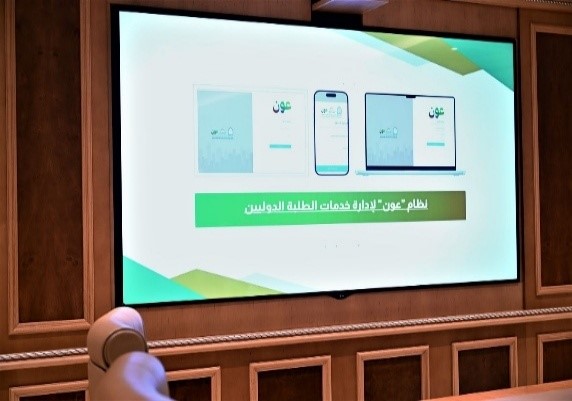 The University President launched the "Aoun " system for managing international student services, as one of the unique initiatives aimed at supporting international female students, in line with the university's commitment to empowering non-Saudi female students and enhancing their educational and living experience. This system is a comprehensive platform that provides a range of integrated services, including academic, social, and cultural support, which contributes to facilitating integrating female students into the university environment. Aoun also provides quality services, such as organizing Hajj and Umrah trips, disbursing lump sum financial aid and allowances, including airfare and shipping, in addition to providing training courses and professional certifications that enhance female students' capabilities and prepare them for the job market. This system exemplifies the university's commitment to providing a comprehensive and equitable educational environment that caters to the needs of all categories of female students . Aoun System/ imamu.News
The Deanship of Student Affairs, through the Vice Deanship for Female Student Affairs for Programs and Activities, is responsible for organizing and implementing a diverse range of student programs and activities through 30 student clubs across the colleges. These clubs aim to develop
female students' personalities in a
comprehensive manner. The Vice Deanship works to study and identify the needs
of female students in religious, psychological, social, cultural, and academic
aspects, ensuring the development of purposeful and comprehensive programs. It
also seeks to provide the largest possible number of female students with the
opportunity to actively participate in these activities, enhancing their sense
of belonging and honing their personal and leadership skills. The Vice Deanship
places great importance on providing the necessary capabilities and equipment
for the success of the clubs' programs. Student activity, within a stimulating
educational environment that supports the principles of interaction, participation
and excellence. Student clubs in the university's religions, agencies, and colleges
.
These clubs organize events and competitions
specifically for female students (such as career days, project exhibitions, and
awareness campaigns), under the supervision of the Vice Deanship for
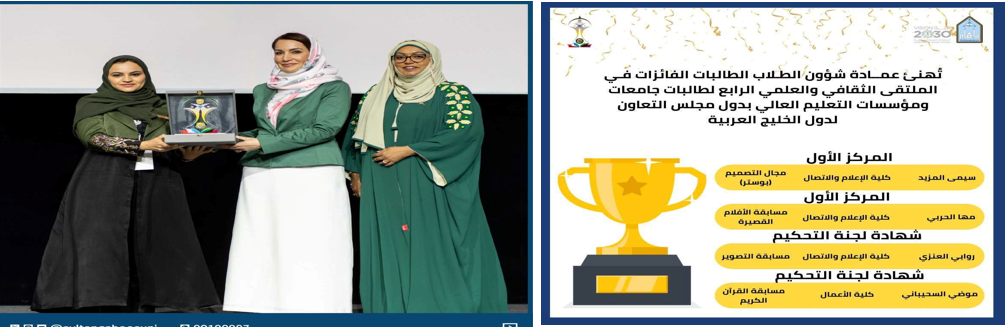
Student Affairs. These activities
have resulted in female students winning awards at cultural and scientific
forums across the Gulf, demonstrating the effectiveness of the support
provided. imamu.edu.sa/news/events
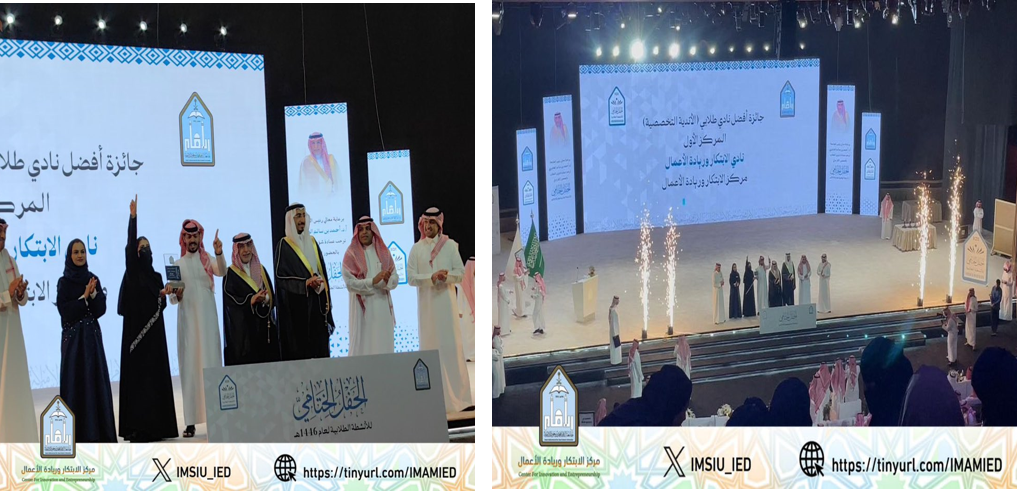
On May 13, 2025, Imam Muhammad ibn
Saud Islamic University honored the Innovation and Entrepreneurship Club for
winning first place in the Specialized Clubs category during the closing
ceremony of student activities for the academic year 1446 AH. Dr. Sawsan
Al-Momen, head of the center, emphasized that this achievement reflects the
club's efforts to promote a culture of innovation and entrepreneurship, in line
with the Kingdom's Vision 2030. She praised the support of His Excellency the
University President and His Excellency the Vice President for Graduate Studies
and Scientific Research. units.imamu.edu.sa/News
One
of the forms of support provided by the university is financial aid
specifically for deserving female students. This is part of its social and
economic support to enhance the continuity of female students in their academic
careers. These aids are granted according to specific criteria and standards,
most notably that the student be regular in her academic studies and not have
any previous financial dues to the university. Furthermore, the student must
not have previously received financial aid during her studies, with the
exception of family aid, which is considered a special case. These aids aim to
alleviate the financial burdens on needy female students and support them in
creating the appropriate conditions for success and academic achievement. Applying
for subvention (female students)
As part of Imam Muhammad ibn Saud
Islamic University's efforts to empower women and enhance higher education
opportunities for all female students, the university offers a variety of
scholarships designed to support Saudi and non-Saudi female students, in
accordance with the Ministry of Education's regulations and the university's
scholarship regulations. Regulation scholarship students
These
programs include:
External Scholarships:
These are allocated to non-Saudi female students from outside the Kingdom, and
provide them with comprehensive coverage, including full exemption from tuition
fees, a monthly stipend, university housing, healthcare, and annual travel
tickets, in addition to educational and cultural support programs that help
with academic and social integration. units.imamu.edu.sa/Gallery
Internal scholarships: These are granted to female students who are
legally residing within the Kingdom, and include a number of similar benefits,
including monthly stipends, health care, and academic support. Study in Saudi Arabia Scholarships
Scholarships are offered to female students and
include many benefits such as monthly stipends, housing and living expenses,
health insurance, and annual airfare for international students, in addition to
training opportunities and academic, social, and psychological support through
specialized centers such as " Enaya." Applications for these
scholarships are made during the official admission periods announced by the
university on its website through the support services portal. To continue the
scholarship, the student must adhere to academic regulations, maintain the
required GPA, demonstrate behavioral discipline, and not drop out of school
without an official justification. Imamu.Applying
for
Scholarship
With support from the Student Fund, the Deanship
of Student Affairs launched excellence awards to motivate students. For
example, the Dean's List Award For academic excellence, outstanding male and
female students are nominated for the award, and financial rewards are offered
as an incentive. The Deanship also organizes honorary trips – with the support
of the Fund – such as: An Umrah trip was organized for six academically
outstanding female students and their supervisors. The trip lasted three days
and included full accommodations for the participants.
These honors programs encourage
students to excel and provide them with moral and material support. Deanship of Student Affairs/News .
Through the Deanship of Student
Affairs (within the Deanship of Student Affairs), the university provides a
range of support services. This includes providing healthy and suitable
university housing for female students and providing healthy meals at
subsidized prices in university campus restaurants. The university also
strengthens the role of the Student Fund to meet the financial needs of needy
male and female students. For example, the Fund provides emergency financial
aid. Students can apply electronically according to the regulations. These
programs ensure that a student's educational journey is not interrupted due to
financial or living obstacles, and provide her with a stable environment. Deanship of Student Affairs
Women in Underrepresented Subjects
In our modern societies, the role of
women has become essential to comprehensive development, and education is no
longer confined to traditional boundaries or stereotypical choices. However,
certain fields still suffer from the underrepresentation of women, often due to
societal perceptions or a lack of awareness about available opportunities. This
highlights the need to re-examine the factors influencing women's career
choices and to create an environment that encourages them to explore new fields
and break down barriers.
The launch of the Bachelor of Nursing
program for female students stands as a key initiative to bolster female
representation in a field where they have been historically underrepresented at
Imam University. The program welcomed its first cohort of 60 female students in
1446 AH. By providing a comprehensive educational environment, including
state-of-the-art laboratories and hands-on clinical training in hospitals, the
university aims to meet market demands, encourage female students to pursue
this vital career path, and contribute to national health security. Opening
College of Nursing
As
part of its comprehensive development plan, the College of Science has launched
a program in Financial Mathematics and Actuarial Science, a specialized field
that combines mathematics with financial risk management. Despite its previous
lack of prevalence among female students, the university took the initiative to
make it available to them, organizing introductory seminars to encourage their
enrollment. Additionally, the College of Science holds an annual "Science
Forum for Female Students," which showcases their achievements in
mathematics, physics, and chemistry. This has contributed to increasing the
participation rate of female students in various science departments compared
to previous years.
To effectively empower
female students in scientific fields, the university has equipped the
laboratories in the Female Students' City with the latest technologies,
featuring 153 labs in disciplines such as computer science, chemistry, biology,
and physics. These labs are utilized for graduation projects and research. This
is supplemented by the "Support Program for Female Innovators and
Inventors," which provides funding and supervision for students' research
projects. This
support has enabled female students to register patents in advanced
technological fields, an achievement that would not have been possible without
a nurturing and motivating environment.
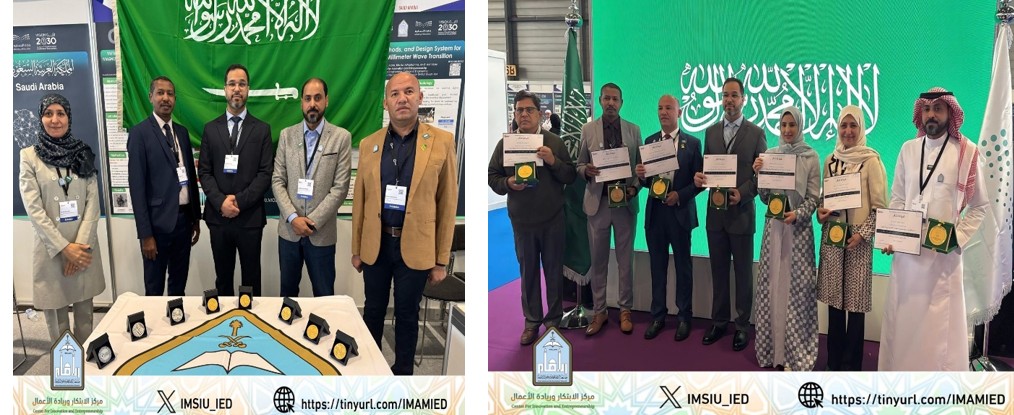
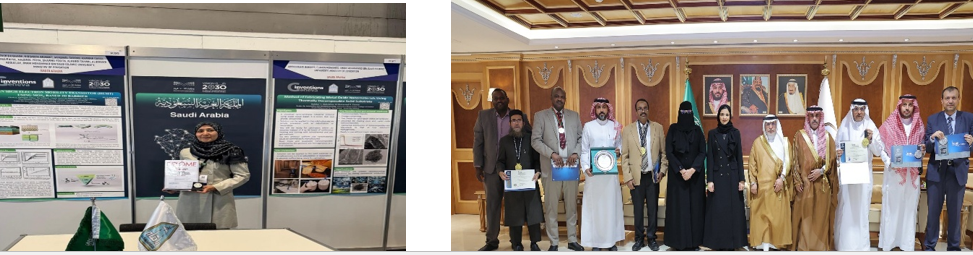
Imam
Mohammad Ibn Saud Islamic University has concluded its participation in the Geneva
International Exhibition of Inventions 2025, held from April 9 to 13 in Geneva,
by winning four international medals: two gold (one with honors) and two
silver. The awards recognized innovations presented by an elite group of the
university's members in the fields of environment, industry, and energy.
Among
the winning innovations:
- Gold Medal with Honors: Awarded for the invention
"Production of Hydrogen as an Eco-Friendly Fuel Using Nanocomposites
of Magnesium Aluminate and Copper." The researchers are Dr. Mohamed
Nady Abdelhamid Ibrahim, Dr. Mohamed Khairy Abdelfattah Omran, and Dr.
Babeker Yagoub Abdelkhair from the College of Science – Department of
Chemistry.
- Gold Medal: Awarded for the innovation
"A Device, Methods, and Design System for Broadband Millimeter-Wave
Transmission." The researchers are Dr. Mohammad Shah Alam Amir and
Dr. Khalid Bin Abdullah Almuhanna from the College of Engineering –
Department of Electrical Engineering.
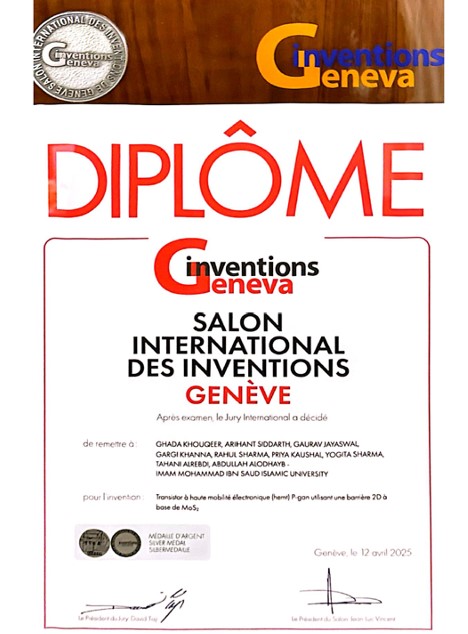
- Silver Medal: Awarded to Dr. Ghadah Ahmed
Mohammed Khouqeer from the College of Science – Department of Physics, for
the innovation "A Hole-Doped Gallium Nitride (GaN) High-Electron-Mobility
Transistor (HEMT) with a 2D Barrier Based on Molybdenum Disulfide
(MoS₂)."
- Silver Medal: Awarded to Dr. Babeker Yagoub
Alhadi Abdelkhair and Dr. Mohammed Rahmatallh Alamin from the College of
Science – Department of Chemistry, for the innovation "Preparation of
Metal Oxides in Their Pure Form and as Mixtures Using Paper Towel
Waste."units.imamu.edu.sa/News
The Marketing,
Business, and Social Responsibility Unit at the College of Science at Imam
Mohammad Ibn Saud Islamic University organized an introductory session titled
"Patenting and the Experience of Participating in the Geneva International
Exhibition of Inventions." units.imamu.edu.sa/News
The session was presented by Dr. Ghadah bint Ahmed Khouqeer,
a silver medalist at the 50th edition of the exhibition. Dr. Ghadah shared her
experience of developing her innovative project and showcasing it
internationally, highlighting the importance of institutional and leadership
support in fostering a culture of innovation and scientific research. She also
emphasized the role of innovation in enhancing the Kingdom's
international
standing and called for greater interdisciplinary collaboration to develop
sustainable solutions, stressing that such successes reflect the university's
academic and research excellence. units.imamu.edu.sa/news
In a new achievement reflecting
excellence in innovation, Imam Mohammad Ibn Saud Islamic University, under the
supervision of the Innovation and Entrepreneurship Center, has won first place
in the "Promising Innovator" track at the 5th Health Innovation
Hackathon. The competition was organized by King Saud bin Abdulaziz University
for Health Sciences from January 24 to 27, 2025, and featured participants from
more than 55 Saudi universities.
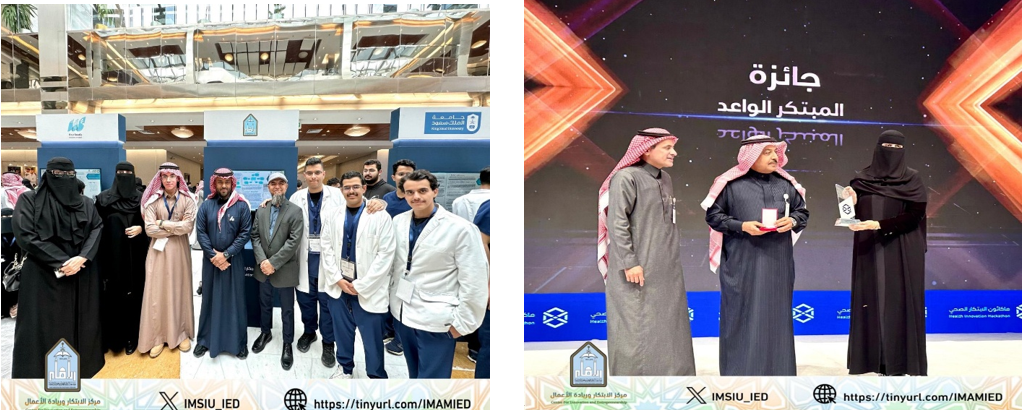
The winning project, presented by student
Abdulrahman Al-Ammar under the supervision of Dr. Salah El Din Khan from the
College of Medicine, was distinguished for its development of anti-infection
surgical sutures using silver nanoparticles. The participants expressed their
delight with the victory, affirming their commitment to continue innovating to
serve the nation's health and enhance their role in developing solutions that
improve healthcare.
From April 17 to
21, 2024, Imam Mohammad Ibn Saud Islamic University participated in the 49th
Geneva International Exhibition of Inventions, securing a number of global
awards, including gold and bronze medals, for innovations presented by its
members across various fields.
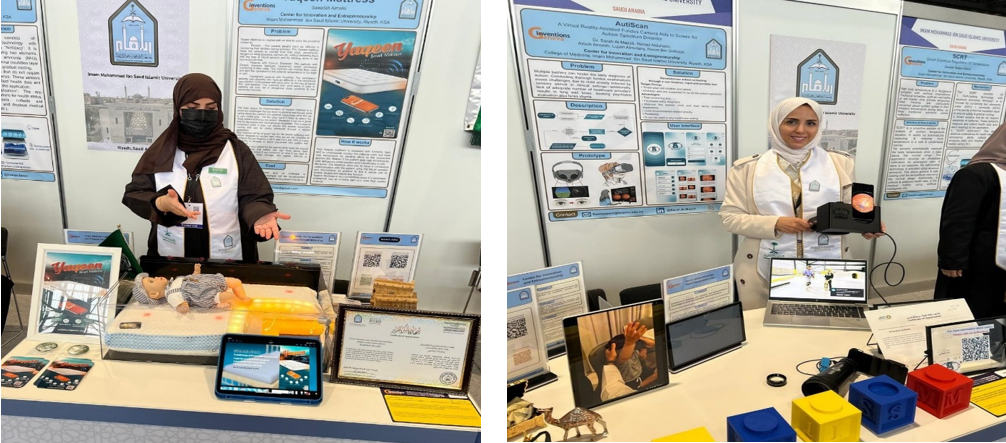
The innovations
included the "AutiScan" device for detecting autism spectrum
disorder, an advanced pen for measuring blood sugar levels, the
"Yaqeen" smart mattress, and the "SCRT" technology for
regulating children's temperature during sleep. Dr. Sawsan Al-Momen, Head of
the Innovation and Entrepreneurship Center, stated that this participation is
part of the university's efforts to enhance its international presence and
achieve the goals of the Saudi Vision 2030. Imam Mohammad Ibn Saud Islamic University wins the gold medal and
several international awards at the 49th Geneva International Exhibition of
Inventions.
The
Innovation and Entrepreneurship Center at Imam Mohammad Ibn Saud Islamic
University has announced the nomination of three teams from the Riyadh region,
out of 35 participating teams, for the global finals of the International Space
Apps Challenge 2024. The
event was organized by the university in collaboration with the American space
agency "NASA," and in strategic partnership with the Saudi Space
Agency and the Communications, Space & Technology Commission, from October
3 to 5, 2024. The nominated teams are: Jurm Project, Green Shift, and Proximus
Exoplanet Tool.
Center
for Innovation and Entrepreneurship Announces the Three Teams Nominated for the
Global Finals of the 2024 NASA International Space Apps Challenge
Women's Mentoring
Schemes
The
Academic Advising Program for New Female Students, offered by the Deanship of
Admissions and Registration, is an annual orientation program implemented at
the start of each academic year. It targets new female students and includes
introductory and guidance meetings during the first week of studies to inform
them of their rights, responsibilities, and available services. For instance,
in 1446 AH, the Deanship organized the "Orientation Meeting for New Female
Students," which was attended by the Vice Dean for Female Student Affairs.
During the event, students were guided on the electronic registration process,
the procedure for obtaining a university ID card, and were introduced to
support centers like the library and academic counseling services. An
"Advising Kit," containing simplified guides to university regulations
and policies, is also distributed. This program facilitates the integration of
new students into the university environment and answers their initial
questions. imamu.edu.sa/news
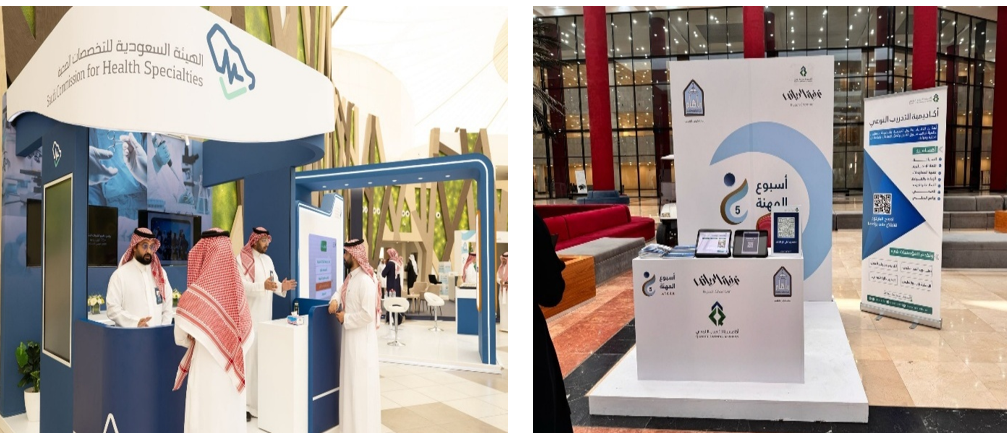
Imam University organizes an annual
Career Week, with a dedicated portion for female students held at the King
Abdullah City for Female Students. In the 2025 edition, intensive events were
conducted over two days, targeting final-year students and recent graduates.
The events featured training workshops and guidance sessions led by labor
market specialists. The Human Resources Development Fund (HRDF) presented a
workshop on professional and social guidance, career planning, and building a
professional identity, aimed at preparing students for their careers after
graduation. Additionally, two training workshops were held, including one
titled "Introduction to Professional Certifications," which explained
the importance of such certificates in enhancing graduates' skills. These
advising activities, specifically designed for female students, help them
transition from their studies to the workforce with greater confidence and
readiness. Fifth Career Week
Activities The Fifth Career
Week activities will continue at King Abdullah City for Girls
Women Applications and Entry Policy
Imam Mohammad Ibn
Saud Islamic University has a clear policy supporting the admission and participation
of female students in university life, reflecting its commitment to achieving
gender equality and empowering women and girls, in accordance with the fifth
Sustainable Development Goal (SDG5). This regulation aims to govern the
admission and enrollment process for female students to ensure equal
opportunities and enhance women's participation in various university education
tracks. This contributes to preparing a conscious and qualified generation of
female graduates capable of serving their community and nation. The Deanship of
Admissions and Registration oversees the admission procedures for female
students in all specializations through the Vice Dean for Female Student
Affairs and the Vice Dean for Academic Advising. All academic and administrative
operations related to female students are managed at the King Abdullah City for
Female Students in Riyadh, which includes specialized administrative and
service units supervised by vice deans to ensure the provision of excellent
service. Admission Guide Bac h elor_Diploma.pdf Unified
electronic admission for female students
Imam Mohammad
Ibn Saud Islamic University has implemented a series of initiatives and
policies to promote the inclusion of female students and support their academic
and administrative development. The university recognized that the equal
participation of women in the educational process is a key element for
achieving comprehensive development. Consequently, the university adopted an
academic expansion plan that includes opening specializations previously
unavailable to female students. For example, Imam University introduced three
new specializations, including a Nursing program (for female students only), in
addition to programs in Financial/Actuarial Mathematics and Marketing. The
university announced admissions for the first cohort of 60 female students into
the Bachelor of Nursing program starting in the academic year 1446 AH, as part
of its efforts to align with Vision 2030 and meet the Kingdom's need for
nursing professionals. These steps confirm the existence of policies to
increase the participation of female students in new fields. imamu.edu.sa/news
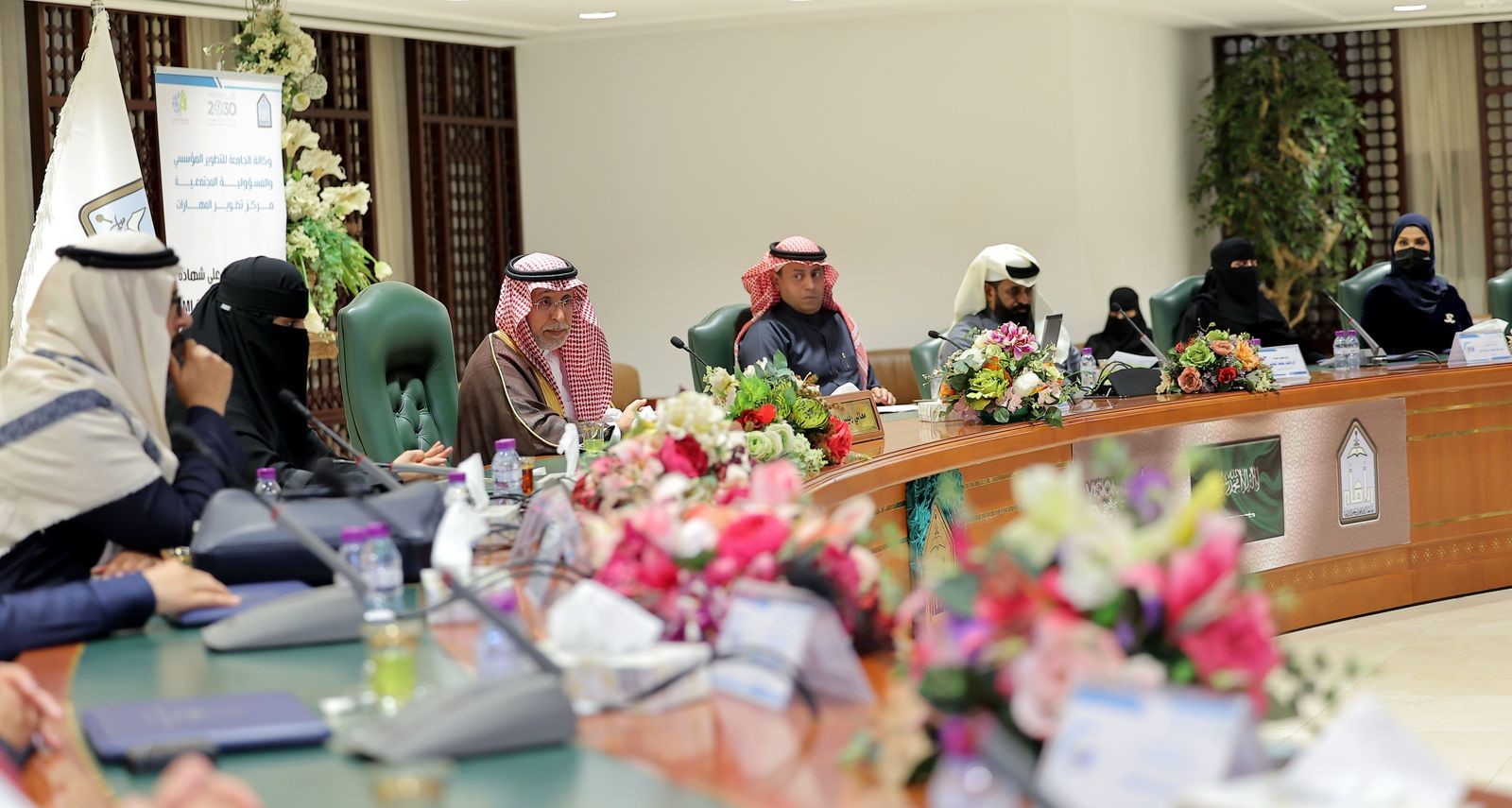
Imam
University has adopted policies to empower female academics and involve them in
leadership positions, university councils, and strategic plans. On February 17,
2025, the university organized a ceremony to honor participants of the
"Academic Leadership Development (ALD)" program, which was
implemented by the Skills Development Center in collaboration with the American
company LMI. The program aims to enhance the academic leadership skills of the
university's male and female personnel, covering topics such as the qualities
of leaders, effective communication, time management, and employee motivation.
More than 14,000 trainees have benefited from the center's programs, and 44
faculty members have been empowered to obtain the British Fellowship in
University Education. The female vice-deans of the colleges also expressed
their appreciation for the high-quality courses that contribute to promoting
academic excellence and creative leadership within the university. units.imamu.edu.sa/News
The
university acknowledges the pivotal role of women in learning, teaching, and
leadership, and has therefore committed to integrating women into its
decision-making processes. Notably, the number of female graduates exceeds that
of male graduates by 8%, and the number of female academics has increased by
approximately 15% compared to their male counterparts. This increase is
reflected in the significant representation of women in leadership positions
within the university. Dr. Kholoud bint Fawaz Al-Tamimi has been appointed as
the Vice President for Institutional Development and Social Responsibility, and
Dr. Kholoud bint Jamal Sandouqa as the Dean of the Deanship of Evaluation and
Quality. These appointments have been praised by university officials, faculty
members, and students. The percentage of women in leadership positions at the
university has reached approximately 40%, underscoring its commitment to
promoting women's empowerment at all levels.
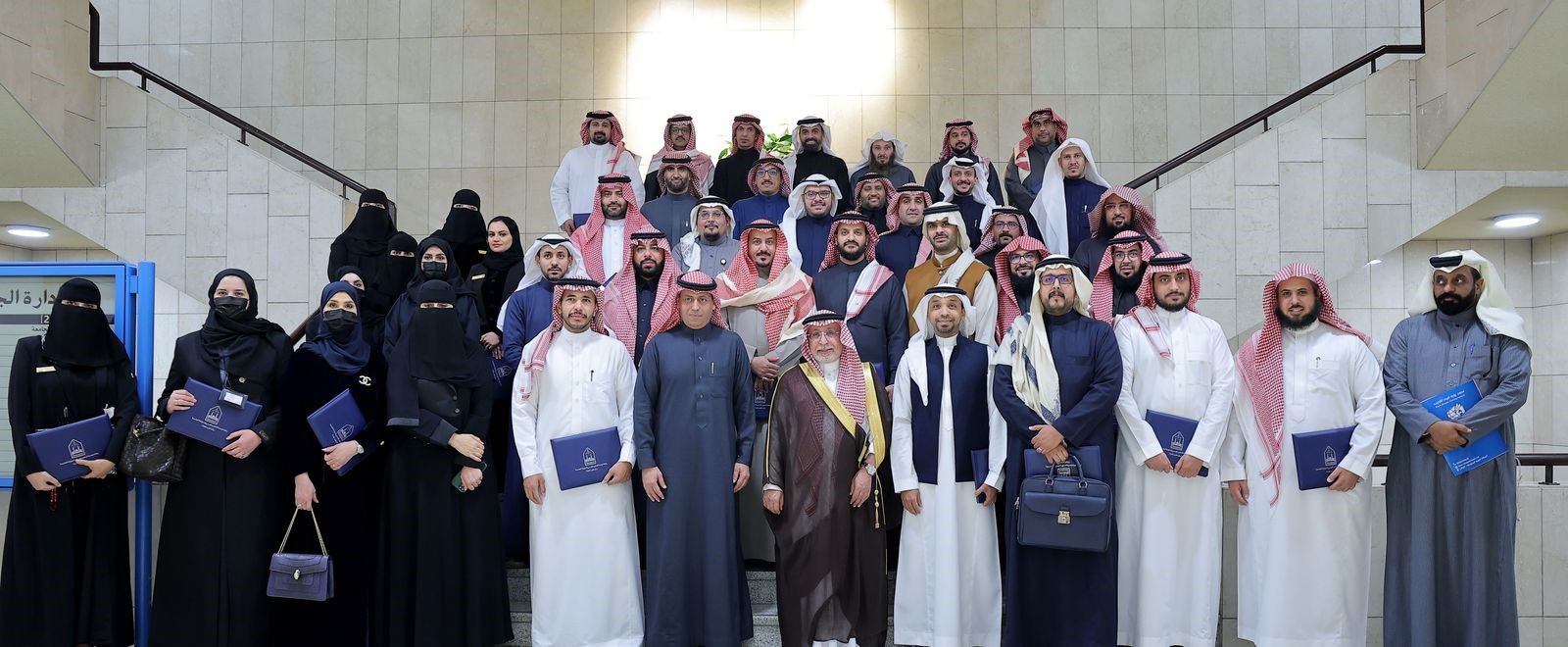
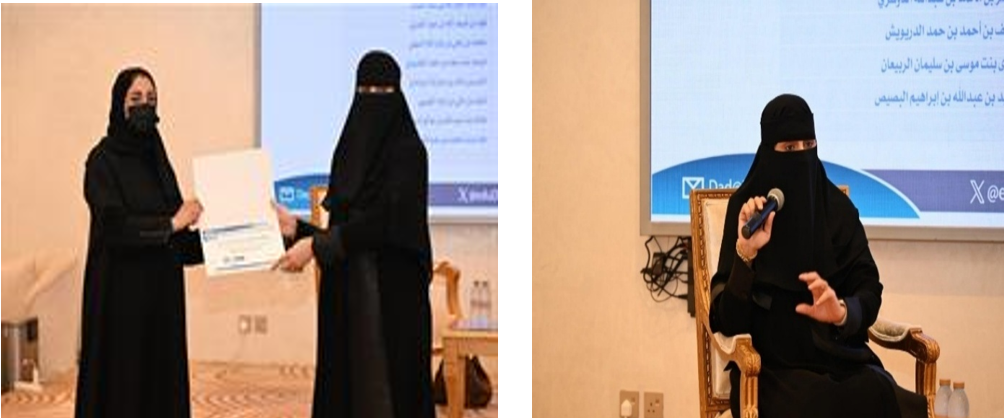
The
Skills Development Center at the university recognized and awarded fifty male
and female employees from various departments and units for their achievements
in obtaining professional certifications in leadership and project management. The
ceremony was held at the Madareem Crown Hotel and attended by the Vice
President for Institutional Development and Social Responsibility, Dr. Kholoud
bint Fawaz Al-Tamimi. She affirmed that this recognition is supported and
guided by His Excellency the University President, Professor Dr. Ahmed bin
Salem Al-Ameri, and aims to achieve the university's goals of developing
administrative staff and enhancing their skills in line with its strategic
vision. The head of the Skills Development Center, Dr. Mohammed bin Nida
Al-Anzi, called on the honorees to continue their efforts toward further
achievements in improving administrative work. At the conclusion of the
ceremony, certificates were distributed and commemorative photos were taken.
Honoring
50 male and female employees who obtained professional certificates
As part of its initiative to enhance
female student engagement, the university has undertaken substantial
development efforts at King Abdullah City for Female Students. The city now
includes six large academic buildings for the women's colleges and five
administrative buildings, one of which houses the first-of-its-kind central
library for female students. Covering an area of over 600,000 square meters,
the campus contains 153 modern laboratories for disciplines such as computer
science, graphics, chemistry, biology, and physics, in addition to 30 student clubs.
This infrastructural development was implemented according to strategic plans
to provide a comprehensive environment that encourages female student
enrollment and facilitates their academic and cultural engagement.
In summary, Imam Mohammad Ibn Saud Islamic
University is actively implementing thorough measures to improve enrollment
opportunities for female students and to support their academic and
professional development across diverse fields. By developing new
specializations, improving the learning environment, and upholding the
principle of equality, the university is successfully presenting an exemplary
model for supporting Saudi women and strengthening their role in national
development. Moreover, the university's commitment to achieving the goals of
Vision 2030 and its adoption of clear institutional policies reflect a
strategic awareness of the importance of women's involvement in the educational
and developmental journey, preparing future generations for an environment with
greater justice and equal opportunities.
Tracing Access
University education is a fundamental pillar for empowering
women and activating their role in national development, making the tracking of
progress and admission indicators in higher education institutions vital for
understanding trends in female participation in education. In this context,
these statistics aim to highlight the national percentage of female applicants
to universities and to analyze actual admission rates, for the purpose of
assessing the availability of educational opportunities and the achievement of
equity in admissions. This data also supports policymakers in developing future
educational policies that align with the objectives of the Kingdom's Vision
2030 towards empowering women and increasing their participation in various
sectors.
In light of this, Imam Mohammad Ibn Saud Islamic
University emerges as a prominent model for tracking and monitoring the rates
of female student enrollment and annual admissions. Official data indicates
that the university is making clear strides toward achieving gender balance in
university admissions. In the academic year 1446 AH, the total number of male
and female students at the university reached 57,590, distributed between
29,453 male students and 28,137 female students, following the university's
announcement of the admission of more than 13,500 students to its bachelor's programs, in addition to 2,500 in
diploma programs for that year (on August 18, 2024). These statistics
demonstrate the university's focus on documenting the numbers of admitted
students of both genders, noting that the percentage of female students was
nearly 49% of the total student body. imamu.edu.sa/News
The university announced the opening of admissions for the
year 1446 AH through the Unified Admission Portal for Female Students, with a
specific number of seats allocated for them (June 2024), which reflects the
existence of a well-regulated system for monitoring and tracking female
admissions. Furthermore, national statistics from the Council of Universities
Affairs show a clear prevalence of female students in terms of the overall
percentage in Saudi universities, as they constitute nearly 60% of total
graduates. This aligns with the national trend, which Imam University follows
by enrolling high percentages of female students annually. Looking at the official
figures published on the university and Ministry of Education websites, it is
evident that the number of enrolled female students at the university is nearly
equal to the number of male students, reflecting the university's success in
attracting female students and ensuring the principle of equality in
admissions.
Based on the foregoing, it is clear that Imam Mohammad Ibn
Saud Islamic University embodies a national model for supporting the
empowerment of women through education, via clear admission policies,
documented statistics, and a constant commitment to achieving gender balance in
university enrollment opportunities. Moreover, tracking female student
enrollment rates and sharing this data transparently reflects the university's
commitment to its developmental and educational role and enhances the
effectiveness of future decisions aimed at increasing women's participation in
higher education and the labor market. The continuation of this approach
strengthens the university's position within the national education system and
supports the general trend toward realizing the aspirations of the Kingdom's
Vision 2030 in building a comprehensive and balanced knowledge-based society.
Women's Graduation Rate
Graduation rates are a key indicator used to evaluate the
quality and efficiency of educational systems. Among the issues that concern
researchers and policymakers are the differences in graduation rates between
males and females, and whether an existing gap requires intervention. Numerous
international and regional statistics indicate that in many countries, female
students achieve higher graduation rates than their male counterparts, despite
the social or cultural challenges they may face.
Imam Mohammad Ibn Saud Islamic University places
great importance on the issue of equal opportunity for male and female students
and is committed to measuring academic indicators that reflect equity in
admission, retention, and graduation. The university relies on monitoring
systems and periodic statistical reports from the Deanship of
Admissions and Registration and the Deanship of Assessment and Quality. These internal
reports include detailed data on admission percentages, academic achievement
rates, and graduation levels for both male and female students. This monitoring
serves as a primary tool to identify any potential gender gaps in the academic
path. Notably, in recent years, the graduation rate for female students has
been considerably higher than that of male students.
Stemming from its vision of achieving excellence and
justice, the university does not merely monitor and analyze; it also
establishes practical policies and initiatives to support female students'
academic journeys, ensuring equitable outcomes. For example, the university
provides academic advising services through specialized units that cater to the
needs of both genders. It also offers training programs and professional
development workshops that enhance the skills of female students, enabling them
to face challenges and achieve high graduation rates.
The university has a specialized unit for academic
assessment and quality that submits comprehensive reports to the University
Council and the Ministry of Education. These reports include key performance
indicators (KPIs), such as graduation rates by gender. This monitoring is used
to meet the requirements of local (NCAAA) and international academic
accreditation, which mandate specific indicators for comparing gender
performance.
These policies and programs reflect Imam Mohammad Ibn Saud
Islamic University's commitment to its mission of providing a just and
comprehensive education. They affirm its continuous effort to empower all
students, male and female, to complete their university studies on an equal
footing, thereby enhancing the university's role in serving national
development and building a knowledge-based society founded on justice and equal
opportunity.