Executive Summary :
Saudi Arabia’s Vision 2030 seeks to achieve the third
Sustainable Development Goal (SDG 3): ensuring healthy lives and promoting
well-being for all at all ages. This is pursued through a comprehensive and
integrated approach that recognizes public health as a cornerstone of
sustainable development and a national priority for improving quality of life
and societal well-being. The Vision focuses on strengthening healthcare
systems, developing medical infrastructure, and expanding preventive and
curative services to guarantee equitable and accessible healthcare for all
citizens and residents. Key directions include a shift toward preventive
medicine and nationwide health awareness programs; building national capacities
in modern medicine and digital health technologies; expanding mental health and
rehabilitation services; and enhancing the quality of emergency and critical
care.
Vision 2030 also aims to achieve inclusive healthcare
across all regions of the Kingdom by improving hospital and healthcare center
efficiency, ensuring the availability of qualified medical professionals, and
investing in medical research and innovation. Moreover, Saudi Arabia emphasizes
the role of the non-profit and private sectors in supporting the healthcare
system through strategic partnerships that improve service quality and ensure
sustainability.
Through these efforts, the Kingdom reaffirms its
commitment to advancing sustainable development by fostering a healthy, secure
society whose members enjoy well-being, in line with Vision 2030 and the United
Nations Sustainable Development Agenda.
Within this framework, Imam Mohammad Ibn Saud Islamic
University plays a pivotal role in supporting SDG 3 (Good Health and
Well-Being). The university provides comprehensive healthcare services on
campus through its specialized medical centers and implements health and
awareness programs targeting both students and the wider community. It also
integrates physical and mental health into the learning environment through
preventive initiatives and sports activities, in addition to conducting medical
and health research that contributes to advancing national knowledge and
practices in public health.By doing so, the university continues to fulfill its
social responsibility by promoting health awareness, providing medical care,
and encouraging healthy lifestyles, thereby contributing to well-being and
quality of life in alignment with Vision 2030.
Contribution of Imam Mohammad
Ibn Saud Islamic University to Good
Health and Well-Being
1. Community Access to Sports
Facilities
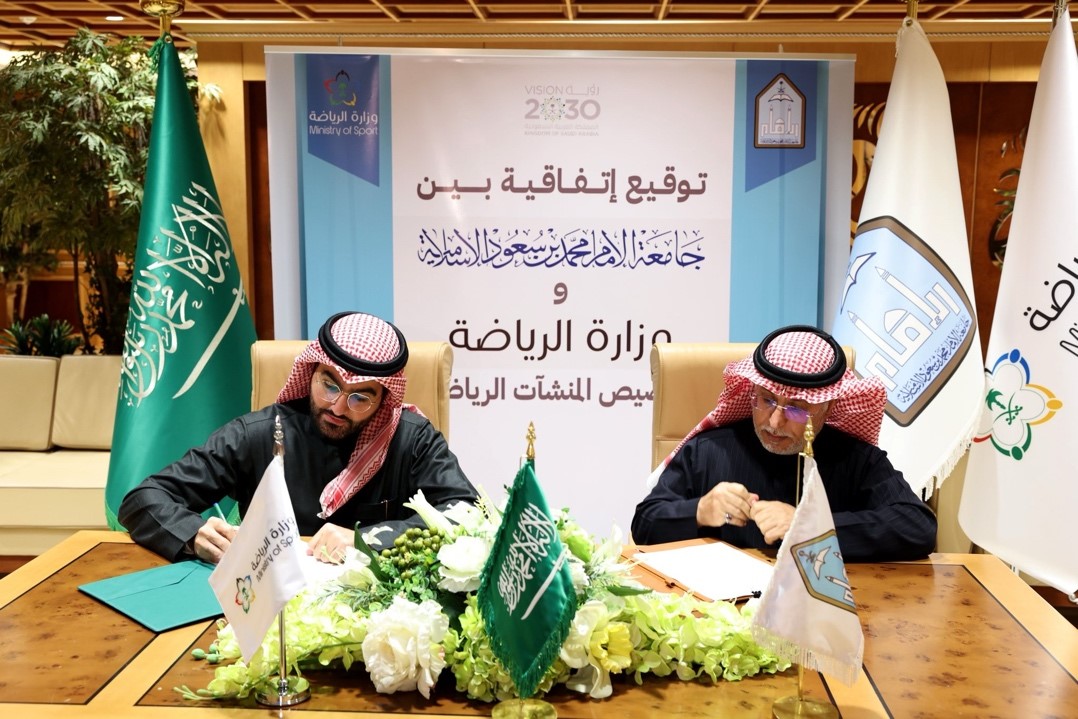
Imam Mohammad Ibn Saud Islamic
University collaborates with the Ministry of Sports through a ten-year
agreement that allocates university sports facilities for community use. The
agreement aims to upgrade and operate these facilities according to national
standards, supporting the goals of Saudi Vision 2030 related to physical health
and well-being.
For more
details, see the official
announcement.
https://x.com/IMSIU_edu_sa/status/1867580087274811502
2. Tobacco-Free Campus Policy
https://imamu.edu.sa/Laws/Pages/UCDetails.aspx?rid=49&flag=true
In alignment with its commitment to
fostering a safe and healthy educational environment, Imam Mohammad Ibn Saud
Islamic University has enacted a comprehensive anti-smoking policy. This policy
is designed to safeguard students, faculty, and staff from the harmful effects
of tobacco and its derivatives through a series of regulatory and awareness
initiatives aimed at eliminating tobacco use across all university premises.
The policy applies to all
administrative and academic units of the university, including its branches,
institutes, and private transportation facilities. It encompasses the entire
university community—students, employees, and faculty—across all campus
locations. The university adopts a comprehensive definition of smoking that
includes conventional cigarettes, electronic cigarettes, cigars, shisha, snuff,
chewing tobacco, and any other form of processed or raw tobacco.
The regulation explicitly bans smoking
in all its forms within the university’s premises. It also prohibits the
promotion, sale, or display of any tobacco-related products or logos through
media or on-campus activities. Any advertising, distribution, or usage of
promotional materials bearing tobacco-related symbols is strictly forbidden.
To implement this policy
effectively, the university established a Permanent Committee on Anti-Smoking,
chaired by the Vice President for Academic Affairs. The committee includes
representatives from various departments, such as the Deanship of Student
Affairs, Human Resources, Legal Affairs, Security and Safety, Media and
Communications, and faculty members, including representation from the Women's
Campus. This committee is responsible for formulating anti-smoking policies,
suggesting awareness programs, liaising with medical authorities, overseeing
enforcement, and reporting to the university president.
On the operational side, the
General Administration for Security and Safety, or delegated personnel, are
authorized to document violations and issue formal citations. In certain cases,
penalties may be applied immediately without prior investigation. Cases
requiring further examination are processed according to the university’s
disciplinary regulations.
The policy outlines clear
sanctions: a fine of SAR 200 for individuals caught smoking on campus, and up
to SAR 5,000 for promoting, selling, or displaying tobacco-related products or
logos. Repeat offenses result in increased penalties.
This policy reinforces the
university’s dedication to public health, raises awareness among its community,
and solidifies its role in combating harmful behaviors within academic
settings, in alignment with national laws and community health initiatives
aimed at reducing tobacco use in Saudi Arabia.
3. Strategic Health Collaborations
Imam Mohammad Ibn Saud Islamic
University places strong emphasis on public health and community well-being
through strategic partnerships and memoranda of understanding with prominent
national health institutions. These initiatives align with the university’s
commitment to the Sustainable Development Goals (particularly SDG 3: Good
Health and Well-Being) and span various domains including training, health
research, community service, mental health, and health education.
1) King Saud Medical City Agreement: Imam Mohammad Ibn Saud Islamic University signed a cooperation
agreement with King Saud Medical City one of the largest specialized healthcare
facilities in the Kingdom to collaborate in areas of training, health
education, and scientific research. The agreement also aims to facilitate the
exchange of expertise between both parties to support national medical
competencies.
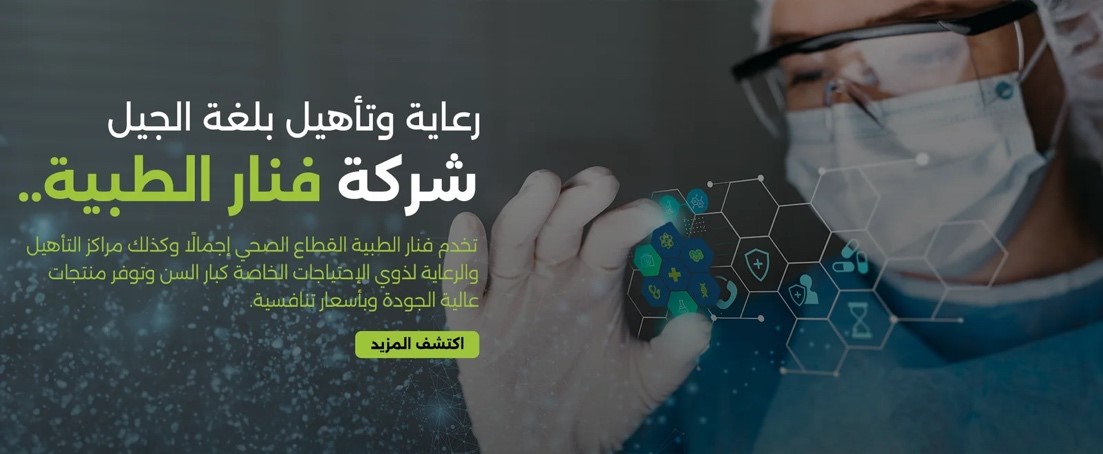
2) Alfanar
Healthcare Partnership: In the presence of
H.E. Prof. Ahmed bin Salem Al-Amri, University President, a Memorandum of
Understanding was signed between the University Investment Fund and Alef
Healthcare (a subsidiary of Alfanar Company) to develop and operate health and
engineering services projects inside and outside the Kingdom. The MoU was
signed by Prof. Abdulrahman Al-Sugair, Vice President for Business Development
and Investment, and Eng. Sabah Al-Mutlaq, Vice Chairman of Alfanar.
This agreement supports the National Health Transformation Program by enhancing
collaboration between the academic and private sectors to implement quality
healthcare projects. It contributes to building sustainable infrastructure and
diversifying university investments. Both parties affirmed their commitment to
long-term cooperation in impactful community health projects.
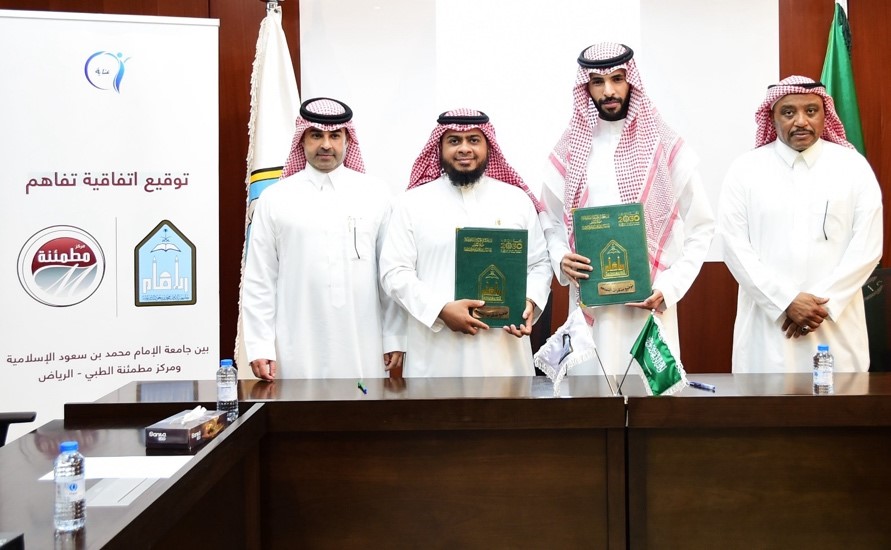
1) Mtmn
Mental Health MoU: The university
previously signed an MoU with Mtmn Medical Center to enhance mental health
awareness and collaborate in training and research. This initiative aims to improve
psychological well-being for university members and the surrounding community
2) Red
Crescent MoU: The university signed a
Memorandum of Understanding with the Saudi Red Crescent Authority to
collaborate in training, continuing education, and the provision of emergency services inside
and outside campus grounds. The agreement promotes awareness of first aid
principles, activates the “First Responder” initiative, and supports the
installation and use of defibrillators while cultivating a culture of health
and safety.
3) SCFHS
AccreditationThe university maintains a
synergistic relationship with the Saudi Commission for Health Specialties
(SCFHS). Its academic programs are accredited under the National Framework for
Health Professions, enhancing student opportunities for professional,
high-quality entry into the healthcare field.
4) Smart
Health Apps Collaboration: The College of
Computer and Information Sciences at the university contributes to digital
health initiatives through smart applications that improve healthcare service
quality. These projects are carried out in cooperation with national health and
technology organizations. 5) Obesity Prevention Program: The university collaborated with the Ministry
of Health and school health authorities in implementing an obesity. 6) Work-Life Balance Initiative: The university launched the “Work-Life Balance”
initiative in partnership with the National Center for Mental Health Promotion,
coinciding with World Mental Health Day (October 10, 2023). The initiative
aimed to support staff well-being and foster a balanced lifestyle through
workshops, virtual sessions, and continuous psychological and social support.
7) Ministry of Health Collaboration: The university signed an MoU with the Ministry of Health
to facilitate joint scientific research, exchange statistical data, host
academic events, enhance laboratory capabilities, and provide cooperative
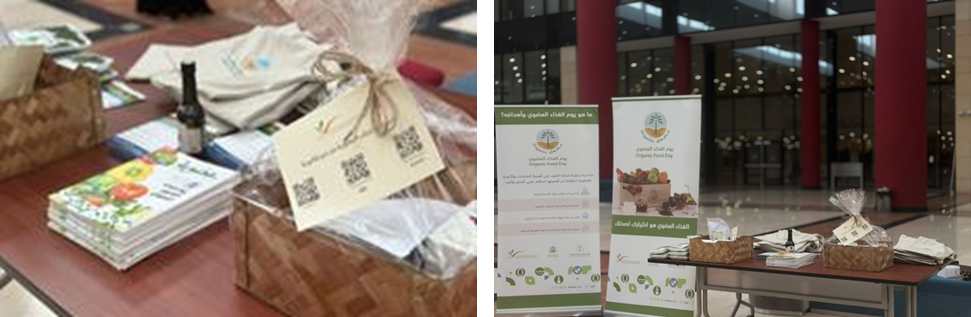
training opportunities for students and joint supervision of postgraduate theses. 8) Organic Food Day Awareness: The university, through its Environmental Club and in
collaboration with the Saudi Organic Farming Association, organized an event on
November 29, 2023, to raise awareness on the health and environmental benefits
of organic food. Activities included exhibitions, educational materials in
Arabic and English, and advocacy for sustainable consumption.
4.
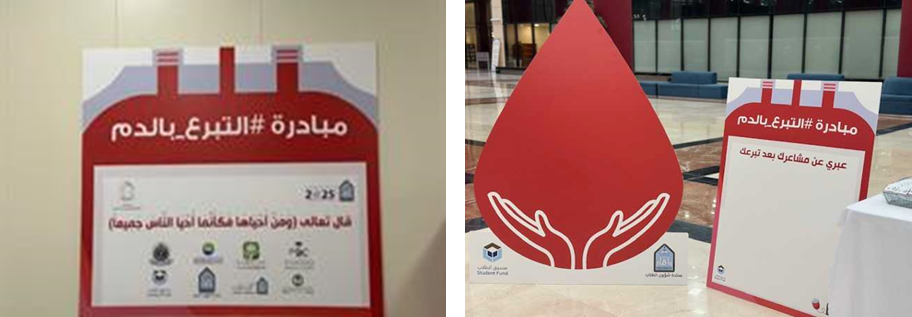
University Health Awareness Events1) Blood
Donation InitiativeThe Deanship of Student
Affairs, with support from the Student Fund, participated in the Blood Donation
Initiative organized by the General Administration of Community Responsibility
and Service. The event took place over two days—Tuesday and Wednesday, April 30
and May 1, 2024.
The Deanship set up an
interactive awareness booth targeting female university staff and students. The
booth aimed to promote awareness about the importance and health benefits of
blood donation. It provided information on donor eligibility criteria and the
organizational process for donations. The booth also featured an expressive
wall for donors, awareness brochures, and hospitality services, and received
significant engagement from attendees.
Several entities contributed to
the initiative, including:
- The Ministry of Health
- The Ministry of National Guard
- King Faisal Specialist Hospital
- Specialized Medical Center
- The university’s College of Medicine
- The National Center for Social Responsibility
- The Deanship of Student Affairs
This initiative reflects a spirit of community
solidarity and promotes humanitarian and national values within the university
environment
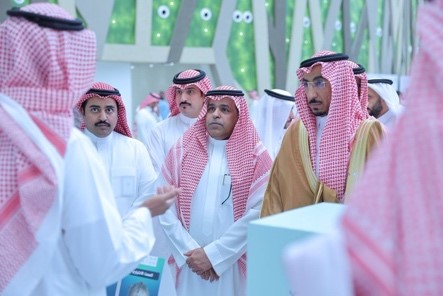
Under the patronage of His
Excellency the University President, Imam Mohammad Ibn Saud Islamic University
organized the 2024 Mental Health Forum in conjunction with the World Mental Health Day, held annually on October 10. The event
was themed “Towards a Work Environment that Supports Mental Health.”
The university places strong
emphasis on active participation in World Mental Health Day, recognizing mental
well-being as an essential component of quality of life, academic success, and
professional performance.
Organized by the Deanship of
Student Affairs and the General Administration of Community Responsibility and
Service, in collaboration with various colleges and specialized centers, the
university hosts annual forums and awareness exhibitions, adopting WHO-aligned
themes such as this year’s “Towards a Work Environment that Supports Mental
Health.”
The forum’s key components
include:
- Awareness booths run by internal units such as the “E'enayah” Psychological Support Unit and external organizations like Mtmn Medical Center, Ishraqa Association, and the Family Safety Program.
- Free psychological consultations provided by qualified professionals.
- Lectures and academic sessions addressing topics such as psychological
balance, academic stress, and strategies for promoting mental well-being.
- Extensive student participation through university clubs and volunteer
committees.
Activities were held across
various university venues, including the main university lobby and the
conference hall at King Abdullah City for Female Students, with engagement from
university leaders, faculty, and staff.
Through this initiative, the
university aims to:
- Raise community awareness of mental health issues.
- Enhance the quality of academic and work environments.
- Combat stigma associated with mental health conditions.
- Support students and employees in managing psychological
challenges.
This effort reflects the
university’s ongoing commitment to community responsibility and aligns with Saudi Vision 2030and the Quality of Life Program by integrating mental health into its
institutional culture.
3) "Health and Sports" Campaign: This
initiative aims to improve individual health and enhance physical fitness by
providing specialized health and awareness services. It falls within the
university’s programs aligned with Saudi Vision 2030, particularly those related to the Quality of Life Program.
Key components of the initiative
include: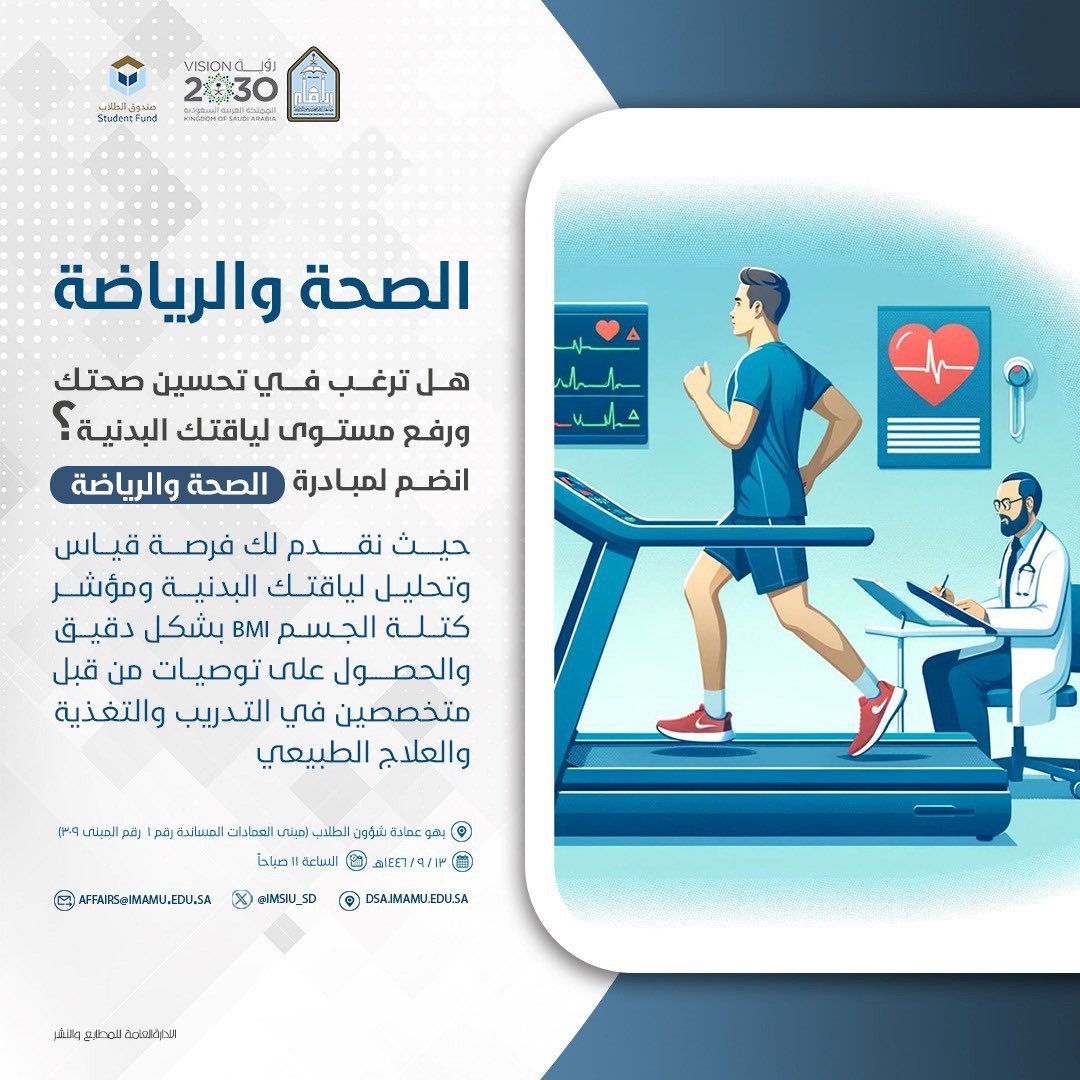
- Assessment and analysis of physical fitness
- Accurate calculation of Body Mass Index (BMI)
- Specialized health recommendations in the following areas:
- Sports training
- Nutrition
- Physical therapy
4) International Day of Persons with Disabilities: Under the patronage of His Excellency Prof. Dr.
Ahmed bin Salem Al-Ameri, President of Imam Mohammad Ibn Saud Islamic
University, and in the presence of the Vice President for Educational Affairs,
Prof. Dr. Fahd bin Saleh Al-Luhaidan, the Deanship of Student Affairs organized a celebratory event on the occasion
of the International Day of Persons with Disabilities, under the theme:
"United in Achieving the Sustainable Development Goals
for Persons with Disabilities."
h Saudi Vision 2030 and the Sustainable Development
Goals (SDGs), particularly:
- SDG 4 (Quality
Education): by ensuring equal educational opportunities for all.
- SDG 10 (Reduced
Inequalities): through academic and social empowerment of individuals with
disabilities.
SDG 3 (Good Health and Well-Being): by raising awareness and educating the community
on the specific health and psychological needs of persons with disabilities.
The event featured awareness programs, informative
exhibits, and performances highlighting the talents and capabilities of
students with disabilities. Several internal and external entities also
participated by offering advisory, health, and educational services that
support their well-being and promote their full integration into university
life.
This celebration embodies the university’s dedication to
building a just and inclusive academic environment that contributes to
sustainable development. It also reflects the institution’s vision of
empowering all segments of society and raising health and social awareness for
the greater good.
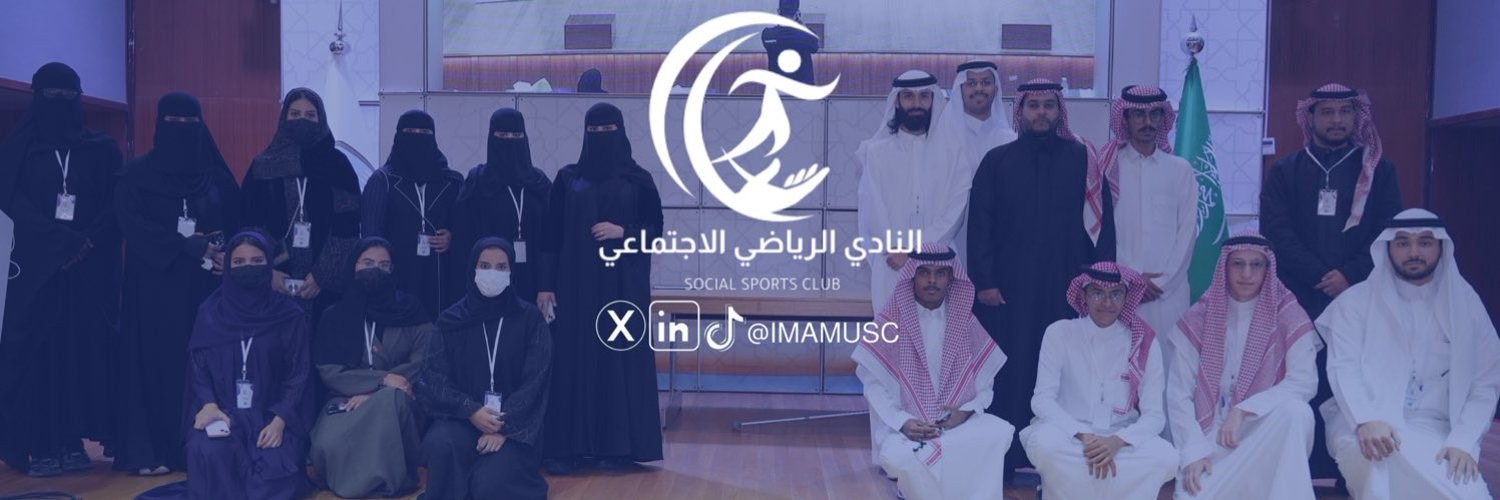
5. Health-Focused Student
Clubs


6. Reproductive Health
Services
https://x.com/IMSIU_edu_sa/status/1834533474981577121?lang=ar
https://x.com/patientservice9?lang=ar#
https://youtu.be/DWQAK_BWGyw
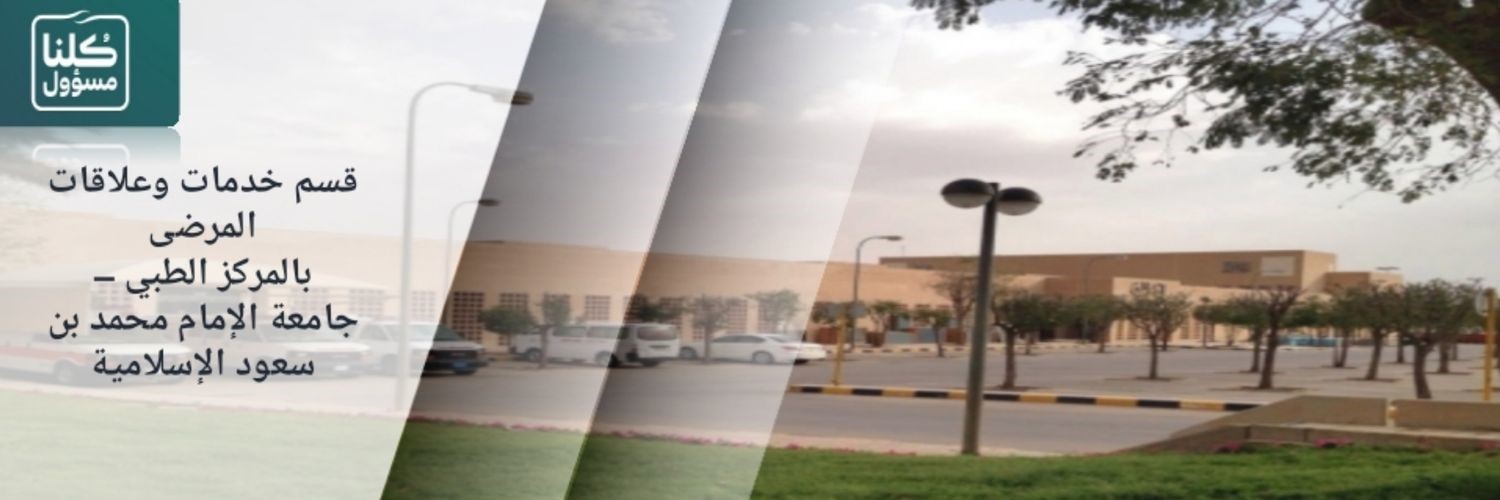
Reproductive Health Services Provided by University
Clinics – Imam Mohammad Ibn Saud Islamic University
The university medical clinics at
Imam Mohammad Ibn Saud Islamic University offer comprehensive healthcare
services to students and staff, including aspects of reproductive health care
within the scope of prevention, education, and primary medical support.
Key Services Provided
- Primary Healthcare Related to Reproductive Health
This includes initial medical screenings tailored to the needs of students
across various age groups, such as: - Managing nutritional
and developmental disorders.
- Monitoring common
health issues among female students, such as anemia and menstrual
irregularities.
- General health
assessments concerning hormonal or psychological factors that may impact
reproductive health.
- Health Awareness and Education
The clinics, in collaboration with health colleges, organize educational
campaigns and workshops on: - The importance of
routine check-ups related to general and reproductive health.
- The impact of healthy
lifestyle practices (nutrition, sleep, physical activity) on reproductive
well-being.
- Awareness about
premarital screening and the connection between physical health, academic
performance, and overall life quality.
- Psychological and Social Counseling Support
In partnership with the Psychological and Social Counseling Unit, the clinics
offer counseling services related to: - Psychological balance
and mental well-being.
- Coping strategies for
academic and life stressors.
- Preparation for a
more stable and healthy personal life.
- Specialist Medical Referrals
When specialized care is required, the clinics refer cases to accredited
medical centers such as King Saud Medical City and King Faisal Specialist
Hospital, ensuring accurate follow-up and access to advanced medical care.
The university medical clinics at Imam Mohammad Ibn Saud Islamic University
contribute to promoting reproductive health through prevention, education, and
primary care. They provide a supportive health environment that enhances the
academic quality of life for students, through an integrated approach combining
medical, psychological, and social services.
7. Psychological Counseling
Services

"E'enayah"
Psychological Support Unit
1. The E’enayah Unit is one of the leading
centers for mental and social health support at Imam Mohammad Ibn Saud Islamic
University. It plays a key role in delivering preventive, developmental, and
therapeutic services that align with Saudi Vision 2030, particularly in
enhancing quality of life and promoting mental well-being at both individual
and community levels.
The unit operates based on a scientific approach rooted in
the foundational values and social norms of Saudi society. It offers integrated
psychological and social support for students and university staff by pursuing
the following core objectives:
- Helping new
students transition smoothly into university life.
- Promoting
students’ psychological and social adjustment throughout their academic
journey.
- Fostering
self-discipline and a strong sense of responsibility among university
members.
- Providing
psychological and social counseling for students and staff alike.
- Empowering
students with life skills through psychological and social education.
- Treating
psychological and social challenges, and supporting individuals struggling
with adaptation or psychological stress.
- Supporting
gifted and high-achieving students by nurturing their talents and
capabilities.
- Designing
therapeutic programs to address addiction and related behavioral problems.
- Conducting
research and studies in the fields of psychological and social counseling
and therapy.
- Organizing
training sessions and awareness programs related to mental health.
- Hosting conferences
and academic forums to enhance knowledge and research in this field.
- Developing and
utilizing effective psychological and social assessment tools.
Confidentiality
and Privacy
The E’enayah Unit places the utmost importance on
maintaining strict confidentiality with all beneficiaries. No personal
information or content from counseling sessions is shared without the explicit
consent of the individual. In cases where there is a risk to the individual or
others, the appropriate authorities are notified, and the client is informed of
the actions taken.
Staff and Professional Team:
The unit is staffed by a highly qualified team of professionals in psychology
and social work, including:
- Certified
consultants with scheduled weekly sessions.
- Full-time psychologists
and social workers.
The team delivers services with a high degree of
professionalism to ensure the well-being of all university members.
The E’enayah Unit reflects the university’s commitment to
building a psychologically supportive campus environment and to raising mental
and social awareness among its students and staff.
2. Free Psychological
Counseling Services at the University Medical Center
https://x.com/IMSIU_edu_sa/status/1834533474981577121?la
=ar
As part of its commitment to promoting psychological and
social well-being within the university community, Imam Mohammad Ibn Saud
Islamic University offers free mental health support services through
its university medical center. These services are available to all students,
faculty members, and staff.
The program includes confidential, one-on-one
counseling sessions provided by qualified mental health professionals.
The sessions address a variety of psychological challenges such as academic
stress, anxiety, depression, and social isolation.
This initiative is part of the university’s broader
strategy to foster an inclusive and healthy educational environment. It
contributes directly to the achievement of the Sustainable Development
Goals, particularly:
- SDG 3 (Good
Health and Well-Being)
- SDG 1 (No
Poverty)
By reducing mental health burdens that may hinder academic
performance or contribute to dropout rates—especially among economically
disadvantaged students—the university creates a more equitable and supportive
learning ecosystem.
Support mechanisms include:
- Initial
psychological assessments.
- Therapeutic
counseling sessions.
- Referrals to
specialized treatment centers when necessary.
- Mental health
awareness and preventive education programs.
The university medical center ensures that all
services are delivered according to the highest ethical and clinical standards,
while maintaining strict confidentiality and providing a safe, supportive space
for all beneficiaries.