Executive Summary:
Saudi Arabia’s Vision 2030 seeks to achieve the seventh Sustainable
Development Goal (SDG 7): ensuring access to affordable, reliable, sustainable,
and modern energy for all. This is pursued through pioneering national
strategies aimed at diversifying energy sources and enhancing energy
efficiency. Clean energy lies at the heart of the Kingdom’s economic
transformation, recognizing its role in driving inclusive development, reducing
carbon emissions, and strengthening global competitiveness.
The Vision emphasizes expanding renewable energy projects such as
solar and wind power, developing smart electricity grid infrastructure, and
investing in clean technologies to improve efficiency and reduce waste. Key
directions include increasing the share of renewable energy in the national
energy mix, enhancing the efficiency of traditional energy production, and
encouraging innovation and investment in sustainable energy solutions.
Saudi Arabia also aims to strengthen energy security by
diversifying energy sources, broadening local and international partnerships
for knowledge exchange, and developing a modern energy market that creates
greater opportunities for the private and non-profit sectors. Furthermore, the
Vision places significant importance on community awareness regarding energy
conservation and its impact on environmental protection.
Through these efforts, the Kingdom reaffirms its commitment to
achieving a sustainable energy transition that supports environmental
protection, boosts the national economy, and ensures safe and accessible energy
sources for all—aligning with Vision 2030 and the United Nations Sustainable
Development Agenda.
Within this framework, Imam Mohammad Ibn Saud Islamic University
plays a vital role in supporting SDG 7 (Affordable and Clean Energy) by
implementing initiatives to optimize energy consumption on campus, such as
energy-efficient lighting systems, district cooling technologies, and
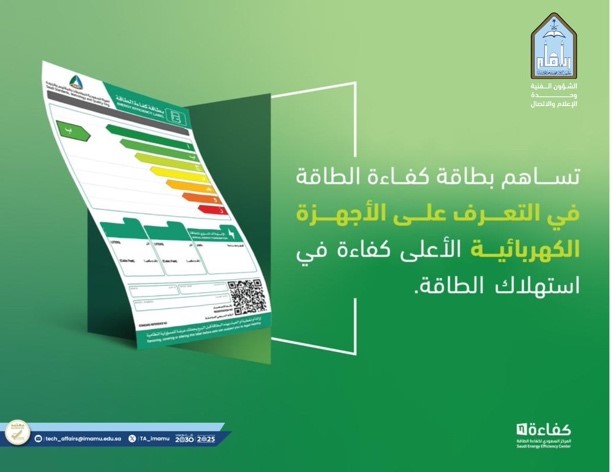
collaborations with the Saudi Energy Efficiency Center. The university also
supports scientific research in the field of sustainable energy and promotes
awareness among its community on the importance of energy efficiency as a
pathway to sustainability.
By doing so, the
university continues to uphold its environmental responsibility through advancing
a culture of clean energy, contributing innovative solutions to energy
challenges, and reinforcing its role in supporting the Sustainable Development
Goals and Vision 2030.
The Role of Imam Mohammad Ibn Saud
Islamic University in Supporting Government Policies on Clean Energy and
Promoting Community Awareness of Energy Efficiency
1-Collaboration
between Imam Mohammad Ibn Saud Islamic University and the Saudi Energy
Efficiency Center (SEEC)
Imam Mohammad Ibn Saud
Islamic University collaborates with the Saudi Energy Efficiency Center (SEEC)
in awareness campaigns and joint initiatives aimed at enhancing energy
efficiency. This collaboration seeks to raise awareness about the importance of
rationalizing energy consumption among government employees and the wider
community.
Awareness Campaigns
The university,
represented by the Technical Affairs Department, has launched awareness
campaigns in cooperation with SEEC under the slogan “Energy Efficiency is a
Shared Responsibility”. These campaigns target employees of various
government entities to promote a culture of energy conservation.
Energy Efficiency
Awards
SEEC participates in the
Energy Efficiency Award initiative, which invites institutions and individuals
to apply and compete in categories such as efficiency and conservation,
development and innovation, and awareness and impact.
Other Initiatives
The two parties also
cooperate on additional projects, such as the Window Air Conditioner
Replacement Initiative, which aims to replace old, inefficient units with
new, energy-saving models. Other collaborative efforts focus on enhancing
energy efficiency across different sectors.
Digital Platforms
SEEC provides integrated
digital platforms, such as the National Platform, to deliver services
related to energy efficiency. These include issuing energy consumption licenses
for electrical products, processing replacement requests, and offering support
for various energy efficiency initiatives.
2-Signing of a
Memorandum of Understanding between Imam Mohammad Ibn Saud Islamic University
and Saudi District Cooling Company
As part of its ongoing
efforts to strengthen strategic cooperation and partnerships aimed at
developing its projects and achieving sustainability in the application of
technical quality standards, Imam Mohammad Ibn Saud Islamic University signed a
Memorandum of Understanding (MoU) with the Saudi
District Cooling Company in the field of developing cooling
systems.
The MoU was signed under
the supervision and follow-up of the General Directorate of
Technical Affairs at the university and was held under the
patronage of His Excellency the University President, Prof.
Dr. Ahmed bin Salem Al-Ameri. The university was represented by Eng. Shafi bin Qaed Al-Qahtani, General Director
of Technical Affairs, while the company was represented by Mr.
Suleiman bin Mohammed Al-Khulaifi, Managing Director of the Saudi
District Cooling Company. The signing took place on Sunday,
5 Muharram 1445 AH, corresponding to 23
July 2023.
The MoU aims to enhance
cooperation and exchange expertise in the field of central cooling systems for
the university campus. Areas of cooperation include:
- Supplying university
buildings with chilled water, improving and upgrading plant efficiency.
- Providing technical and
financial solutions to ensure the sustainability of cooling services for the
university’s zones.
- Assessing current central
cooling plants, reviewing their capacity, evaluating assets, and planning
expansion phases.
- Determining the proposed
cooling capacity for each building.
- Reviewing the operational
efficiency of cooling plants and studying the existing pipeline network.
- Providing technical and
financial reviews and recommendations for the project.
This MoU comes as part of
the university’s strategy to collaborate with leading national companies in the
Kingdom of Saudi Arabia, contributing to the development of its infrastructure
and the achievement of its goals in quality and sustainability.
Imam Mohammad Ibn Saud Islamic University’s
Commitment to Renewable Energy
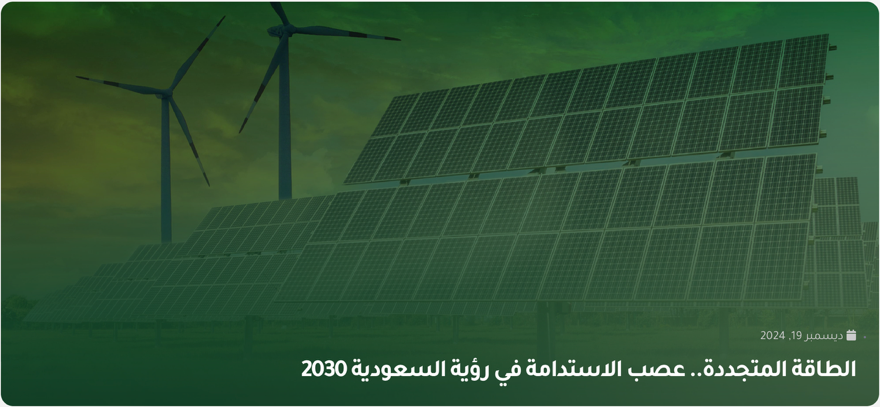
As a public university, Imam
Mohammad Ibn Saud Islamic University is committed to implementing the national
regulations and policies of the Kingdom of Saudi Arabia, which prioritize promoting renewable energy and energy efficiency
in line with Saudi Vision 2030. This
commitment aligns with the national direction toward building a sustainable
future that ensures the highest quality of life and contributes to achieving net-zero carbon emissions.
The university’s commitment is demonstrated through:
- Compliance
with governmental regulations issued by relevant authorities
such as the Ministry of Energy and the Saudi Energy Efficiency Center, which
aim to increase reliance on renewable energy and reduce carbon emissions.
- Participation
in national initiatives that seek to transition toward a more
sustainable energy mix, including improving the efficiency of cooling and
lighting systems and adopting energy-saving technologies across university
facilities.
- Integration
of government objectives into the university’s strategic plans
to ensure that projects and future expansions align with energy efficiency
standards and the national goal of increasing the share of renewable energy.
- Collaboration
with national companies, such as the National Energy
Efficiency Services Company “Tarshid” and the Saudi District Cooling Company,
in infrastructure development projects that enhance efficiency and
sustainability.
This approach aligns with Saudi Vision 2030, which sets a target
for renewable energy and natural gas to account for 50%
of the energy mix for electricity production by 2030. In 2023,
the share of renewable energy in electricity generation ranged between 45% and 50%, close to that of thermal energy.
According to 2022 statistics, the Kingdom generated 5,520
GWh of electricity from renewable energy projects connected to
the national grid, including 1,588 GWh
from the Dumat Al-Jandal wind power project and 932
GWh from the Sakaka solar photovoltaic project. There are also 19 projects under implementation with a total
capacity of 14,513 MW—84.84% solar and
15.16% wind—that, once fully operational, will supply electricity to 2.6 million housing units and reduce 24.8 million tons of CO₂ emissions annually.
The statistics also indicate strong public awareness, with 92.1% of households expressing interest in energy
conservation and 42.3% showing a willingness
to use solar energy in their homes. Renewable energy projects also offer an
economic advantage, as global solar photovoltaic production costs have
decreased by 56% compared to fossil fuel and nuclear options, and projects
developed since 2000 have saved USD 409 billion
in fuel costs worldwide.
Thus, Imam Mohammad Ibn Saud Islamic University’s commitment to
renewable energy reflects its alignment with government policies and Vision
2030, placing it firmly on the path of the national transition toward clean and sustainable energy.
Imam Mohammad Ibn Saud Islamic University’s Direct Services to Local Industries in Improving Energy Efficiency and Promoting the Use of Clean Energy
Imam Mohammad Ibn Saud Islamic University’s Research in
Renewable Energy and Energy Efficiency
Imam Mohammad Ibn Saud Islamic University places increasing
emphasis on scientific research in the fields of energy
efficiency and renewable energy,
reflecting its role as a public educational institution committed to supporting
the objectives of Saudi Vision 2030 in
environmental sustainability and the transition toward clean energy.
The university’s researchers conduct a wide range of academic and
applied studies aimed at improving energy consumption efficiency in buildings
and facilities, developing innovative technical solutions in solar energy, wind
energy, and hybrid systems, as well as supporting industrial competitiveness by
enhancing production efficiency and reducing carbon emissions.
Key Research in Energy Efficiency and Renewable Energy
1. Industrial Competitiveness and Energy Efficiency in GCC
Countries
A study examining the relationship between
energy efficiency and industrial competitiveness in Gulf Cooperation Council
countries, showing that improving energy efficiency contributes to cost
reduction and increased productivity.
https://econjournals.com/index.php/ijeep/article/view/19425
2. Strategies and Energy Efficiency in Institutional Buildings
(Case Study: Riyadh Correctional Facilities)
Research assessing the impact of replacing
lighting and air-conditioning systems with high-efficiency alternatives,
showing potential reductions of 74% in lighting energy consumption and 28.4% in
air-conditioning energy use.
https://www.mdpi.com/2071-1050/17/13/5808
3. Off-Grid Hybrid Energy Systems Using Artificial Intelligence
Development of a model integrating solar
energy, wind energy, batteries, and generators, using intelligent algorithms to
achieve optimal performance in terms of cost and reliability.
https://www.researchgate.net/lab/Hassan-M-H-Farh-Lab
4. Enhancing Heat Transfer Fluids (MXene) for Solar Energy
Systems
An advanced study to improve the
performance of solar energy systems by developing MXene-based aqueous ionic
fluids, which enhance heat transfer efficiency.
https://pubmed.ncbi.nlm.nih.gov/40594502/
5. The
College of Engineering at Imam Mohammad Ibn Saud Islamic University signed a
cooperation agreement with Danfoss B Global
to strengthen academic and research partnerships in various fields, including renewable energy.
Under the supervision of Dr. Waleed bin Hamoud
Al-Furaidi, the college’s students participated in the IEEE PES ISGT 2023 International Conference on Innovative
Smart Grid Technologies held in France, where they presented a research
paper titled: “Flexibility of IoT-Based Smart Home Loads to Enhance the
Capability of the Electrical Distribution Network.”
As part of their international research engagement, the students
also participated in the 10th IEEE International
Conference on Sustainability Technologies in the United States,
presenting a paper titled: “Sustainability in Universities in Light of
Recent Energy Efficiency Initiatives in the Kingdom of Saudi Arabia.”
Furthermore, the students achieved a remarkable milestone with the
acceptance of their research paper titled: “Enhancing Net-Zero Energy
Solutions in Saudi University Campuses” for publication at the IEEE GESS 2024 International Conference on Green Energy and
Smart Systems.
These participations and achievements represent a significant
contribution to the university’s track record in scientific
research and innovation, reinforcing its role in supporting
the fields of sustainability and renewable energy.
In addition to its specialized academic research, Imam Mohammad Ibn
Saud Islamic University places significant emphasis on organizing workshops and awareness activities aimed at
enhancing knowledge and promoting a culture of energy
efficiency and renewable energy
among its staff, students, and the local community, in alignment with Saudi
government policies and the objectives of Saudi
Vision 2030.
Key efforts in this field:
- Collaboration with the Saudi Energy Efficiency Center
- Launching awareness
campaigns under the slogan “Energy Efficiency is a Shared Responsibility”,
targeting employees of government entities to promote a culture of energy
conservation.
- Participating in the Energy Efficiency Award initiative, which
encourages innovation and development in the fields of efficiency and
conservation, covering categories such as building efficiency, technological
innovation, and community impact campaigns.
2.Specialized Training Workshops
- Energy
Efficiency in Government Buildings Workshop: Hands-on
training on energy-saving lighting technologies, improving air-conditioning
performance, and enhancing equipment operational efficiency.
- Solar
Energy Training Program: Training participants in the design,
installation, and maintenance of photovoltaic (PV) systems, including practical
simulations for small-scale solar projects.
3.University Events and Conferences
- Annual
Environmental Exhibition: Showcasing student projects in
renewable energy, such as solar-powered irrigation systems and smart,
energy-efficient home models.
https://units.imamu.edu.sa/vrectorate/TA/announcements/Pages/26-3-2020.aspx
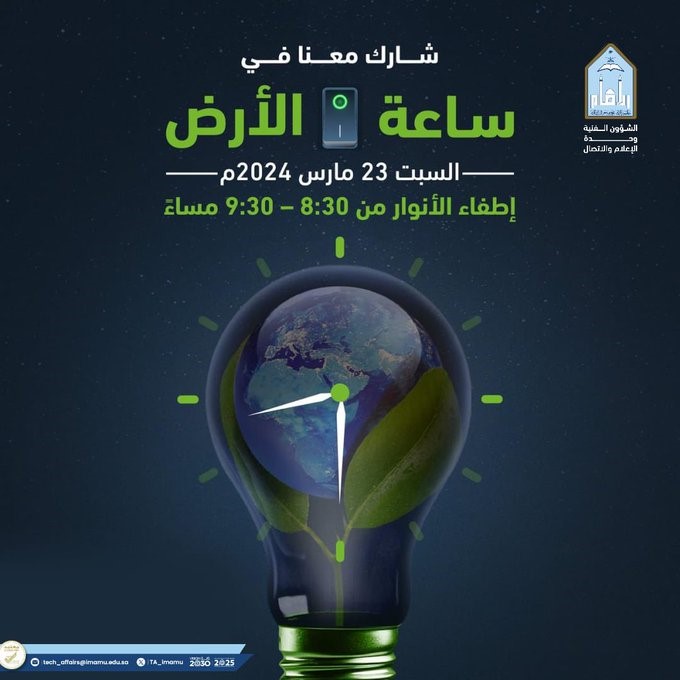
- Participating in national
events such as Earth Hour by switching
off lights in university facilities for one hour and organizing seminars on the
importance of reducing energy consumption.
4. Digital Awareness Platforms
- Launching a dedicated page
on the university’s official website featuring energy conservation guides, tips
for optimal use of electrical devices, and links to national initiatives such
as the National Energy Efficiency Platform.
- Publishing short video
clips via the university’s social media accounts to demonstrate simple steps
for reducing energy consumption in daily life.
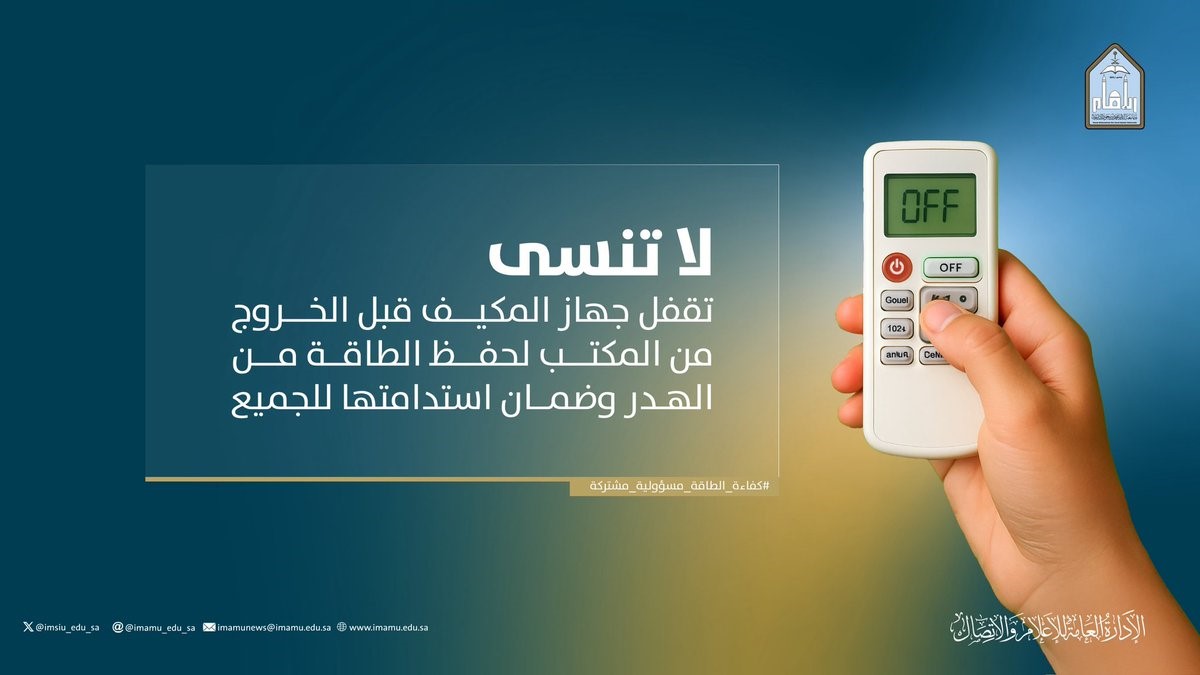
Imam Mohammad Ibn Saud Islamic
University’s Plans and Efforts in the Building Retrofit and Energy Efficiency
Project
Imam Mohammad Ibn Saud Islamic University, represented by the
General Directorate of Technical Affairs, has launched a comprehensive Building Retrofit and Energy Efficiency Project
covering the main university campus and King
Abdullah City for Female Students, with the goal of reducing electricity consumption by 41%. The
project is being implemented in partnership with the National
Energy Efficiency Services Company (Tarshid) and includes
replacing traditional lighting units with high-efficiency LED
systems in educational and administrative buildings, as well as all campus
facilities, in addition to upgrading and improving the operational efficiency
of cooling systems.
The university’s Technical Affairs Department developed a detailed
work plan to oversee the project’s implementation, ensuring continuous
supervision and coordination between technical teams during both morning and
evening shifts, in order to achieve the highest standards of quality and timely
completion. To date, 80% of the work has been
completed in several buildings as part of the initial phases of the project, in
alignment with the university’s initiative to modernize its infrastructure and
facilities.
The project delivers multiple benefits, including energy
savings and reduced operational costs, lowering emissions and
environmental impact, extending the lifespan of equipment, and contributing to
the stability of the public power grid by reducing demand, especially during
peak hours.
Under the patronage of the University President, a ceremony was
held to mark the completion of Phases One and Two
and to inaugurate Phase Three of the project,
attended by university leadership and Tarshid representatives. The University
President emphasized that Imam Mohammad Ibn Saud Islamic University is among
the first educational institutions to adopt this national project, which is
considered one of the largest energy efficiency initiatives in
the education sector, praising the efforts of the joint working
teams and reaffirming the university’s commitment to adopting projects and
initiatives that support sustainability and energy efficiency across all its
facilities.
Imam Mohammad Ibn Saud Islamic
University’s Efforts in Reducing Carbon and Emissions
As part of its commitment to environmental sustainability and
supporting the transition toward a low-carbon economy, Imam Mohammad Ibn Saud
Islamic University (IMSIU) adopts and implements a range of initiatives aimed
at reducing carbon emissions and minimizing the environmental footprint of its
facilities and activities. These efforts include:
Implementation of a comprehensive building
retrofitting project at the main university campus and King Abdullah City for
Female Students in collaboration with the National Energy Services Company
(Tarshid), targeting up to a 41% reduction in energy consumption, thereby
lowering emissions from electricity use.
- Transition to
Energy-Efficient LED Lighting
Replacing traditional lighting systems
with LED fixtures in academic, administrative, and all other facilities to
reduce electricity consumption and carbon emissions.
- Upgrading Cooling and
Air Conditioning Systems
https://units.imamu.edu.sa/vrectorate/TA/News/Pages/news005.aspx
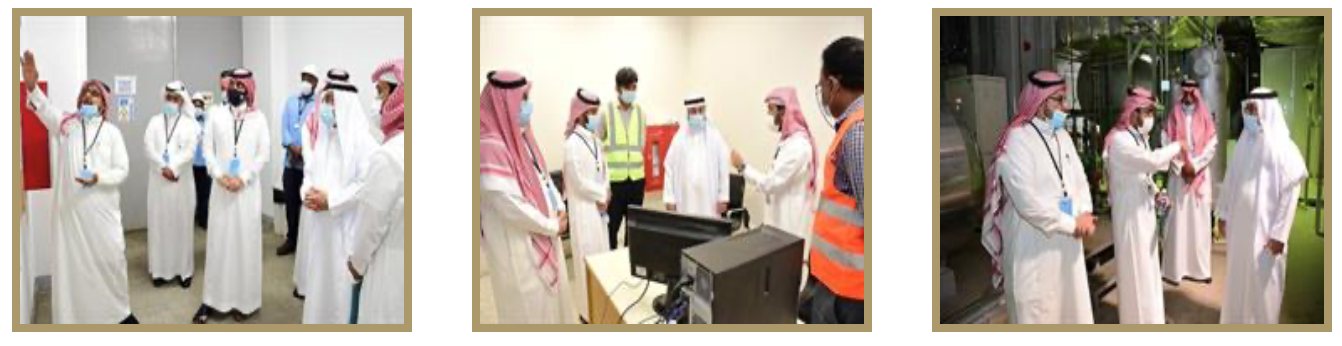
Modernizing cooling and HVAC units to
high-efficiency systems, along with the use of smart control systems to
minimize unnecessary energy use.
Organizing workshops and awareness
campaigns on energy efficiency and the importance of reducing emissions.
https://x.com/TA_imamu/status/1833191699302240599/video/1
- Encouraging Sustainable
Practices on Campus
https://x.com/TA_imamu/status/1665798123610943488/photo/1
Expanding green spaces, launching initiatives to reduce resource
waste, and improving both indoor and outdoor environmental quality.
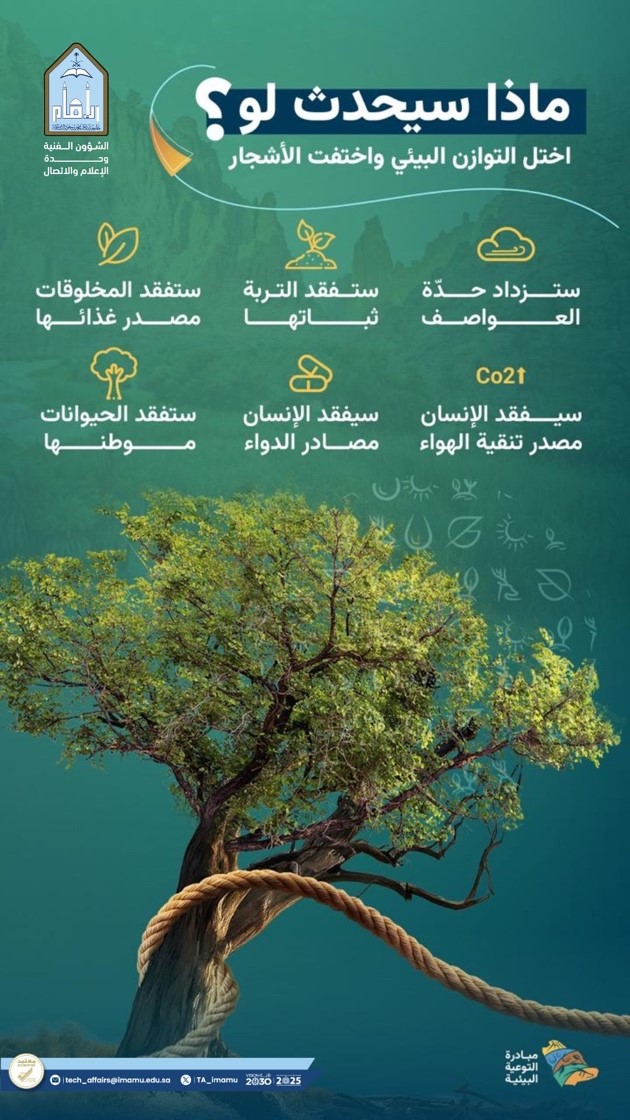
As a government university, IMSIU adheres to national
sustainability policies and operates within the framework of Saudi Arabia’s
flagship initiatives, foremost among them the Saudi Green Initiative,
which aims to reduce carbon emissions by 278 million tons annually by 2030.
Achieving the Kingdom’s carbon reduction vision requires a
multi-faceted approach, including generating 50% of electricity from renewable
sources by 2030 and optimizing the national energy mix. The university aligns
with this vision by implementing energy efficiency projects in its facilities
and adopting sustainable solutions in operations and maintenance.
These efforts complement the Kingdom’s broader programs and
ambitious projects to reduce emissions, such as:
- Investing in renewable
energy sources.
- Enhancing energy efficiency
across sectors.
- Advancing carbon capture
and storage programs.
The scale of these initiatives is reflected in the Kingdom’s energy
statistics:
- 6.2
GW – Total capacity of operational renewable energy sources.
- 44.2
GW – Total capacity of renewable energy projects under
development.
- 7
million homes – Potentially powered by renewable energy
projects currently in progress.
- 100–130
GW – Targeted capacity of renewable energy projects planned
for contract awarding by 2030.
These national efforts also include investments in clean hydrogen
and the development of advanced carbon capture technologies—initiatives in
which IMSIU actively participates through its own sustainability projects and
emission-reduction programs.
Periodic Energy Audits at Imam
Mohammad Ibn Saud Islamic University
As part of its commitment to environmental sustainability and
improving energy efficiency, Imam Mohammad Ibn Saud
Islamic University conducts regular energy audits across all
its facilities. These audits aim to identify areas of energy waste, enhance
operational efficiency, and reduce carbon emissions, in alignment with the
goals of Saudi Vision 2030 and
its initiatives for clean energy and energy efficiency.
These audits are carried out through:
- Conducting regular
technical inspections of lighting, air conditioning, and cooling systems to
identify waste and improve performance.
- Leveraging the expertise of
the National Energy Efficiency Services
Company (Tarshid) to evaluate energy consumption and provide
technical recommendations to address inefficiencies.
- Continuously analyzing
energy consumption data to compare actual performance against targets and
identify buildings or facilities with consumption levels above standard
benchmarks.
- Implementing immediate
improvement measures such as replacing non-energy-efficient equipment,
adjusting operation schedules, and improving thermal insulation systems.
- Monitoring the results of
improvements to ensure the effectiveness of actions taken and the
sustainability of outcomes.
These audits help the university reduce
energy consumption, lower operational costs, and minimize carbon emissions,
supporting its move toward a more sustainable and energy-efficient campus
environment.